Brake Motors
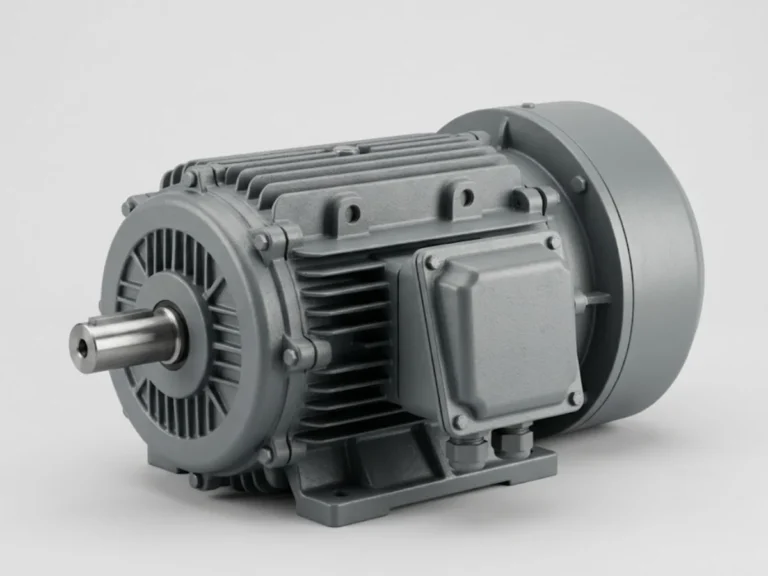
Crane Duty Brake Motor
Crane-duty motors with an integral fail-safe brake for hoists and travel drives.
- StandardIEC 60034, IS 3177
- Enclosure / ProtectionIP55
- Voltage ClassLT: 415 V, 3-phase, 50 Hz
Brake MotorCrane DutyMade to Order
Browse the full range. Filter by category or feature, compare specifications and add items to your quote list.
Crane-duty motors with an integral fail-safe brake for hoists and travel drives.
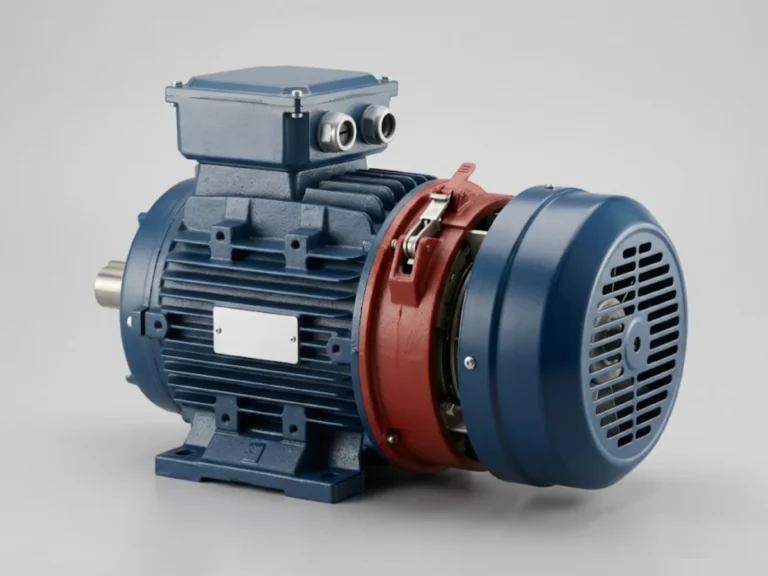
Flameproof motors fitted with a flameproof brake, for hoisting and holding duties in hazardous areas.
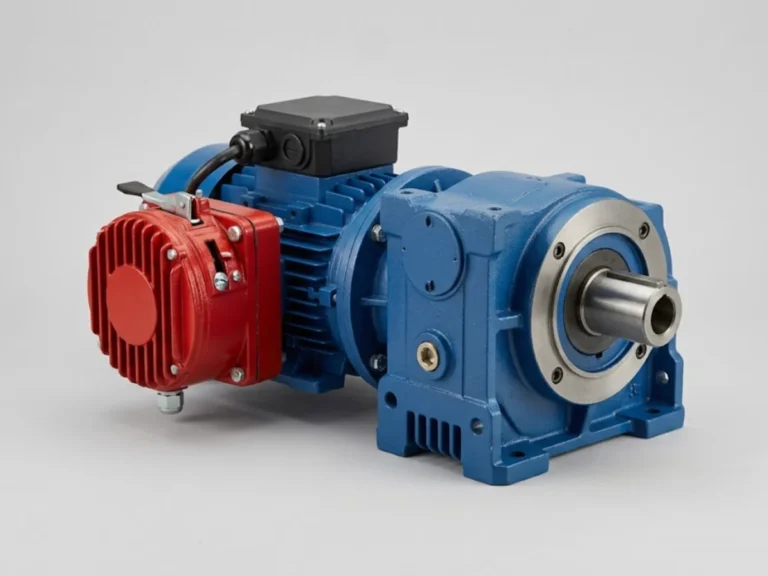
Geared motor with a built-in electromagnetic holding brake, for positioning and fail-safe stopping of conveyors and lifts.
No products match your filters. or ask our engineers.
A brake motor combines an induction motor with a built-in electromagnetic brake so the load stops and holds without relying on motor torque alone. This category includes crane duty brake motors, flameproof motors with brake and gear motors with brake, used on hoists, EOT cranes, conveyors, lifts, packaging lines and machine tools.
Most brakes of this type are spring-applied and released electrically, so they fail safe: if power is lost, the springs close the brake and the load is held. The brake coil is supplied from AC, often through a rectifier, and the brake response time can be tuned with the coil switching method. Remember that a motor brake is a holding and stopping device, not a substitute for the safety brake or load-holding requirement stated by the crane or lift standard.
When selecting, give:
For hoists, also look at the plain AC motors range and the gearbox range, and check supply cable and protection with the motor current calculator.
A brake motor has an electromagnetic brake mounted on the non-drive end. When the motor is energised, the coil releases the brake; when power is cut, springs press the friction disc and stop and hold the shaft. This fail-safe action makes it suitable for hoists, conveyors and positioning drives where the load must not coast.
In a brake motor the brake is built into the motor housing, so the package is compact and the brake is matched to the motor. An external brake, such as a drum or thruster brake on a coupling, is used for larger torque or where the brake must act on the load side of a gearbox. Selection depends on torque and mounting.
Calculate the load torque at the brake shaft, add a safety factor appropriate to the application, and also check that the brake can absorb the kinetic energy of the load inertia during stopping. For lifting duty, applicable crane or lift standards may set the minimum factor. Provide the load and speed data and let the supplier confirm the brake size.
Yes, if the whole assembly, including the brake, is built and certified for the area, as in a flameproof motor with brake. A standard brake motor must not be used in a classified zone. State the zone, gas group and temperature class when you ask for a quotation, and confirm the certificate with a qualified engineer.
They can, but the brake coil should be supplied separately from the drive output, not from the motor terminals, because the output is a variable-voltage, variable-frequency supply. The control sequence must also close the brake only after the drive has brought the load to a stop. Check the drive and brake manuals for the recommended sequence.
What motor frame numbers mean, how B3, B5, B35, B14 and V1 mounting differ, and the dimensions to measure when replacing a motor.
7 min readMotors, Gearboxes & DrivesWhat Ex d flameproof motors are, how gas group, temperature class and zone decide the selection, and the installation mistakes that void the protection.
7 min read