Solar Products
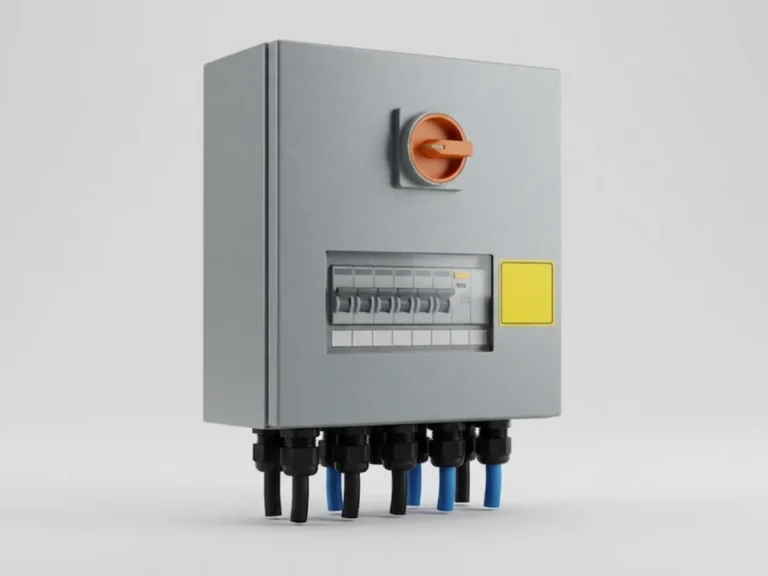
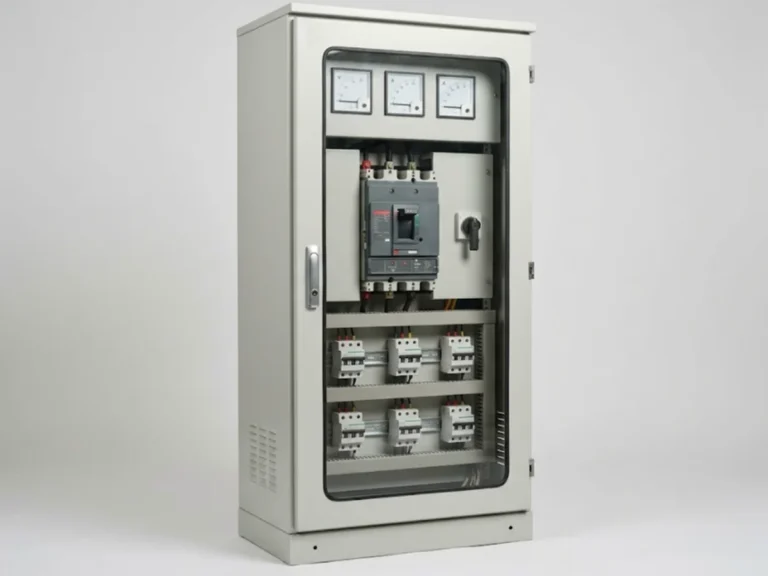
800V LT Panel
Low-voltage panels rated for 800 V class solar and inverter duty.
On request- StandardIEC 61439
- Voltage ClassLT, up to 800 V class
IEC 61439Solar
Solar panels, combiner boxes, DC/AC distribution boards and protection panels.
Low-voltage panels rated for 800 V class solar and inverter duty.
On requestBoxes that combine several inverter AC outputs into a single feeder with protection.
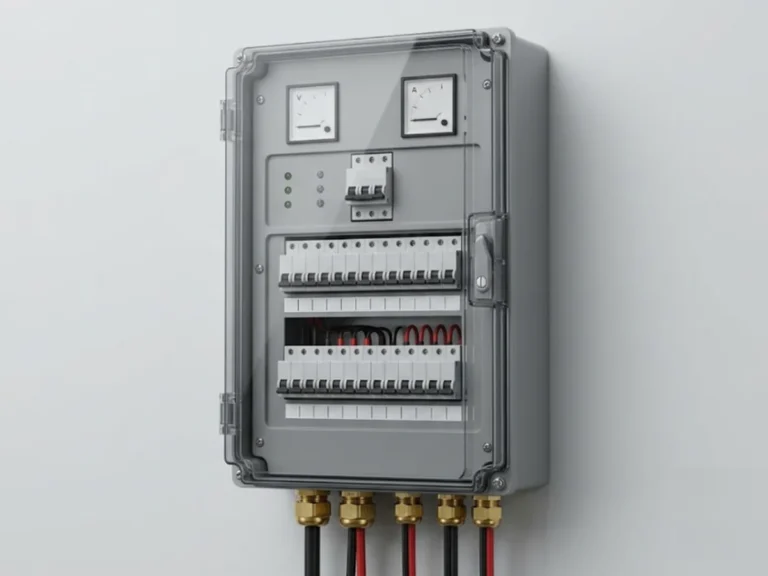
On requestAC-side distribution boards that gather inverter outputs and connect them to the plant LV supply.
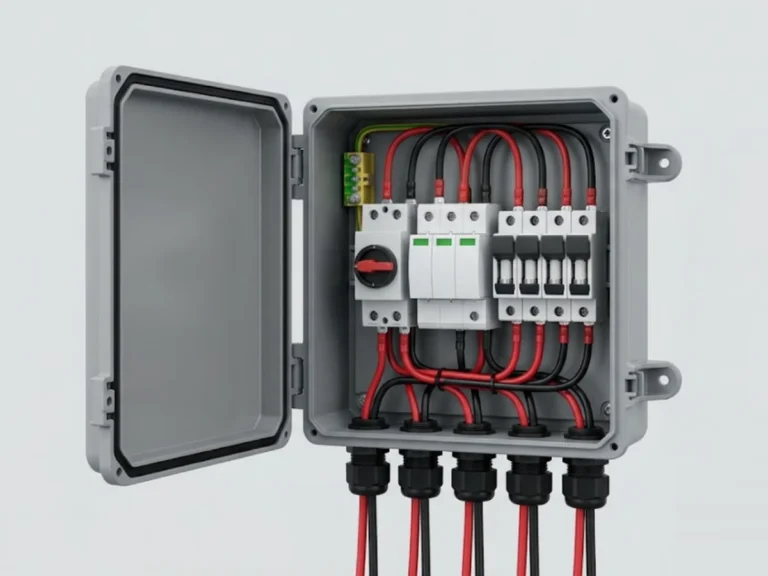
On requestWeatherproof boxes in the array field that combine PV strings with fuses and surge protection.
On requestDC-side boards that combine string inputs with protection before the inverter.
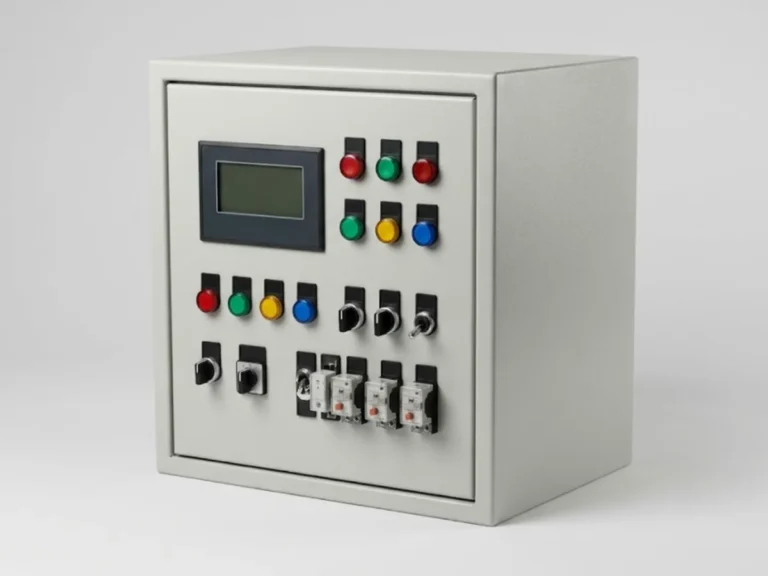
On requestControl panel built to your drawing for the NVR requirement of the installation.
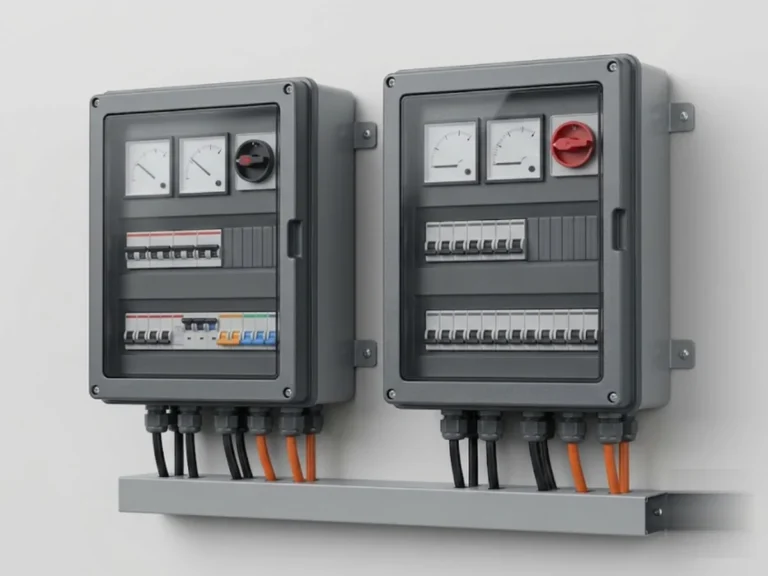
On requestCombined AC and DC distribution boards that protect and isolate the DC input and AC output of a...
On requestCrystalline-silicon photovoltaic modules for rooftop, ground-mount and utility plants.
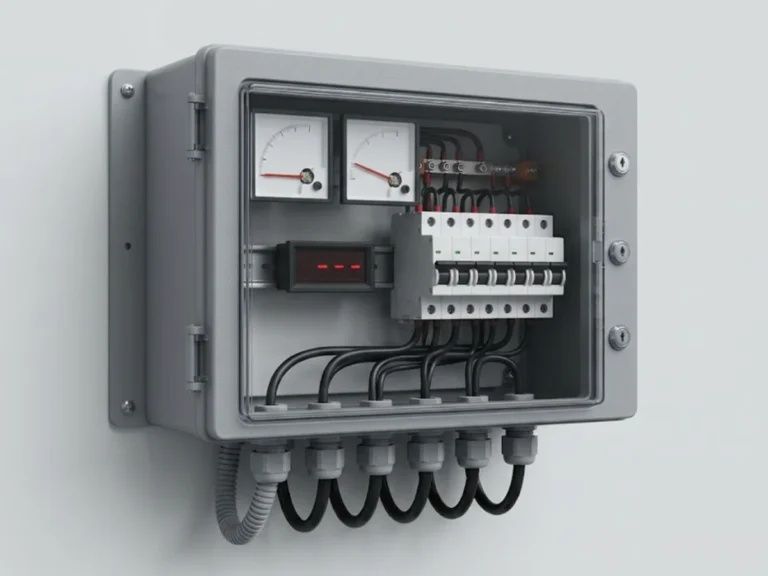
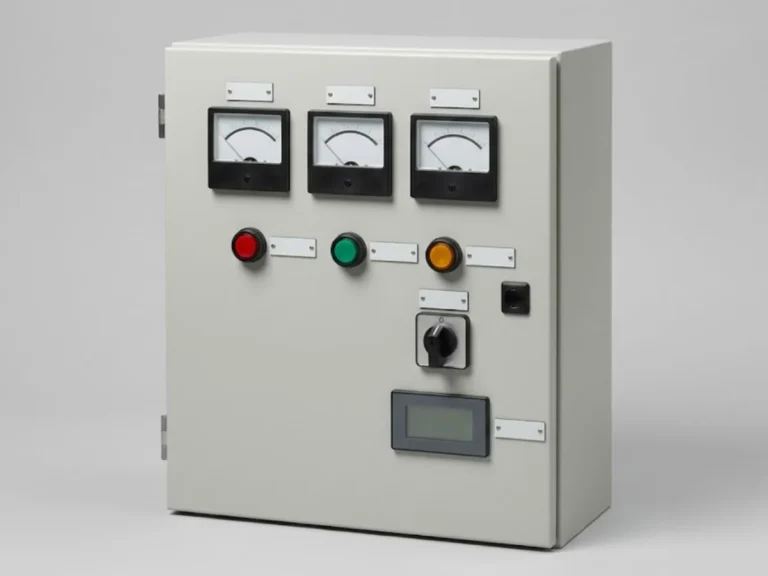
On requestMetering and monitoring panel built to your drawing for the TVM requirement of the installation.
On requestNo products match your filters. or ask our engineers.
This range covers the electrical equipment around a solar plant: solar panels, array junction boxes, AC combiner boxes, DC and AC distribution boards, combined solar ACDB and DCDB units and an 800 V LT panel. They are used on rooftop and ground-mounted plants for factories, institutions, water pumping and utilities.
Power flows in a fixed order. Strings of panels feed an array junction box, which combines strings with a fuse on each string, a DC surge protection device and an isolator. The DC distribution board brings several junction boxes to the inverter input. The inverter output goes to an AC combiner or AC distribution board before reaching the LT panel and the grid or load. Each stage has to be rated for the string voltage and fault current, and the DC side needs DC-rated fuses and isolators, because DC arcs do not extinguish at current zero the way AC arcs do.
When specifying, give:
Pair them with the solar inverters and PCUs and size the plant with the solar calculator. System design should be checked by a qualified engineer against the applicable PV standards.
It combines the outputs of several solar strings into one or more DC outputs and provides protection: a fuse on each string, DC surge protection and an isolator for safe disconnection. It is mounted near the array, so it must be weatherproof and UV-resistant. It also may house monitoring for string current.
The DC distribution board (DCDB) sits between the array and the inverter and handles DC protection and isolation. The AC distribution board (ACDB) sits after the inverter and handles AC protection, metering and connection to the load or grid. Each is rated for its own voltage and fault conditions, and DC and AC components are not interchangeable.
DC current has no natural zero crossing, so an arc is harder to extinguish than on AC. DC-rated fuses and switches are designed to break the arc at the stated voltage. Using AC-rated devices on a solar string can lead to sustained arcing and fire. Always check the DC voltage and current rating on the datasheet.
The string voltage must stay within the inverter's MPPT window at hot temperatures, and the open-circuit voltage at the coldest site temperature must stay below the inverter's maximum input voltage and the module system voltage. Then match the string count to the inverter current. The designer should check this with module and inverter datasheets.
PV modules are tested against IEC 61215 and IEC 61730, with Indian standards and BIS requirements applying to certain products, and inverters follow safety standards such as the IEC 62109 series. The plant design usually follows the project tender and DISCOM or MNRE requirements. Confirm the list that applies to your installation.
Type 1 SPDs handle direct lightning current at the service entrance, Type 2 sit at distribution boards and Type 3 protect sensitive equipment. Here is where…
6 min readSolar & Energy EfficiencyArray junction box, DCDB, AC combiner box and ACDB each protect a different stage of a solar plant; here is what they contain and how to…
6 min read