A good lug on a good cable is wasted if the crimp is poor. A loose crimp raises contact resistance, the joint heats under load, and over months it can burn the lug, the insulation or the terminal. The right tool for the conductor size and lug type is the cheapest insurance against that. This guide explains how to choose crimping tools, cable cutters and strippers.
How a good crimp works
A crimp compresses the lug barrel around the stranded conductor until the metal flows together, creating a gas-tight joint with low resistance. Three conditions have to be met:
- The lug barrel suits the conductor cross-section and material.
- The die shape and size match the lug barrel.
- The tool completes a full crimp cycle with enough force.
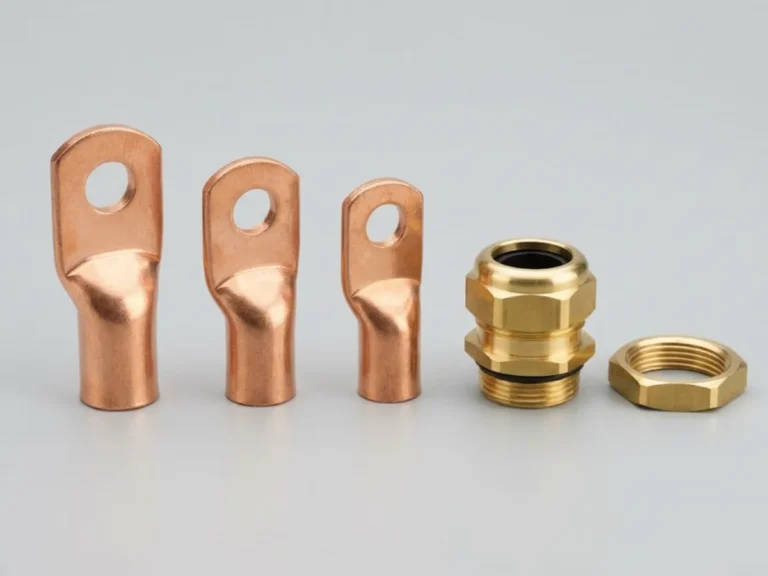
A lug is not interchangeable with another size just because it fits on the cable. Choose lugs from cable lugs and glands first, then select the tool that has dies for those sizes.
Crimping tool types
| Tool type | Typical conductor range | Best for |
|---|---|---|
| Hand crimper (plier type) | Small control wires and light sizes | Pin, ring and ferrule terminals on control wiring |
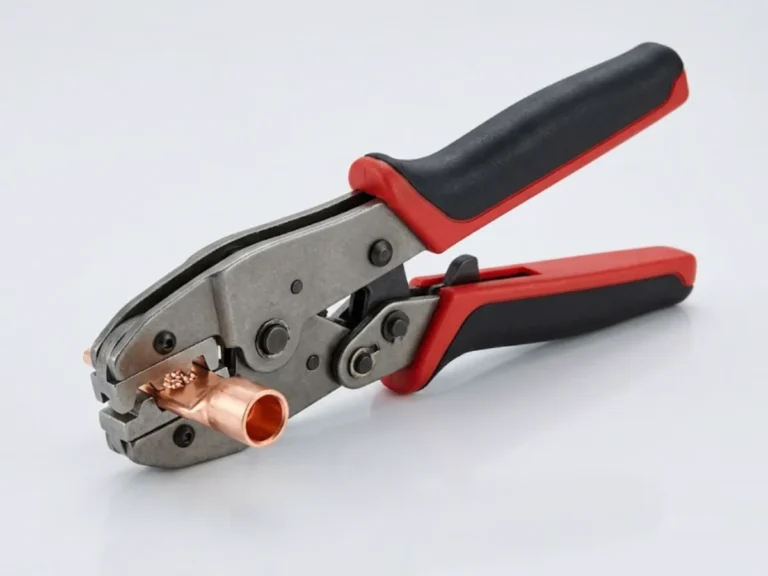
| Ratchet crimper | Small to medium sizes | Repeatable crimps on control wiring and small power cables; releases only after the full cycle |
| Mechanical lever crimper | Medium sizes | Site work on LT cable lugs where hydraulic tools are not available |
| Hydraulic hand crimper | Medium to large sizes, commonly up to 300 sq mm and beyond depending on model | Power cable lugs on feeders; most common site tool for LT power cable |
| Battery or electro-hydraulic crimper | Large sizes | High-volume work and large lugs; less operator effort |
The range in the table is indicative. Always read the tool’s specified conductor range and die list. See our crimping and termination tools.
Dies and crimp shape
Most power cable lugs are crimped with hexagonal dies; the die size is marked with the conductor area. Using the wrong die gives a loose or over-compressed joint. Some applications use indent or square crimps for control terminals. Check that the tool has the dies your lugs need, and that dies are clean and undamaged. For aluminium lugs, ensure the tool force and die type suit aluminium; aluminium work often needs more force or a different procedure than copper, and the lug maker may recommend an oxide-inhibiting compound.
What to look for when buying a crimper
- Range: cover the smallest and largest sizes you will crimp, with a comfortable margin on force.
- Die set: hexagonal dies for each size, stored in a case.
- Return mechanism: a safety release and a pressure relief that prevents over-pressing.
- Head design: a head that can work in cramped panel space.
- Build: forged steel body, oil-tight hydraulics and a handle with enough leverage.
Cable cutting and stripping tools
Cutters should cut cleanly without crushing the strands, because a distorted end makes lug insertion difficult.
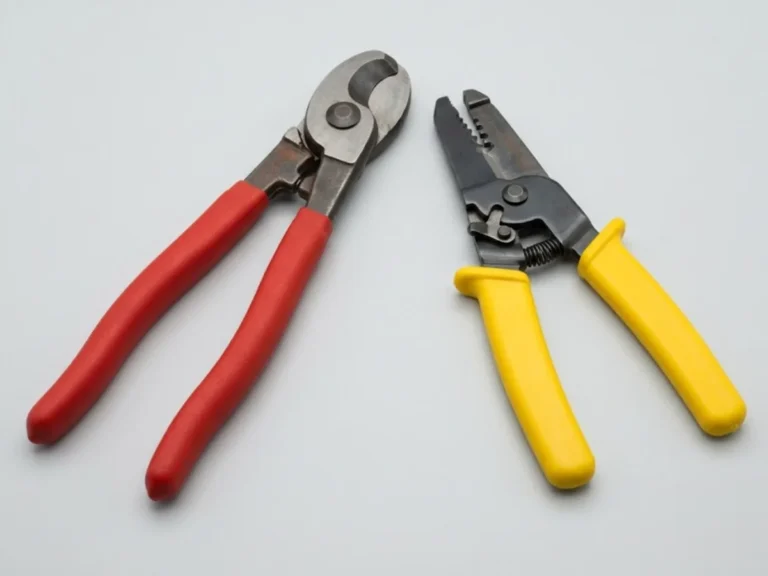
- Ratchet cable cutters: a ratcheting action cuts large copper or aluminium cable with modest effort. Check the maximum diameter and conductor type the cutter is rated for.
- Hydraulic cutters: for large power cable and armoured cable where hand force is not enough.
- Armour cutters and hacksaws: steel armour usually needs a dedicated tool or a hacksaw; do not use a copper-aluminium cable cutter on steel wire armour.
- Side cutters and insulated pliers: for small conductors and control wiring.
- Wire strippers and sheath strippers: adjustable strippers with depth control prevent nicking conductors. For large cables a sheath cutter or knife with a depth stop is used on the outer sheath, then the insulation is trimmed without cutting into the strands.
Browse cable cutting and stripping tools for these items. If you work on live circuits, tools should be insulated and marked for 1,000 V AC, and the electrical hand tools category lists the matching items.
Good crimping practice
- Cut the cable square; strip the insulation to the barrel length plus a small allowance.
- Do not nick or remove strands; do not twist them off to make them fit.
- Insert the conductor fully to the end of the barrel.
- Select the correct die and crimp from the lug palm end toward the open end, overlapping slightly if multiple crimps are specified.
- Check the crimp visually and confirm the die mark; fit the heat-shrink sleeve.
- Torque the bolted joint to the value the terminal maker states.
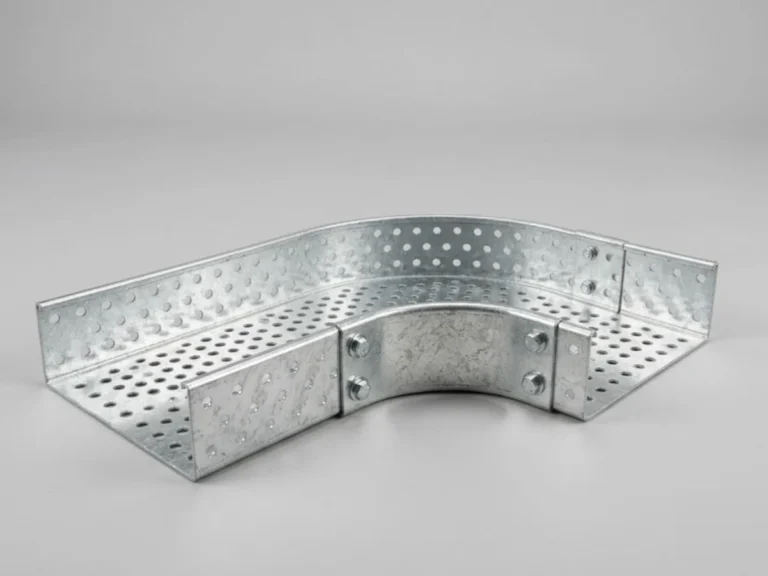
For an important feeder, ask your engineer to specify crimping depth checks or contact resistance tests. Accessories such as tray, glands and earthing complete the job; browse electrical hand tools and cable trays and accessories together when planning a cabling work package.
Tool care and checking a finished crimp
Keep dies clean and free of burrs, check hydraulic oil level and look for leaks, and store the tool in its case with the dies matched to it. A tool that has been dropped or overloaded should be checked before use. After crimping, look for a uniform, centred impression on the barrel with the die size mark visible, no cracks, and the conductor visible in the inspection hole if the lug has one. Give the cable a firm tug to confirm the lug does not slide. For critical feeders, a contact resistance reading across the joint is a reliable check.
Calibrate or service hydraulic tools on a schedule, since a weak relief valve can release before the full force is delivered. Never use a tool with a damaged handle or leaking cylinder.
What to send us for a quotation
Tell us the lug sizes and conductor material, the largest cable diameter, whether the work is on a site or a workshop bench, how many crimps per day, and whether insulated or battery tools are needed. Send the details through request a quote or contact us; we answer within 24 hours.
Frequently asked questions
Which crimping tool is best for power cable lugs?
For LT power cable from about 16 sq mm upwards, a hydraulic hand crimper with hexagonal dies is the usual site choice. Battery-operated hydraulic tools help for many or large lugs. Check that the tool's rated range covers your largest lug, includes the right dies, and has a full-cycle release so every crimp is completed properly.
Can I use the same crimping tool for copper and aluminium lugs?
Often the tool can, if the dies and force suit both, but aluminium usually needs more care. Lugs for aluminium may have a different barrel and often an oxide-inhibiting compound. Follow the lug manufacturer's instructions for die size and number of crimps, and never use a tool outside its stated range for the conductor.
Why must a crimp tool complete its full cycle?
An incomplete crimp leaves the barrel under-compressed, so the joint has higher resistance and heats under load. Ratchet and hydraulic crimpers are built so they cannot release until the full cycle is done, which makes each crimp repeatable. If the tool releases early or the dies do not close fully, stop and have the tool serviced before using it again.
Can I cut armoured cable with a ratchet cable cutter?
Ratchet cutters for copper and aluminium conductors are not designed for steel wire or strip armour and can be damaged. Remove the armour with a dedicated armour cutter or a hacksaw, taking care not to nick the inner insulation, then cut the conductors with a suitable cutter. Always check the maximum diameter and the material the cutter is rated for.