Cable Trays & Accessories
Cable Trays & Accessories
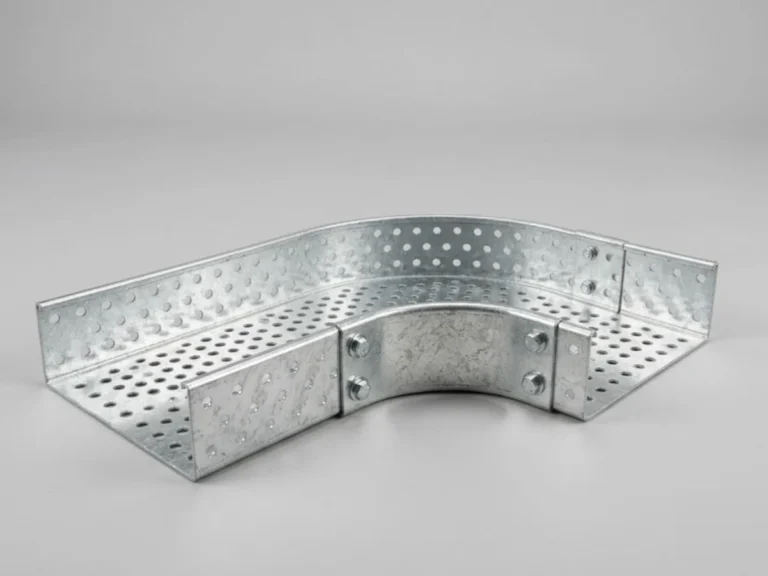
Perforated, ladder and wire-mesh trays with bends, tees and supports.
On request- StandardIEC 61537
Download specification sheet (PDF)
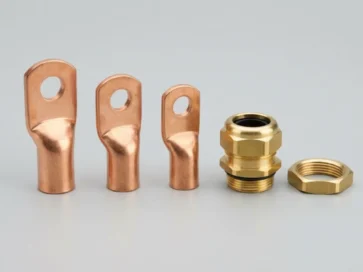
Crimp lugs and cable glands for terminating power and control cables.
Every field is optional - tell us what you know and we will confirm the rest in the quotation.
Representative image. The actual product, make and appearance depend on the supplier and your specification.
Also searched as: cable lugs, copper cable lug, aluminium cable lug, cable glands, armoured cable gland, lugs and glands for cable termination
A termination is only as good as the match between conductor, lug and tool. Pick the lug by conductor cross-section in mm² and material, and use the hole size that fits the terminal stud or bolt. Copper conductors take copper (usually tinned) lugs; aluminium conductors need aluminium lugs, and where aluminium meets a copper bus or terminal use a bi-metallic lug or a suitable joint compound as per the supplier's guidance.
Typical faults are undersized lugs on stranded conductors, the wrong crimp die, and missing armour clamping. Use matching crimping and termination tools and check that every crimp is complete before energising.
Ratings, dimensions and certification are confirmed against your enquiry. Use Send an enquiry and our engineers will respond within 24 hours.
Not directly. Copper and aluminium together can corrode and heat up at the joint. Use an aluminium lug, or a bi-metallic lug where the cable meets a copper surface, together with the jointing practice recommended by the manufacturer. Confirm the arrangement with your site engineer.
Measure the outer diameter of the cable over its sheath, and for armoured cable also the armour type and wire diameter. Pick the gland whose range covers both, then match the entry thread of the enclosure. Mention hazardous-area zone and ingress protection needs when you request a quotation.
A cable lug is crimped on the conductor end so that it can be bolted to a terminal or busbar. A cable gland is fitted at the entry of an enclosure and holds the cable, seals the entry and, for armoured cable, can provide earth continuity of the armour.
A cable lug gives a secure, low resistance connection between a conductor and a terminal, busbar or equipment stud. It is crimped on the stripped conductor and then bolted down. The lug must match the conductor size, material and the hole size of the terminal.
For a lug, match the cable cross-section, conductor material (copper or aluminium) and bolt hole size. For a gland, match the cable type (armoured or unarmoured), the cable outer diameter, the entry thread size and the required IP protection.
Send the cable size and type, conductor material, lug hole size, gland thread size and type, protection degree and quantity. Mention the make if you have a preference. SKE Bharat will prepare a quotation from these details.
| Product Type | Cable lug / gland |
|---|---|
| Standard | IS 8309 (lugs), IEC 62444 (glands) |
| Selection Basis | Cable size, conductor material (Cu / Al), hole size, gland thread and type (armoured / unarmoured), IP |
| Typical Use | Cable terminations |
Perforated, ladder and wire-mesh trays with bends, tees and supports.
On requestEarthing electrodes, strips, earth pits and accessories for earthing and lightning protection.
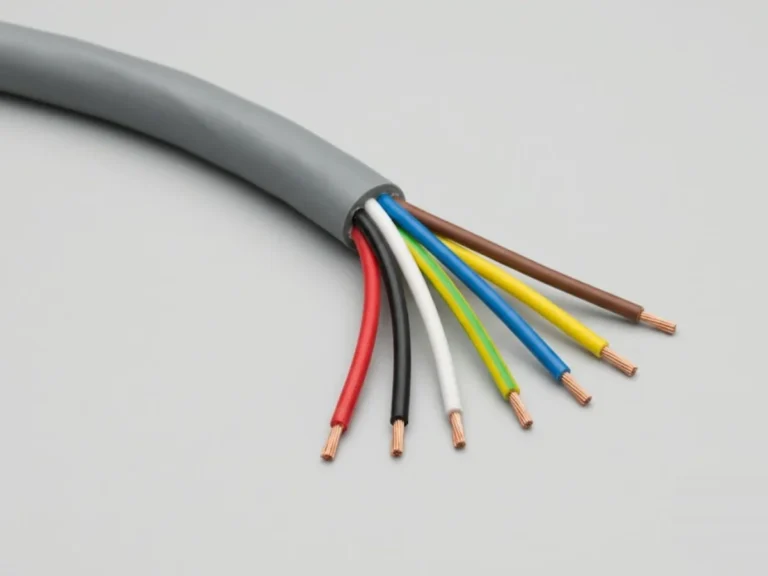
On requestMulticore cables for control, interlock and signal wiring between panels, drives and field devices.
On requestPower cables for carrying electricity from supply to loads, in LT and HT grades with copper or aluminium...
On requestA practical guide to earthing in industrial plants: electrodes, earth pits, strips and conductors, resistance testing and what the IS 3043 code of practice covers in…
7 min readTransformers & Power QualityDecode the vector group on a transformer nameplate: what Dyn11, Dyn1 and YNyn0 mean, how the 30 degree phase shift works and why it matters for…
6 min readPumps, Cables & Buying GuidesHow to match lugs to conductors, glands to cable types and trays to the route, so terminations stay tight and cable runs stay safe and tidy.
7 min read