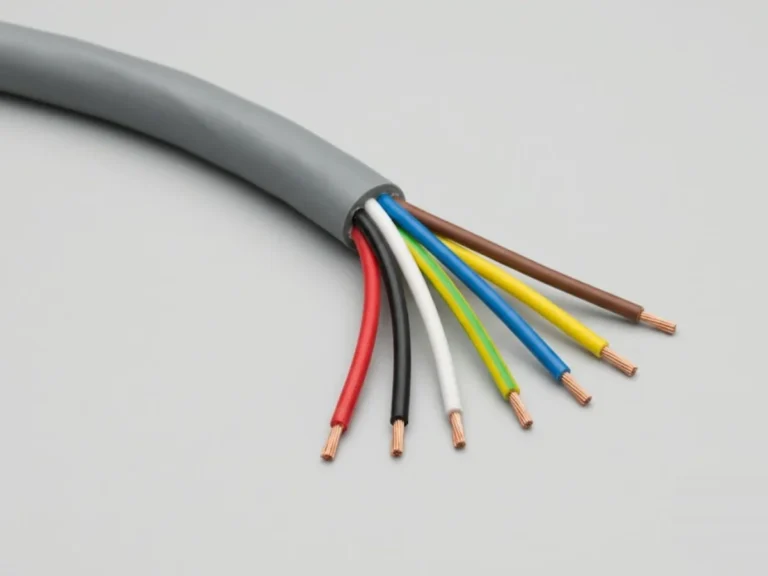

Cable Lugs & Glands
Cable Lugs & Glands
Crimp lugs and cable glands for terminating power and control cables.
On request- StandardIS 8309 (lugs), IEC 62444 (glands)
Download specification sheet (PDF)
Perforated, ladder and wire-mesh trays with bends, tees and supports.
Every field is optional - tell us what you know and we will confirm the rest in the quotation.
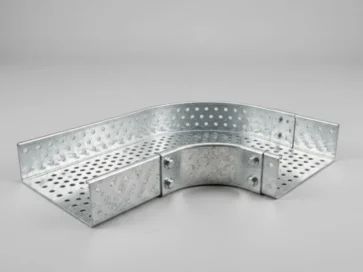
Representative image. The actual product, make and appearance depend on the supplier and your specification.
Also searched as: cable tray, perforated cable tray, ladder type cable tray, wire mesh cable tray, GI cable tray and fittings, cable tray bends and tees
Pick the tray type from what the route has to do. Perforated trays suit mixed power and control cables and give ventilation, ladder trays carry heavy armoured cables over long supports, and wire-mesh trays are quick to install for light data and control runs.
Common mistakes: mixing LT power with instrument cables in one compartment without a barrier, no earth continuity across tray joints, and missing bend radius for large cables. Order bends, tees, reducers, couplers and covers in the same system as the straight lengths so the profile and finish match. For terminations, see cable lugs and glands.
Ratings, dimensions and certification are confirmed against your enquiry. Use Send an enquiry and our engineers will respond within 24 hours.
A perforated tray has a solid base with punched holes and supports cables continuously, which suits smaller and mixed cables. A ladder tray has two side rails with rungs and handles heavier cables over longer spans with better ventilation. The choice follows cable weight, span between supports and the environment.
Metal trays should be bonded to the earthing system and kept electrically continuous across joints, using bonding links where the coupler does not guarantee it. The exact method depends on the installation design, so confirm it with the project's electrical engineer.
Accessories are the parts used with straight tray lengths to complete a run, such as bends, tees, reducers, couplers, covers and supports. They let the tray change direction, branch or reduce width, and they fix the tray to walls, ceilings or structures.
The common types are perforated tray, ladder tray and wire-mesh tray. Perforated tray has a solid base with holes, ladder tray has side rails with rungs, and wire-mesh tray is made of welded wire. The choice depends on the cable load, ventilation and site conditions.
Choose by the width and depth needed for the cables with some spare space, the material thickness for the load and support spacing, the finish such as pre-galvanised, hot-dip galvanised or powder-coated, and the tray type. Indoor and outdoor or corrosive areas need different finishes.
Send the tray type, width, depth, thickness, finish and length required, with the quantity of bends, tees, covers and supports. A cable schedule or route sketch helps in listing the fittings correctly. SKE Bharat will prepare a quotation from these details.
| Product Type | Cable tray |
|---|---|
| Standard | IEC 61537 |
| Selection Basis | Width and depth, thickness, finish (pre-galvanised / hot-dip / powder-coated), type (perforated / ladder), accessories |
| Typical Use | Cable routing and support |
Crimp lugs and cable glands for terminating power and control cables.
On requestEarthing electrodes, strips, earth pits and accessories for earthing and lightning protection.
On requestMulticore cables for control, interlock and signal wiring between panels, drives and field devices.
On requestPower cables for carrying electricity from supply to loads, in LT and HT grades with copper or aluminium...
On requestA practical guide to earthing in industrial plants: electrodes, earth pits, strips and conductors, resistance testing and what the IS 3043 code of practice covers in…
7 min readTransformers & Power QualityDecode the vector group on a transformer nameplate: what Dyn11, Dyn1 and YNyn0 mean, how the 30 degree phase shift works and why it matters for…
6 min readPumps, Cables & Buying GuidesHow to match lugs to conductors, glands to cable types and trays to the route, so terminations stay tight and cable runs stay safe and tidy.
7 min read