When a project specifies a dry-type transformer, the next question is usually which winding technology to use. The two common choices are cast resin and VPI (vacuum pressure impregnated). Both are air-cooled, have no oil and are used indoors. They differ in how the coils are insulated, which changes how they behave in damp, dusty or corrosive rooms, how they cope with short circuits, and what they cost.
How the two are built
Cast resin
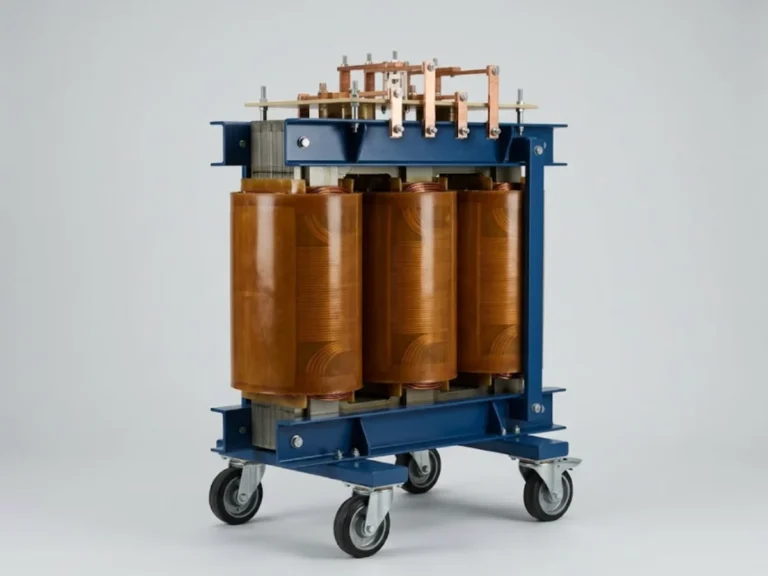
The HV winding (and usually the LV) is cast in epoxy resin under vacuum so that the entire coil becomes a solid, void-free block. The resin is often filled with a mineral filler such as quartz or alumina to improve strength and fire behaviour. The result is a coil sealed from the room air. See our resin cast transformers.
VPI
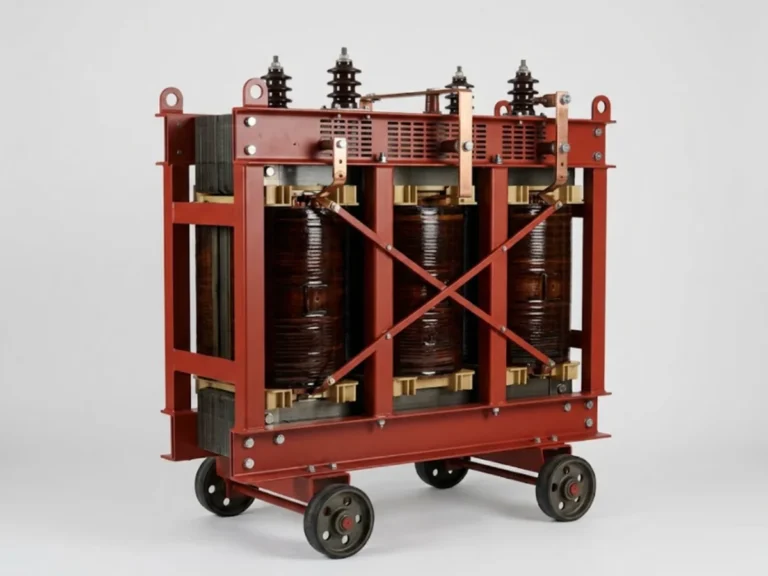
The windings are made from insulated conductor with insulating sheets, then the whole coil is placed in a vacuum chamber, impregnated with a varnish or resin and baked. The coil is coated and impregnated, but not fully encapsulated; the winding surface is exposed to the air. See our VPI transformers.
Comparison
| Factor | Cast resin | VPI |
|---|---|---|
| Winding protection | Fully encapsulated in resin | Impregnated and coated, partly exposed |
| Humidity and condensation | Handles damp and condensation well | Needs a drier room or space heaters during idle periods |
| Dust and pollution | Sealed coils are easier to live with, still need cleaning | Dust and conductive deposits on open coils are a risk |
| Corrosive or coastal air | Better suited | Less suitable without protective enclosure |
| Short-circuit strength | Strong, rigid coil block | Good, depends on design |
| Fire performance | Low fire load; typically self-extinguishing | Low fire load; varnish systems vary |
| Cost | Higher | Lower |
| Repair | Hard to repair a damaged coil; usually replaced | Easier to rewind or recoat |
| Voltage and rating range | Common in medium-voltage distribution range | Common at lower ratings and voltages |
The classification that matters: E, C and F
The international standard for dry-type transformers classifies them by environment (E0, E1, E2), climate (C1, C2) and fire behaviour (F0, F1). In plain terms, a higher E class tolerates condensation and pollution, a C2 class tolerates low ambient temperatures at start-up and transport, and F1 means the transformer has been tested for fire behaviour. Cast resin units are commonly offered as E2, C2, F1. Ask the manufacturer which class applies to the model you are quoted and ask for the test evidence, rather than accepting a general statement.
Temperature class and loading
Both types are built with insulation classes such as F or H, which define the permitted winding temperature rise. A unit with a lower temperature rise has some thermal headroom for overload and higher ambient conditions; one designed close to its limit does not. Two offers of the same kVA can differ here, so compare temperature rise, class of insulation and guaranteed losses. Fan cooling (AF) can raise the short-term rating, but it is not a substitute for a correctly sized unit. AN and AF are the two cooling codes for dry-types: air natural and air forced.
Where each fits
- Cast resin: choose when the room is humid, the plant is coastal or in a polluted area, the transformer is in a basement or near cooling towers, the building is a hospital, metro or tunnel with strict fire and reliability norms, or the unit will be switched on and off frequently.
- VPI: choose when the room is clean, dry and air-conditioned or well ventilated, budget is tight, or a lower-voltage dry-type is adequate. Typical uses include electrical rooms in commercial offices and clean industrial floors.
- Neither: choose oil-immersed when the unit is outdoors, very large, or in a high-pollution yard. See the detailed comparison under oil-immersed and dry-type transformers.
Practical issues that catch buyers out
- Ventilation. Dry-types lose heat to room air. A room that is not ventilated will raise the ambient temperature and derate the transformer. Plan the air path and the exhaust.
- Protection. Dry-type transformers rely on winding temperature sensors (PT100 or PTC) and a temperature controller to alarm and trip. Do not omit them.
- Enclosure. A protective enclosure with an IP rating suitable for the room (for example IP21 or IP23, depending on the location) guards against touch and dripping. Confirm the rating needed.
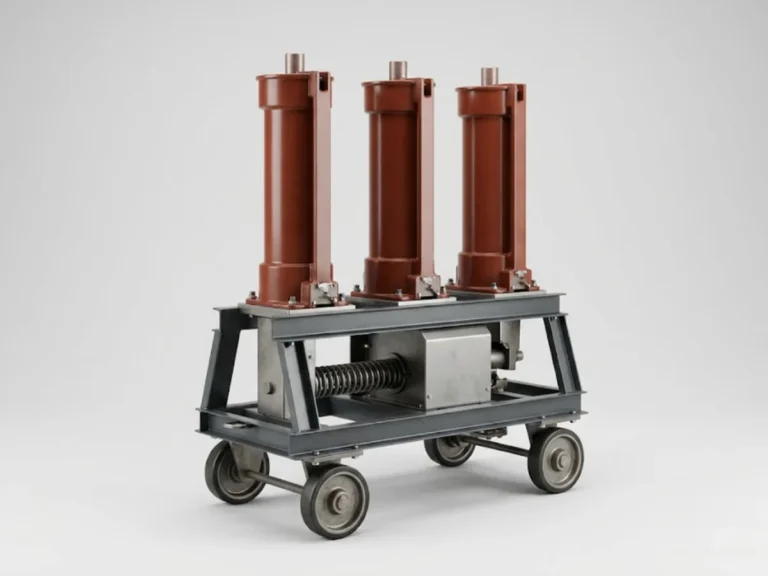
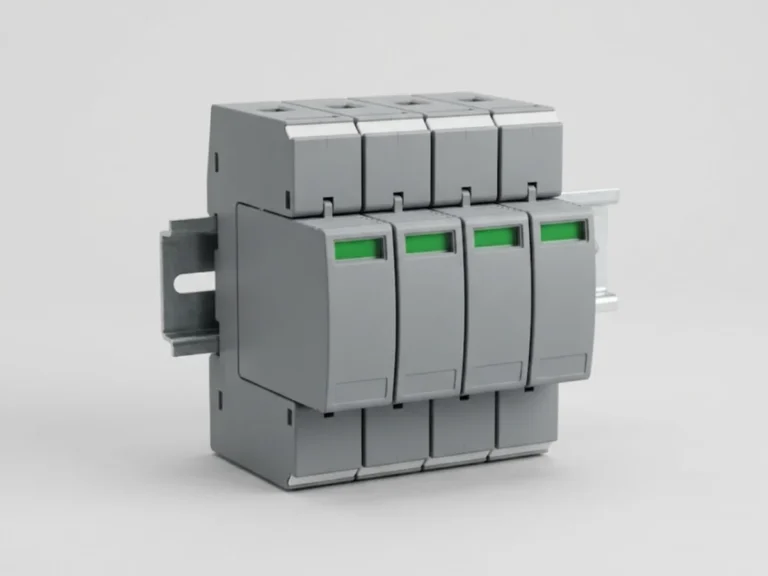
- Surge protection. Cast resin and VPI windings have different impulse behaviour in vacuum breaker switching. When fed through a VCB, discuss RC snubbers or surge arresters with the manufacturer, and see our surge protection devices.
- Idle periods. A VPI transformer left de-energised in a damp room can absorb moisture; use space heaters or an insulation resistance check before energising.
- Noise. Both types can be noisier than oil-immersed at the same rating, especially with fans. Check dB figures for rooms near occupied areas.
How to decide quickly
- Is the room clean, dry and temperature-controlled? If yes, VPI may be enough.
- Is there humidity, dust, salt or chemicals, or occupied space above? Lean to cast resin.
- Do you need to meet a hospital, high-rise or tender specification? Follow its named class and fire rating.
- Is life-cycle cost important? Compare guaranteed losses and the cost of any ventilation or enclosure needed, along with the purchase price.
You can also compare against an overall dry-type transformer offer or the larger distribution transformer range, and browse the full transformers category.
What to send us for a quotation
Send the kVA, HV and LV voltage, vector group, impedance, class of insulation, enclosure IP degree, location conditions (humidity, dust, altitude, ambient) and whether you want temperature controllers and fans. Use request a quote or contact us. For indoor installation, fire and ventilation, confirm the design with a qualified engineer.
Frequently asked questions
What is the main difference between cast resin and VPI transformers?
Cast resin coils are fully encapsulated in epoxy resin under vacuum, so the winding is sealed from room air. VPI coils are vacuum-impregnated with varnish or resin and baked, but the surface is still exposed. Cast resin tolerates humidity, dust and corrosive air better and costs more.
Is a cast resin transformer better than a VPI transformer?
It depends on the room. In damp, dusty, coastal or corrosive locations cast resin is the safer choice. In a clean, dry, ventilated electrical room, VPI can do the job at lower cost and is easier to repair. Choose by environment and by the class stated by the manufacturer.
Do dry-type transformers need special protection?
Yes. They normally have winding temperature sensors with a controller for alarm and trip, and are often protected against switching surges when fed by a vacuum circuit breaker. They also need proper room ventilation. Specify these items at ordering and confirm the protection scheme with a qualified engineer.
Can dry-type transformers be used outdoors?
Not without a suitable enclosure and the correct environmental class. Cast resin is more tolerant, but most outdoor installations still use oil-immersed units or a compact substation. If you must install a dry-type outdoors, ask the manufacturer for an enclosure and IP rating suited to your site.