Most factories know what the electricity bill says at month end. Few know when the cost was created: which shift, which machine, which hour. Energy monitoring closes that gap by measuring electrical parameters continuously, at the incomer and at the loads that matter, and by keeping the history. The aim is not to collect data for its own sake. It is to find idle consumption, demand peaks, poor power factor and abnormal machine behaviour while they can still be corrected.
This guide lists what to measure, at which point in the plant, and what each measurement is good for. SKE Bharat supplies meters, current transformers, power analysers, communication gateways and power factor equipment, along with a monitoring offering described below. Treat the following as planning guidance and have a qualified engineer confirm meter ratings and wiring.
Start with the questions you want answered
Before choosing meters, write down what you want to know. Typical questions:
- How much of our energy is used when the plant is not producing?
- What causes our maximum demand peak, and at what time?
- Are we losing money on low power factor?
- Which department or line uses the most energy per unit produced?
- Is any motor, compressor or furnace drawing more than it should?
The questions decide the measurement points. Metering every outgoing feeder is expensive; metering the incomer plus the largest ten loads often answers most of them.
What to measure
| Parameter | What it tells you | Typical action |
|---|---|---|
| Energy (kWh, kVAh) | Total consumption by period; kVAh matters if you are billed on it | Compare shifts, days and lines; set baselines |
| Demand (kW, kVA) | The peak that drives demand charges | Stagger large motor starts; shift loads out of the peak |
| Power factor | How much reactive power you draw | Check APFC operation and capacitor health |
| Voltage and current per phase | Supply quality and phase unbalance | Rebalance single-phase loads; investigate under or over voltage |
| Frequency | Generator or grid behaviour | Review genset governor and changeover |
| Harmonic distortion (THD) | Presence of non-linear loads | Plan filters or detuned capacitor banks |
| Machine state: running, idle, off | Links energy to production activity | Cut idle running; schedule shutdowns |
| Production count or tonnage | Lets you compute energy per unit | Track specific energy consumption over time |
Where to measure
1. Incomer and transformer
The main incomer gives the plant’s kWh, kVA demand and power factor, and is the number your utility bills. Use a multifunction meter or power analyser here. It captures current, voltage, power, power factor, demand and often harmonics. If you have several transformers, meter each one.
2. Major feeders and departments
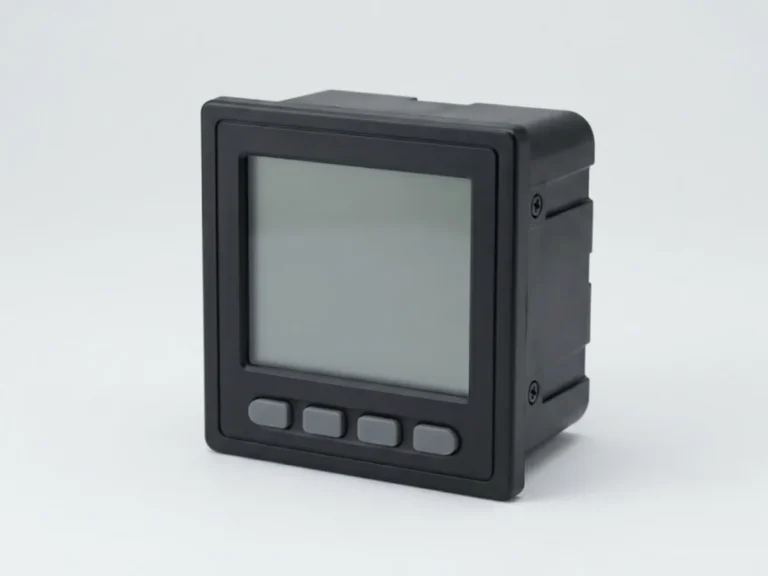
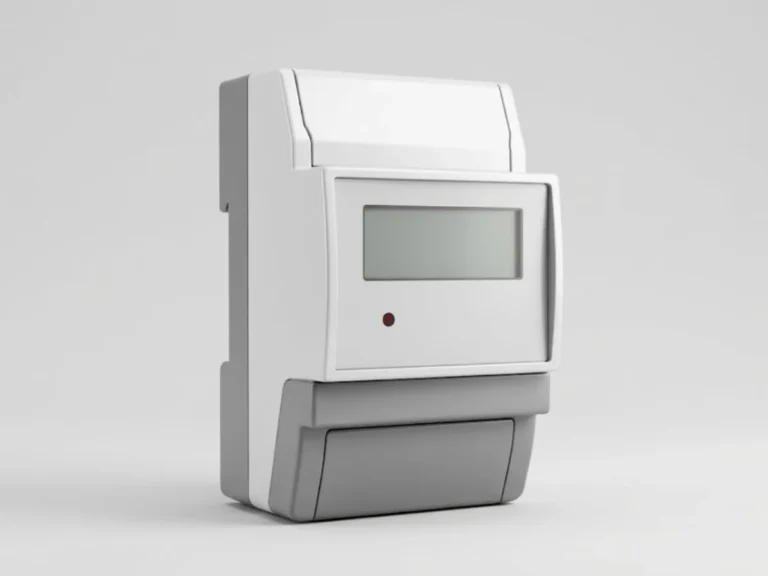
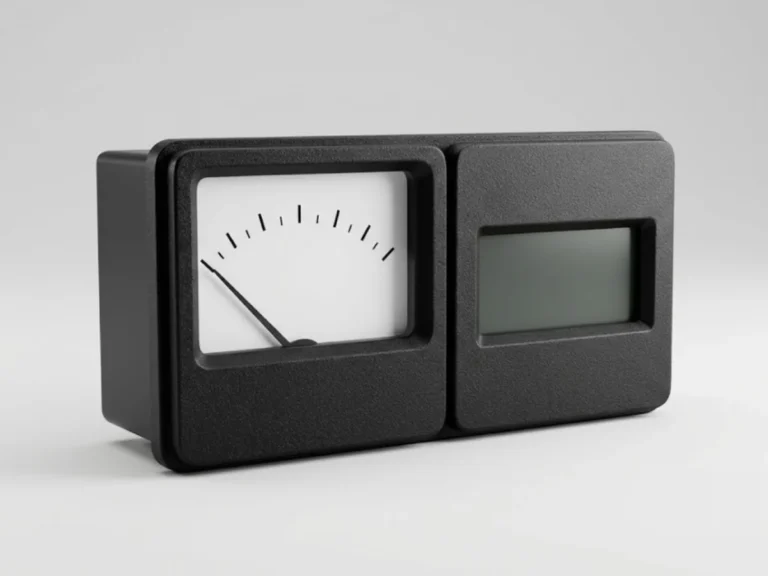
Meter the outgoing feeders to each department or MCC. Standard energy meters are enough where you only need consumption; multifunction meters are better where you also want power factor and demand. Panel meters are covered under analogue and digital panel meters.
3. Large individual machines
Compressors, chillers, furnaces, large motors and pumps are worth separate meters, as these are often the biggest controllable loads. Check them against machine state. A compressor that draws 60 per cent of full-load power while unloaded is a typical finding. A motor that is over-sized or lightly loaded can often be improved with a VFD or soft starter; the VFD energy savings calculator gives a first estimate.
Hardware you will need
- Current transformers. For currents above what a meter handles directly, CTs are used. Choose the ratio so that normal load falls in the upper part of the CT range, and use an accuracy class suitable for metering. Never open-circuit a live CT secondary.
- Meters with communication. Look for RS-485 Modbus or Ethernet outputs, so that readings can be collected automatically. Manual meter reading cannot give you a load profile.
- Gateways. Industrial Ethernet switches and gateways link serial meters to the network.
- Power supply and enclosure. Use DIN-rail power supplies and a properly labelled panel. Keep voltage sensing leads fused.
Choose the logging interval to suit the purpose. Short intervals reveal demand peaks and motor starting behaviour. Longer ones are fine for daily and monthly trends. Whatever you choose, make sure the data is time-stamped and kept long enough for comparison.
First 90 days: a practical plan
- Meter the incomer and the biggest loads first.
- Collect data for at least a few normal weeks. Note shift timings, holidays and shutdowns.
- Find the non-production baseline: energy used at night and on holidays.
- Locate the peak demand time and the machines starting then.
- Check power factor against your billing and the capacitor bank condition. Read our power factor calculator if you need to size correction.
- Fix the simple items first, then decide where more sub-metering is worth it.
Any energy-saving figure should come from your own measured baseline, not a generic percentage.
Linking energy to machine data
Energy numbers become much more useful when they are tied to machine status and production. SKE Bharat’s Digital Shopfloor is an energy and machine monitoring solution for factories, which puts these readings alongside machine activity. If you are planning a monitoring project, tell us what you already have and we can advise on the metering side. The same data also helps when you size solar; see estimating solar system size.
What to send us for a quotation
Send a single-line diagram or list of feeders to be metered, current ratings, system voltage, the parameters wanted, communication protocol preference, and the number of machines for sub-metering. Use request a quote or contact us; we reply within 24 hours.
Frequently asked questions
What should a factory measure first for energy monitoring?
Start at the main incomer: kWh, kVA demand and power factor, because these decide your bill. Then add meters on the largest loads such as compressors, chillers, furnaces and big motor feeders. Record machine state alongside energy so you can separate productive consumption from idle running.
What is the difference between kWh and kVAh?
kWh measures real energy used. kVAh measures apparent energy, which includes the reactive component caused by poor power factor. Some utilities bill industrial consumers on kVAh, so a low power factor directly raises the bill. Check which one your tariff uses and monitor power factor accordingly.
Do I need a multifunction meter or an ordinary energy meter?
Use an ordinary energy meter where you only need consumption. Use a multifunction meter or power analyser at the incomer and on important feeders, where you also need demand, power factor, per-phase values and harmonics. Meters with Modbus or Ethernet output make automatic logging possible.
How long should energy data be collected before acting?
Collect at least a few normal weeks covering all shifts, a holiday or shutdown and typical production variation. This shows the non-production baseline and repeating demand peaks. Quick fixes can start earlier, but any claim of savings should be compared against your own measured baseline.