Two identical batteries bought on the same day can be dead in year three or still going strong in year seven. The difference is almost always how they were charged, kept cool and checked. Most failures we hear about trace back to a short list of causes: dry cells, loose terminals, wrong charger setting, heat and deep discharge. This guide gives you the routine that avoids them, for both home inverter batteries and industrial standby banks.
Water, charging and depth of discharge
Keep the electrolyte right (flooded batteries)
- Top up only with distilled or demineralised battery-grade water, never tap water or acid.
- Top up after charging, not before, because electrolyte rises while charging. The level should reach the mark indicated on the container or sit just above the plates, as the manufacturer states.
- Do not overfill, since acid will overflow and corrode the terminals and the stand.
- Frequency depends on usage, ambient temperature and charger setting; many home users find monthly checks sensible, then adjust.
- Never add acid to a battery in service unless the maker instructs it.
Sealed VRLA and SMF batteries have no water to add. Do not try to open them.
Get the charging right
Under-charging causes sulphation, where hard lead sulphate builds on the plates and permanently reduces capacity. Over-charging boils off water or dries VRLA cells. Check that:
- The inverter or charger is set for the correct battery type (flooded, VRLA/SMF, lithium) if it has such a selection.
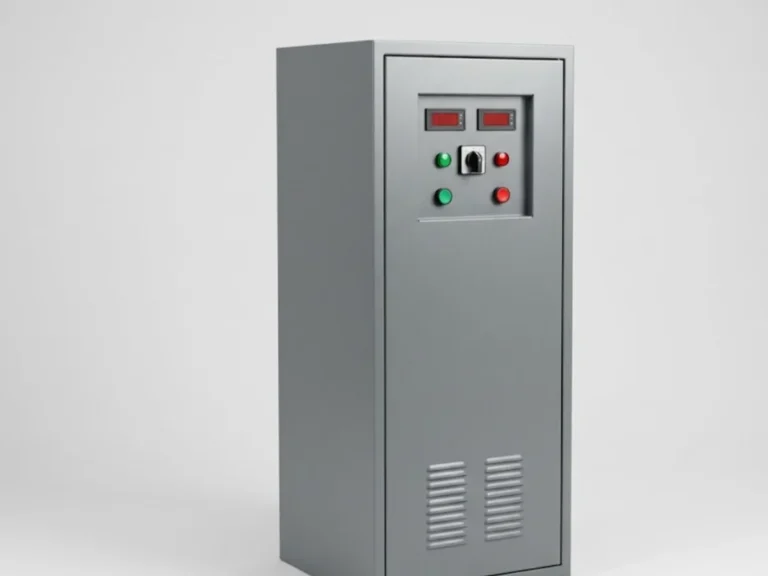
- Float and boost voltages match the manufacturer’s values. For industrial banks, use a temperature-compensated charger. Our article on float, boost and trickle charging covers the stages.
- The bank is fully recharged after each long outage. A battery that never reaches full charge wears early.
Avoid deep discharge
Running a lead-acid battery flat shortens life sharply. Switch off non-essential loads in a long cut, and fit a correctly sized bank so the normal load only uses a moderate part of the capacity. Recharge promptly after deep discharge rather than leaving the battery sitting empty. Our worked example on backup time shows how to size for a comfortable depth of discharge.
Temperature, terminals and bank hygiene
Control temperature
Heat is the biggest hidden battery killer. A widely quoted rule of thumb is that life roughly halves for every 8 to 10 degrees C above 25 degrees C. Practical steps:
- Place batteries in a shaded, ventilated spot, away from walls that get afternoon sun, gensets, and cooking areas.
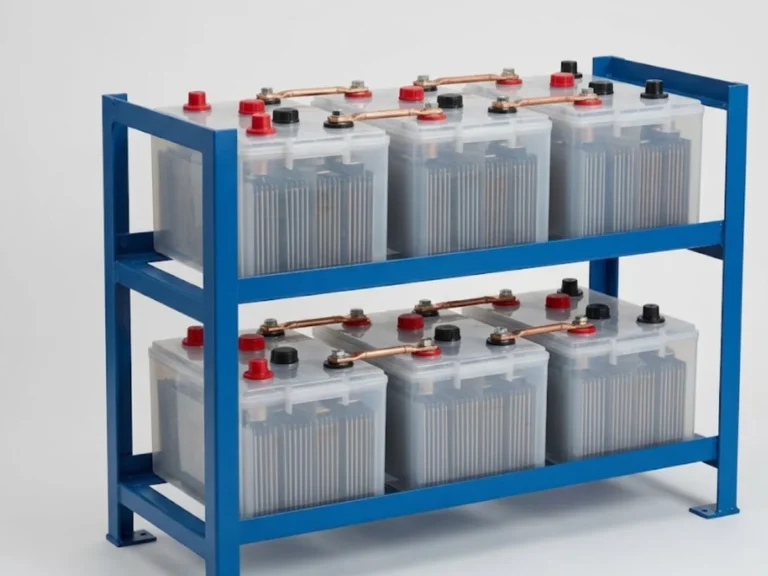
- Leave air gaps between batteries in a bank so heat can escape.
- Do not stack batteries in a closed, unventilated cupboard.
- In battery rooms, keep room temperature stable and ventilation working.
Keep terminals clean and tight
- Clean white or green corrosion with a brush and a baking-soda solution, taking care that none enters the cells, then dry.
- Retighten connections to the torque the manufacturer gives; loose links heat up and waste energy.
- Apply a thin coat of petroleum jelly or terminal grease after cleaning.
- Use correctly sized cables and lugs of the same quality at both ends.
Do not mix batteries
Do not combine new and old, different capacities or different makes in one bank. The weakest battery sets the pace for the others. Replace the entire bank together. The same applies inside industrial strings: replace weak cells only if the maker and a qualified engineer allow it, and never mix lithium with lead-acid.
Measure and log
A logbook is the cheapest maintenance tool. A simple schedule:
| Interval | Flooded | VRLA / SMF |
|---|---|---|
| Monthly (home) or per site routine (industrial) | Electrolyte level, visual check, terminal condition, bank float voltage | Visual check for bulging or leakage, bank float voltage, temperature |
| Quarterly | Specific gravity of sample cells, corrected for temperature; cell voltages | Cell or block voltages, internal resistance or conductance where instruments exist |
| Annually | Torque check, cleaning, capacity test per site practice | Torque check, capacity test per site practice |
Use the manufacturer’s fully charged specific gravity and cell voltage values as the benchmark. Record every reading with date, so a gradual trend is visible before it becomes a failure. A common replacement trigger for standby batteries is when tested capacity drops to about 80 per cent of rated, but your specification governs.
Store and handle batteries safely
- Spare batteries that are stored need periodic freshening charges as the maker advises, since lead-acid self-discharges.
- Keep batteries upright and dry.
- Hydrogen is released during charging of flooded cells, so avoid sparks, naked flames and smoking near the bank.
- Wear gloves and eye protection while handling electrolyte. We supply insulated hand gloves and safety helmets and PPE for work at battery rooms.
- Use insulated tools and remove metal jewellery when working on batteries.
Know when to replace
Signs include much shorter backup than before, a battery that gets hot, bulging or cracked containers, electrolyte that discolours, a battery that will not hold voltage after charging, and cells with consistently low gravity. A battery that is past its useful life can fail without warning during the next outage, so replace it on schedule instead of waiting.
See the batteries range, with home inverter batteries and industrial and standby batteries. Check your bank size with the battery backup calculator.
What to send us for a quotation
For a replacement or a new bank, send the existing battery make, voltage, Ah, number of units, age and the load or inverter details. Submit them through request a quote or contact us via contact us; we answer within 24 hours.
Frequently asked questions
How often should I add water to my inverter battery?
It depends on temperature, charger settings and usage, but many users check monthly and top up when the level approaches the minimum mark. Use only distilled or demineralised water, top up after charging, and keep records. Sealed SMF or VRLA batteries do not need water.
Can I use tap water or acid to top up the battery?
No. Tap water carries minerals that damage plates, and adding acid raises concentration and harms the battery. Only water is lost during normal use, so top up with distilled or demineralised water. Add acid only when the manufacturer specifically instructs it.
Does keeping the battery fully charged all the time harm it?
Not if the charger holds the correct float voltage. Lead-acid batteries are designed to sit on float charge. Problems come from incorrect voltage, excessive heat, or never reaching full charge. Use a charger with settings matched to the battery type and temperature.
How can I tell if my battery is nearing end of life?
Look for a clear fall in backup time, voltage collapsing under load, a battery that heats up or swells, repeated low-voltage alarms, and gravity or cell-voltage readings that differ strongly from the others. A capacity test confirms it. Plan replacement before the next long outage.