Battery Chargers & DC Power Supplies
Battery Chargers & DC Power Supplies
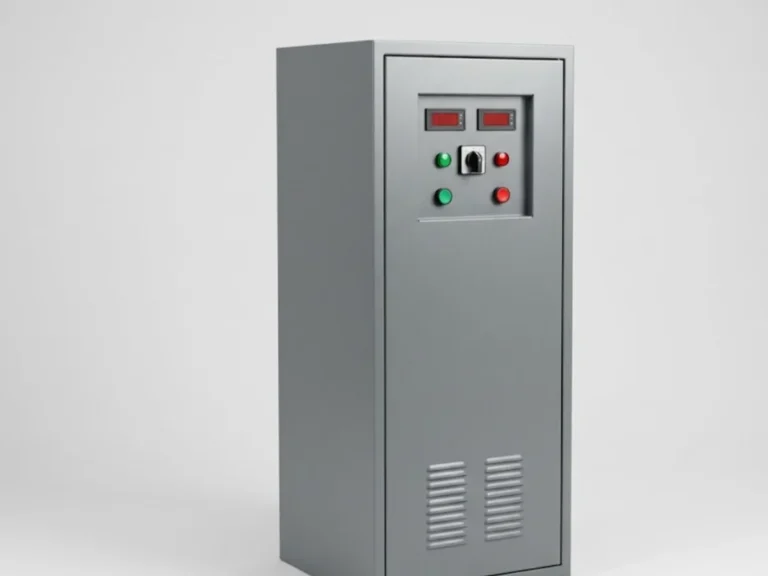
Float-and-boost chargers and DC power supplies for stationary battery banks.
On request- StandardIEC 62040-3 (UPS), IEC 61204 (power supplies)
 Batteries in association with MARC Traders
Download specification sheet (PDF)
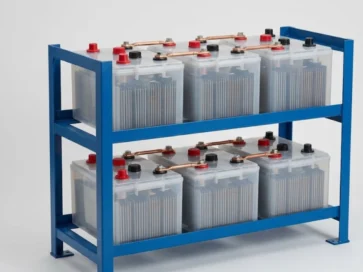
Racks, stands and interconnecting cables for battery banks.
Every field is optional - tell us what you know and we will confirm the rest in the quotation.
Representative image. The actual product, make and appearance depend on the supplier and your specification.
Also searched as: battery rack, battery stand, battery bank rack, battery interconnecting cables, battery stand for UPS, battery racks and cables
Size the rack from the battery, not the room. Collect the cell or block dimensions, the weight per unit and the number of cells in series, then work out total weight and floor loading before choosing single-tier, two-tier or multi-tier layouts. Heavy flooded cells and large VRLA blocks can need a reinforced floor or load spreading.
Mistakes include ordering racks before the cell make is final, mixing cable lengths so some links are stretched, and forgetting clearance for ventilation. Seismic zone or special mounting requirements should be stated up front. For the matching charger, see battery chargers and DC power supplies.
Ratings, dimensions and certification are confirmed against your enquiry. Use Send an enquiry and our engineers will respond within 24 hours.
Add the weight of all cells or blocks, the rack itself and the cables, then divide by the footprint area. Compare with the floor's permissible load from the building drawings. If the figure is high, ask a structural engineer about spreading the load. Share cell weights with the enquiry.
Size the connecting cable for the maximum discharge current of the bank with an acceptable voltage drop over its length. Keep links short and identical in length where possible. The battery manufacturer's data and the discharge duty determine the final size, so state both when requesting a quotation.
A battery rack holds cells or blocks of a battery bank in an orderly layout, in one or more tiers. It keeps them off the floor, gives access for inspection and maintenance, and supports the weight of the bank safely.
Choose by the number and size of cells or blocks, the number of tiers, the floor space and the weight to be carried. If the site needs seismic protection, mention it. The layout should follow the battery manufacturer's guidance and the site drawing.
These are the cables that connect cells, blocks or rows of a battery bank to each other and to the charger or UPS. Their size and length are chosen for the current to be carried and for acceptable voltage drop. They are usually supplied with lugs.
Send the battery make, type and Ah rating, number of cells or blocks, number of tiers wanted, available space, and the cable size and length for the connections. SKE Bharat will prepare a quotation from these details.
| Product Type | Battery rack / accessory |
|---|---|
| Standard | As per battery manufacturer and site layout |
| Selection Basis | Number and size of cells / blocks, tiers, seismic requirement, cable size and length |
| Typical Use | Installing battery banks |
Float-and-boost chargers and DC power supplies for stationary battery banks.
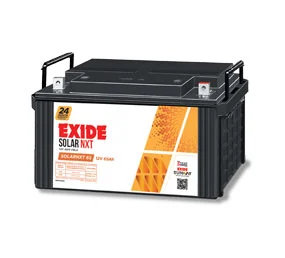
On requestSealed, maintenance-free AGM VRLA solar batteries (12 V monoblocs and 2 V cells) built for cyclic duty and...
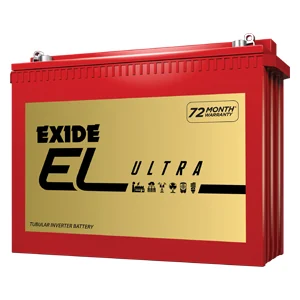
On requestLonger-life version of the 6EL range with low-antimony alloy and ceramic vent plugs, stated float life beyond 5...
On requestFloat, boost, equalise and trickle are the four stages of stationary battery charging. Learn what each does, typical voltages per cell, how to size a charger…
6 min readBatteries, Inverters & UPSBattery life is mostly decided by habits, not luck. A checklist of the routine checks, charging settings and storage practice that keep inverter and industrial batteries…
6 min readBatteries, Inverters & UPSHow tall tubular, flat plate and SMF batteries differ in construction, life, upkeep and cost, and which one fits your inverter and the power cuts you…
6 min read