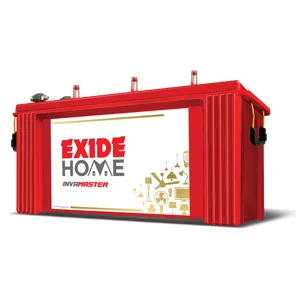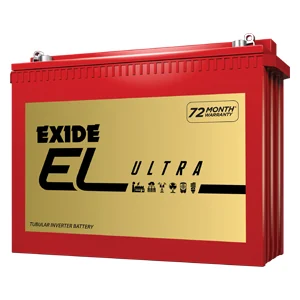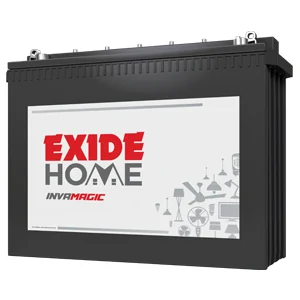
Most buyers walk into a shop asking for “a 150 Ah battery” and leave with whatever is on the shelf. The three common choices for an inverter, tall tubular, flat plate and SMF, behave very differently once the first year is over. This guide explains what is inside each type, where each one makes sense, and what goes wrong when the wrong one is chosen.
What is actually different inside the battery
All three are lead-acid batteries. The difference lies in how the positive plate is built and whether the battery is open (vented) or sealed.
- Flat plate: the active material is pasted onto a flat grid. It is the simplest and cheapest construction. Under repeated deep discharge the paste slowly sheds and falls to the bottom of the container.
- Tubular (tall or short): the positive plate is a set of spines surrounded by porous fabric tubes (gauntlets) packed with active material. The tubes hold the material in place, so the plate tolerates deep cycling much better. “Tall” simply means the cell container is taller, which allows more plate area and more electrolyte above the plates. Short tubular batteries use a lower container, for example the Exide InvaMaster Short Tubular (IMST), where the cabinet or trolley height is limited.
- SMF (sealed maintenance-free): a valve-regulated (VRLA) battery, usually with AGM separators or gelled electrolyte. It is sealed, never needs water, and does not spill. Many are flat-plate inside, so sealed does not automatically mean long-lived.
Side-by-side comparison
| Point | Tall tubular | Flat plate | SMF (VRLA) |
|---|---|---|---|
| Deep-discharge tolerance | Good | Poor to fair | Fair, depends on design |
| Water topping | Needed, typically every few months | Needed, usually more often | None |
| Typical use | Areas with long, frequent power cuts | Short, occasional cuts, tight budget | Closed cabinets, offices, no-maintenance sites |
| Heat tolerance | Better, because water can be replaced | Moderate | Sensitive; heat dries out the cell |
| Upfront cost | Higher than flat plate | Lowest | Mid to high |
Quoted life figures vary by maker, model and how the battery is used, so compare the warranty and design-life statements on the datasheet instead of relying on general claims.
Reading the label and the warranty
A battery label gives voltage and Ah, usually at a stated discharge time, and a warranty period. Warranty periods are often split into a free-replacement part and a pro-rata part, so ask the supplier to explain which applies and what conditions (such as regular topping, correct charger and no deep discharge records) the maker expects. A longer warranty can hint at a stronger design, but it only helps if you can meet its conditions. Keep the purchase invoice and note the date of installation on the battery.
How your power cuts decide the choice
Long and frequent outages
If you have several hours of cut every day, the battery is cycled deeply and often. This is the case for which tubular plates were developed. A tall tubular battery loses capacity more slowly than a flat plate one under the same duty. Ranges such as the Exide Home InvaTubular IT series and Exide Home InvaMaster IMTT / IMST series are examples of tubular-plate home inverter batteries; see the home inverter batteries category for the full list.
Rare and short outages
If the supply fails only a few times a month for under an hour, the battery spends nearly all its life on float charge. Here the deep-cycle advantage of tubular plates is not used, and a flat plate or SMF battery can be perfectly adequate. The battery will usually age from float charging and temperature, not from cycling.
Where nobody will look after the battery
For a shop in a mall, a small office or a flat where the battery sits in a cupboard, SMF removes the need for water topping. The trade-off is that you cannot rescue a dried-out cell, and a hot, closed cupboard shortens life.
Common mistakes we see
- Choosing by Ah alone. Two 150 Ah batteries of different construction will behave differently at the same load. Always read the discharge table in the datasheet.
- Mixing old and new batteries in a bank. The weaker battery drags the stronger one down. Replace the whole bank.
- Ignoring the inverter’s charger setting. Many inverters have a battery-type selection for flooded and VRLA types. A wrong setting over- or under-charges the battery and cuts its life.
- Skipping water topping on tubular batteries. Plates that are exposed to air sulphate permanently.
- Placing the battery in the sun or near a hot wall. Heat is the single biggest enemy of lead-acid batteries.
A quick decision guide
- More than two hours of cut every day: choose tall tubular and plan for water topping.
- Occasional short cuts and a limited budget: flat plate is acceptable if you accept more frequent topping and earlier replacement.
- No one to maintain the battery, or a closed enclosure: choose SMF and keep the room cool.
- Not sure of your daily backup need: work it out first with our battery backup calculator.
The inverter and battery must also match in voltage and size. A 12 V single battery suits roughly a 1 kVA inverter, while larger inverters use 24 V, 36 V or 48 V banks; follow the inverter manual. For the complete inverter range see home inverters and UPS, and for the battery family overall visit batteries.
What to send us for a quotation
To get a precise quote, send the inverter make and rating in VA, the battery voltage it needs, the load you want to run and the backup hours, plus whether the location is hot or enclosed. Submit these through request a quote or write to us via contact us, and we will reply within 24 hours.
Frequently asked questions
Is a tall tubular battery always better than a flat plate battery?
Not always. Tall tubular batteries cope better with frequent deep discharge, so they pay off where power cuts are long and daily. If cuts are rare and short, the battery mostly sits on float charge and a flat plate battery can serve adequately at lower cost. Match the battery to your outage pattern, not to a general ranking.
Do SMF batteries really need no maintenance?
SMF batteries need no water topping, but they are not zero-care. Keep terminals clean and tight, avoid heat, and make sure the inverter charger is set for a sealed battery. Heat and wrong charging voltage dry out a sealed cell, and unlike a vented battery you cannot add water to revive it.
What does 'tall' mean in a tall tubular battery?
It refers to the taller container, which allows longer plates and more electrolyte above them. This gives more active material and more margin before the plates are exposed. Short tubular batteries use the same tubular plate idea in a lower container for places where height is restricted, such as certain trolleys and cabinets.
Can I replace one battery in my bank with a new one?
It is better not to. A new battery paired with an aged one forces the bank to behave like the weaker unit, and the new battery is overworked. Replace all batteries of a bank together, and use the same make, type and capacity.