Battery Racks, Stands & Cables
Battery Racks, Stands & Cables
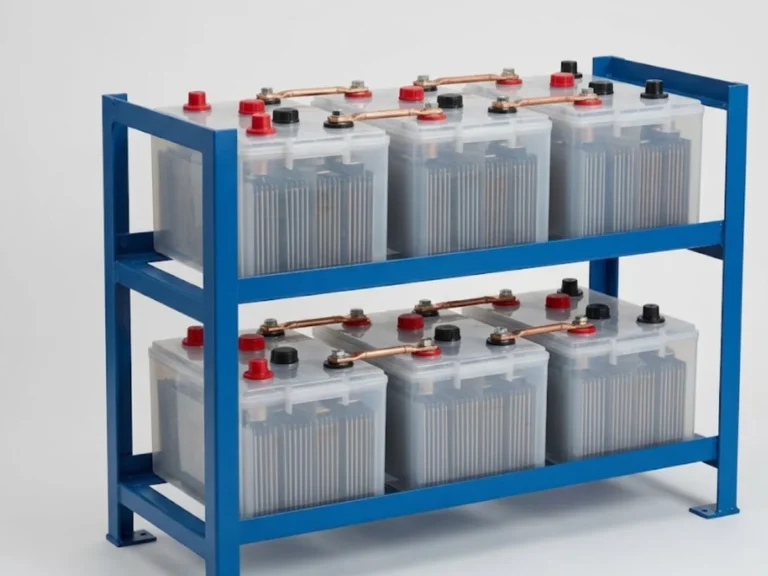
Racks, stands and interconnecting cables for battery banks.
On request- StandardAs per battery manufacturer and site layout
 Batteries in association with MARC Traders
Download specification sheet (PDF)
Float-and-boost chargers and DC power supplies for stationary battery banks.
Every field is optional - tell us what you know and we will confirm the rest in the quotation.
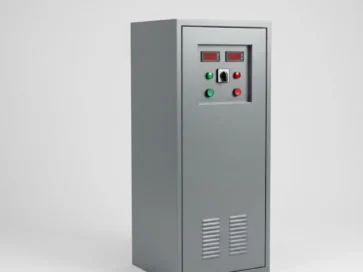
Representative image. The actual product, make and appearance depend on the supplier and your specification.
Also searched as: battery charger, float cum boost battery charger, industrial battery charger, DC power supply, DC charger for battery bank, stationary battery charger
Start with the DC bus voltage (commonly 24 V, 48 V, 110 V or 220 V) and the battery type, because float and boost voltages differ for lead-acid, VRLA and Ni-Cd cells. A charger set for flooded cells can damage a sealed VRLA bank, so state the exact cell type and number of cells.
Current rating has two parts: the continuous DC load plus the current needed to recharge the battery in the time you allow. As a simple illustration, a 20 A load with a 200 Ah battery recharged at about C/10 (20 A) suggests a charger in the region of 40 A, before margin.
Confirm the input supply (single or three-phase) and temperature compensation if the room is hot. Matching Ni-Cd batteries or VRLA cells should be chosen first.
Ratings, dimensions and certification are confirmed against your enquiry. Use Send an enquiry and our engineers will respond within 24 hours.
Float charging holds the battery at a steady voltage to keep it full while the charger also supplies the load. Boost charging applies a higher voltage for a limited time to recharge quickly after a discharge or to equalise cells. Whether boost is allowed depends on the battery type.
Add the continuous DC load current to the battery recharge current, then add margin. Recharge current is usually taken as a fraction of battery capacity, for example Ah divided by ten, depending on the recovery time wanted. Share load, battery Ah and cell type so the rating can be confirmed.
A battery charger supplies controlled DC to charge a battery bank and then keeps it fully charged. A DC power supply gives regulated DC to a load, and in many installations the charger also feeds the DC load while the battery stays on float as a backup.
A battery needs a charging voltage and current suited to its type, with limits set by the battery maker. A plain DC supply without such control can overcharge it. A charger designed for the battery type is the safer choice.
In float mode the charger holds the battery at a steady voltage to keep it full. In boost mode it applies a higher voltage or current to recharge a discharged battery faster. The settings depend on the battery type and the maker's recommendation.
Send the battery type, nominal voltage, Ah capacity, required charging current, input supply, the DC load if any, and the alarms or metering you want. SKE Bharat will prepare a quotation from these details.
| Product Type | Battery charger / DC supply |
|---|---|
| Standard | IEC 62040-3 (UPS), IEC 61204 (power supplies) |
| Selection Basis | Battery voltage and type, charging current, input supply, float / boost modes, alarms |
| Typical Use | Charging and DC supply for battery banks |
Racks, stands and interconnecting cables for battery banks.
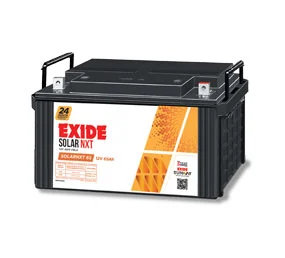
On requestSealed, maintenance-free AGM VRLA solar batteries (12 V monoblocs and 2 V cells) built for cyclic duty and...
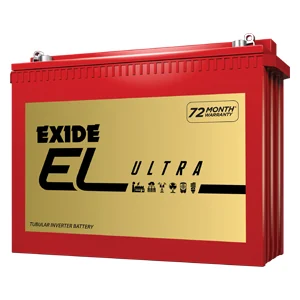
On requestLonger-life version of the 6EL range with low-antimony alloy and ceramic vent plugs, stated float life beyond 5...
On requestFloat, boost, equalise and trickle are the four stages of stationary battery charging. Learn what each does, typical voltages per cell, how to size a charger…
6 min readBatteries, Inverters & UPSBattery life is mostly decided by habits, not luck. A checklist of the routine checks, charging settings and storage practice that keep inverter and industrial batteries…
6 min readBatteries, Inverters & UPSHow tall tubular, flat plate and SMF batteries differ in construction, life, upkeep and cost, and which one fits your inverter and the power cuts you…
6 min read