Lithium-ion batteries are now offered with inverters and UPS in India, and the price gap with lead-acid is a common question. The answer is not “lithium is better” or “lead-acid is cheaper”; it depends on how many cycles you ask of the battery, how much space and weight matter, and whether your equipment can charge lithium correctly. This article sets out the practical differences.
The two chemistries in brief
Lead-acid batteries, flooded tubular or sealed VRLA, are the established choice for inverters, UPS and industrial standby. Lithium batteries used for stationary backup are mostly lithium iron phosphate (LFP, LiFePO4) because of their thermal stability and long cycle life. Each LFP cell has a nominal voltage of about 3.2 V, so four cells in series give roughly 12.8 V and sixteen give roughly 51.2 V. A battery management system (BMS) inside the pack protects against overcharge, over-discharge, over-current and temperature extremes, and balances the cells.
Lead-acid and lithium also fail in different ways. A tired lead-acid battery loses runtime gradually and gives you warning. A lithium pack usually runs normally until the BMS decides to cut off, so monitoring the pack’s state-of-charge and alarms matters more. A BMS protects the cells but it cannot repair a charger that is set to the wrong profile.
Comparison
| Point | Lead-acid (tubular/VRLA) | Lithium (LFP) |
|---|---|---|
| Usable depth of discharge | Roughly 50 to 80 per cent, to preserve life | Commonly 80 to 90 per cent or more |
| Cycle life | Hundreds to a few thousand cycles, depending on type and depth | Typically several thousand cycles |
| Weight and space | Heavy and bulky | Much lighter and more compact |
| Maintenance | Water topping (flooded), terminal care, ventilation | Little; BMS monitors the pack |
| Charge speed | Slower, tapering current | Faster, accepts high current |
| Upfront cost | Lower | Higher |
| Failure behaviour | Gradual capacity fade | BMS cuts off; can drop out suddenly |
Cycle-life and depth-of-discharge numbers depend on the maker and the test conditions, so read the datasheet curves for the specific model and do not compare marketing figures.
Where each chemistry fits
Where lithium wins
- Daily deep cycling, for example solar self-consumption or places with long daily outages, where the battery turns over every day.
- Space and weight limits, such as rooftop telecom shelters, small server rooms or a flat where a battery rack will not fit.
- Low-maintenance sites where no one can top up water or inspect cells.
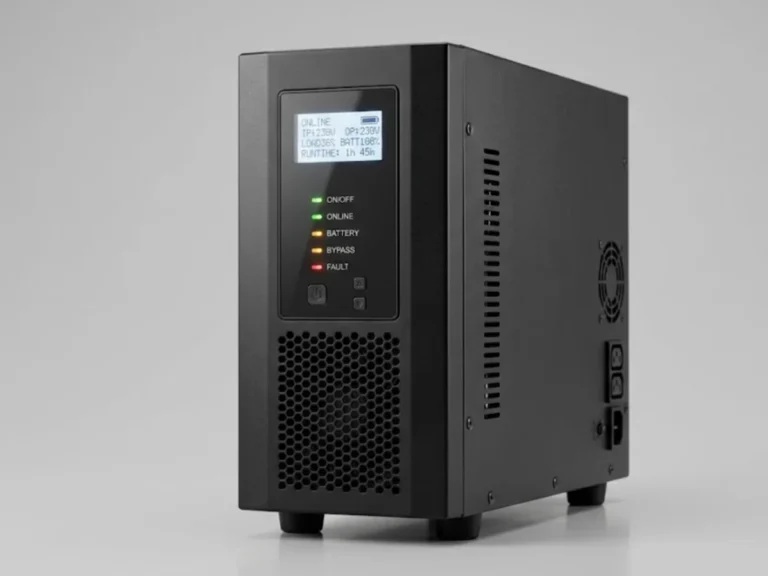
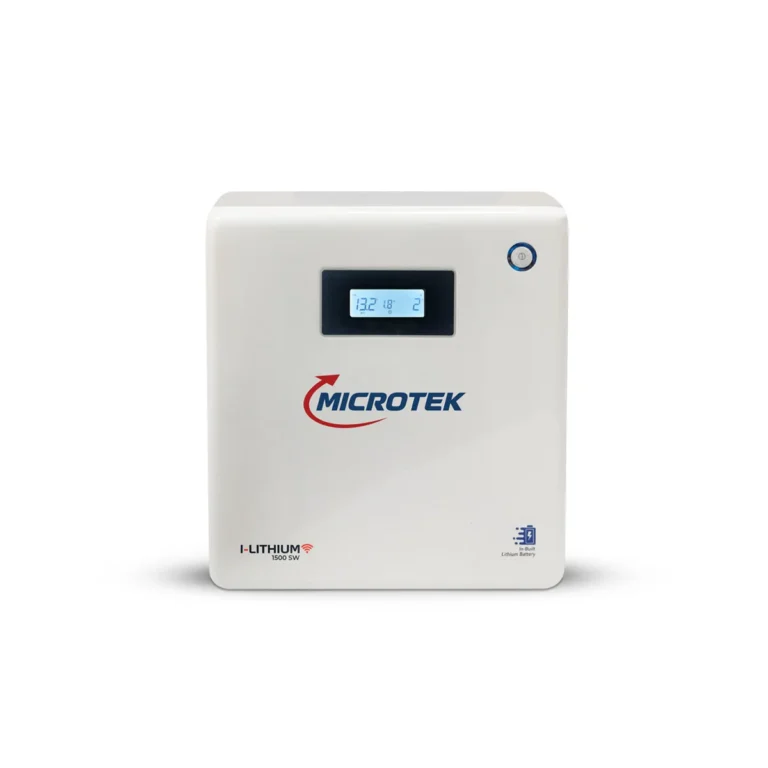
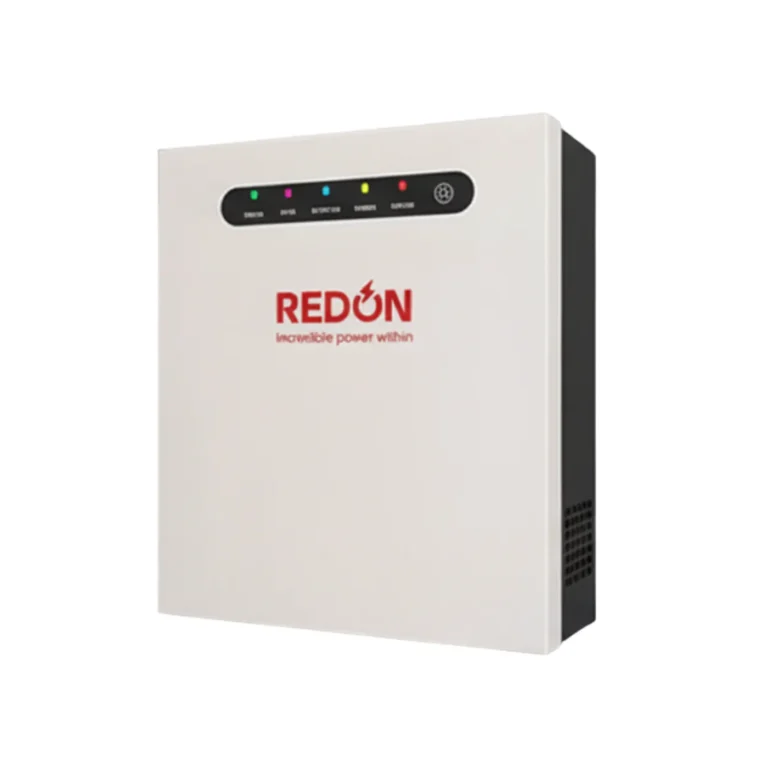
- Compact UPS, as with the Uniline Lithium-Ion Battery UPS and the Microtek I-Lithium, or integrated systems such as Redon in-built lithium inverters (ESS series).
Where lead-acid still makes sense
- Infrequent outages. A battery that mostly floats will not use its cycle-life advantage. If the battery rarely discharges, the low upfront cost of lead-acid is hard to beat.
- Tight capital budget for large banks.
- Existing equipment whose charger is built only for lead-acid.
- Proven industrial standby at large scale, where flooded or VRLA cells are specified for the standby application by long practice.
Total cost: a simple way to compare
Divide the purchase price by the usable energy delivered over the battery’s life. Usable energy is nominal kWh x usable depth of discharge x number of cycles. A lithium pack costing two to three times more can still win if it lasts several times as many cycles, but only if you actually use those cycles. For a battery cycled twice a month, the lead-acid battery is likely to age by time before it ever uses its cycles. Do the calculation with your own prices and your own outage pattern; do not rely on a general rule.
Energy example: a 12.8 V, 100 Ah lithium pack stores about 1.28 kWh nominal. At 90 per cent usable it gives about 1.15 kWh. A 12 V, 150 Ah lead-acid battery stores 1.8 kWh nominal, but at 50 per cent usable it gives about 0.9 kWh. So the smaller-looking lithium pack can deliver more usable energy per discharge, which is why comparing nameplate Ah between chemistries is misleading.
Compatibility traps and safety
- Charger profile. Lithium needs a constant-current, constant-voltage profile with no float equalisation. Connecting lithium to an inverter set for lead-acid can under-charge it or trigger BMS cut-outs. Use a lithium-ready inverter or UPS, or one with a lithium charging mode.
- Voltage window. A 12.8 V lithium pack and a 12 V lead-acid battery do not have identical voltage curves. Confirm the inverter’s low-battery cut-off suits the pack.
- Surge current. The BMS has a maximum discharge current. A motor starting surge can trip it, even when the continuous load is within rating.
- Temperature. Lithium should not be charged outside the maker’s temperature window. Keep packs in a ventilated, shaded area.
- Mixing. Never mix lithium with lead-acid batteries in one bank, and do not mix packs of different age or make.
Safety
LFP is among the safer lithium chemistries, but safety still depends on a good BMS, correct protection devices (fuses or breakers on the DC side) and proper cable sizing. Installation of larger banks should be checked by a qualified engineer, and fire-safety arrangements should follow your site’s rules.
Products to look at
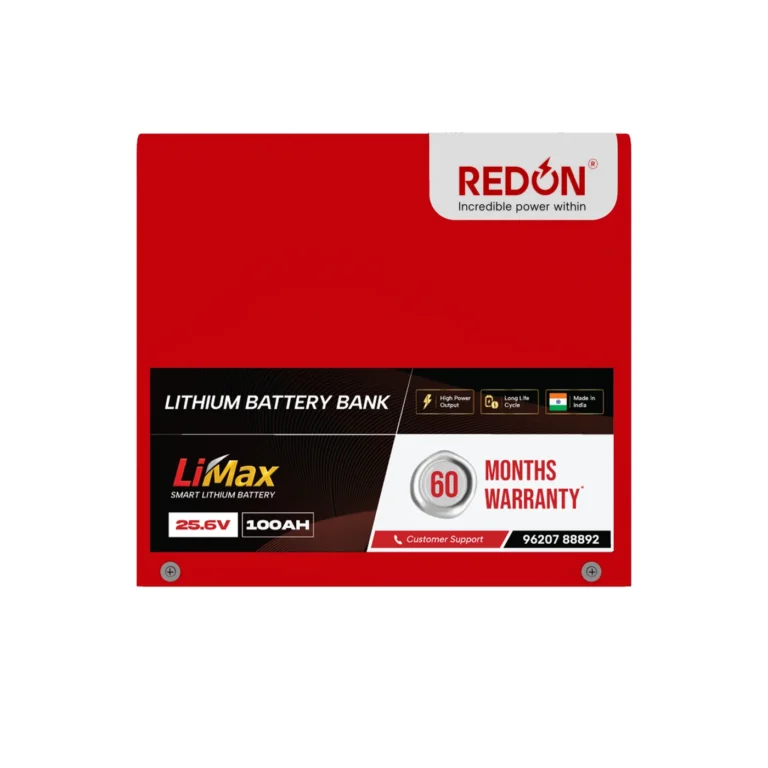
Standalone packs are available as Redon lithium battery banks and, for telecom, Redon 48 V telecom battery modules. See lithium-ion batteries and lithium and integrated battery UPS for the full list. For the lead-acid side, see batteries.
What to send us for a quotation
Share the load in watts, backup hours, system voltage, how often power fails, available space and the make of your inverter or UPS so we can check compatibility. Send it through request a quote or reach us via contact us, and we will answer within 24 hours.
Frequently asked questions
Can I replace my tubular battery with a lithium battery in the same inverter?
Only if the inverter's charger supports lithium or has a lithium mode, and its voltage thresholds suit the pack. Otherwise it may undercharge the pack or trip the BMS. Check with the inverter maker or us before swapping. Never mix lithium and lead-acid in one bank.
Is lithium worth it if my area has few power cuts?
Often not. If the battery rarely discharges, you do not use its long cycle life, and the lower upfront cost of lead-acid wins. Lithium pays off with frequent deep cycling, solar daily cycling or tight space, so check your outage frequency before deciding.
Why do lithium packs have a BMS?
The BMS protects the cells from overcharge, over-discharge, over-current and extreme temperature, and balances cell voltages. Without it, a lithium pack can be damaged or become unsafe. It also means the pack can cut off suddenly at its limits, which is different from the gradual fading of lead-acid.
Do lithium batteries need maintenance?
They need far less than flooded lead-acid: no water topping and no gravity checks. Still, check terminals, keep the pack cool and ventilated, and review the BMS alarms or app readings periodically. Follow the maker's service guidance for your model.