Every solar quotation starts by choosing one of three architectures: on-grid, off-grid or hybrid. The choice changes the equipment list, the cost, the maintenance and, most importantly, what happens to your loads during a power cut. A shop owner in a city with a reliable supply and a factory in an area with daily outages should not end up with the same design.
SKE Bharat supplies the electrical equipment used in all three types: inverters and PCUs, batteries, array junction boxes, DC and AC distribution boards and protective devices. We supply equipment and do not do EPC or installation, so treat this article as a way to prepare for a conversation with your solar designer.
On-grid (grid-tied) systems
An on-grid system has panels, a grid-tie inverter, protection and metering. There are no batteries. During the day the inverter supplies your loads first and the surplus, if your utility permits, goes to the grid. At night, or when the sun is low, you draw from the grid as before.
- Strengths: lowest cost per kW, simplest to maintain, no battery replacement.
- Limits: no output during a power cut because the inverter must shut down when the grid fails. Output depends entirely on sunlight.
- Best for: shops, factories, hospitals’ non-critical loads, schools and offices with a stable grid and mostly daytime consumption.
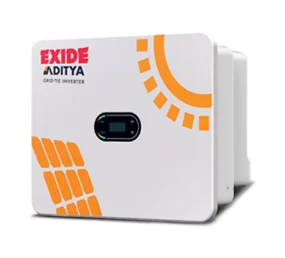
The core hardware is the grid-tie inverter range, plus the DC side boxes and AC distribution described in our guide to ACDB, DCDB and junction boxes.
Off-grid systems
An off-grid system works without any utility connection. Panels charge a battery bank through a charge controller, and an inverter runs the loads from the battery. Because the battery is the only buffer, the system must be sized for the worst days and for the night load.
- Strengths: works where there is no grid, or where the grid is very unreliable.
- Limits: the battery bank is large, expensive and needs replacement over the life of the plant. Loads must be disciplined, because running out of stored energy means a blackout. Often a diesel generator is kept as a final backup.
- Best for: remote pumps, farm buildings, telecom sites, small rural institutions.
Key equipment includes solar storage batteries (tubular, gel, AGM or lithium), the solar PCU or inverter-charger, and DC protection. Read MPPT vs PWM charge controllers when selecting the charging stage.
Hybrid systems
A hybrid system joins solar panels, batteries and the grid. Solar serves the loads first, charges the battery with spare energy, and the grid fills any shortfall. When the grid fails the inverter islands the protected circuits and runs them from the battery and solar. Depending on the inverter and utility rules, the system may also export surplus to the grid.
- Strengths: solar savings plus backup in one design; fewer separate devices than a solar plant plus a separate UPS.
- Limits: higher cost than on-grid, and a battery that ages. The backup load must be wired to a separate protected panel, not the whole building.
- Best for: clinics, small data rooms, schools and workshops with a critical load and daily outages.
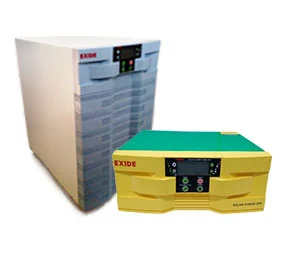
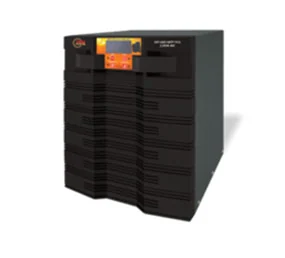
Look at Redon solar PCUs (hybrid inverters) and Exide solar hybrid inverters. For the inverter-type differences see solar PCU vs hybrid vs grid-tie inverter.
Side-by-side summary
| Question | On-grid | Off-grid | Hybrid |
|---|---|---|---|
| Needs the utility grid | Yes | No | Yes, as a source |
| Battery bank | None | Large | Sized to critical load |
| Power cut behaviour | Shuts down | Keeps running from storage | Keeps critical loads running |
| Relative upfront cost | Lowest | Highest per kW delivered | Middle to high |
| Ongoing maintenance | Panel cleaning, inverter checks | Battery care, water topping for flooded types | Battery care plus inverter checks |
| Utility paperwork | Yes | Generally none | Yes, if grid-connected |
How to decide
Ask these questions in order:
- Is a reliable grid available? If not, off-grid or hybrid is the only option.
- Do you need electricity during an outage? If no, on-grid is the economic choice. If yes, how many kW and for how many hours?
- When do you use power? Daytime-heavy loads match solar output well. Heavy night loads need either the grid or storage.
- What does your utility allow? Rules on connection capacity, export and metering differ by state. Read net metering in India: what to check.
- What roof or ground area is free of shade? This caps the size. Use the solar calculator and our guide on estimating system size.
Common mistakes and lifetime cost
Compare designs on cost over the plant life, not the first invoice. An on-grid plant has no battery to replace, while off-grid and hybrid systems carry a battery bank whose cycle life and replacement date should be written into your comparison. Lead-acid tubular and gel batteries, and lithium packs, differ in upfront cost, cycle life, maintenance and usable depth of discharge, so ask each supplier for the datasheet values and the conditions behind them.
- Choosing off-grid because “backup is needed” when only a few circuits are critical. A hybrid or an on-grid plant plus a small UPS is often cheaper.
- Connecting the whole building to a battery inverter. Back up only essential loads such as lights, fans, computers and a few outlets.
- Forgetting battery replacement cost when comparing the price of two designs.
- Skipping surge protection and earthing on the DC side. Roof arrays attract lightning-induced surges.
For an overview of our solar offering, visit the solar solutions page. Backup design is covered more broadly on our power backup page.
What to send us for a quotation
Tell us the site type, grid availability and daily outage hours, the connected and critical loads in kW, preferred system type, and the area available for panels. Send these through request a quote or contact us, and we will reply within 24 hours.
Frequently asked questions
Which is better for a factory, on-grid or hybrid solar?
If the grid is reasonably stable and the plant already has a UPS and generator for critical loads, on-grid is usually the simplest and cheapest way to cut daytime grid consumption. Hybrid suits sites with a defined critical load and frequent outages. Confirm the choice with a qualified solar designer using your actual load profile.
Can an on-grid solar system run without electricity from the grid?
No. An on-grid system synchronises with the grid and switches off when the grid is absent, even in full sunlight. This is deliberate for safety. To keep running during an outage you need batteries and a hybrid inverter or PCU, or an existing generator arrangement that the inverter manufacturer approves.
What is the main difference between hybrid and off-grid solar?
A hybrid system stays connected to the utility grid and uses it as a source, while an off-grid system has no utility connection at all and relies on panels, batteries and often a generator. Off-grid needs a larger battery bank because there is no fallback source for a few cloudy days.
Do off-grid solar systems need a charge controller?
Yes. Panels cannot charge a battery bank directly without regulation. A charge controller, either PWM or MPPT, manages the charging current and voltage, and protects the battery from overcharge. Many solar PCUs and hybrid inverters include one internally, so check whether the one you buy already has it.