Solar Storage Batteries
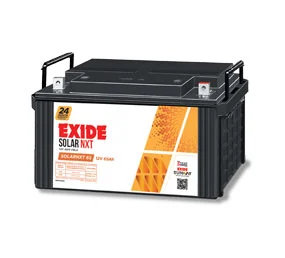
Exide AGM VRLA Solar Batteries - Solar NXT
Sealed, maintenance-free AGM VRLA solar batteries (12 V monoblocs and 2 V cells) built for cyclic duty and...
- BrandExide
- Product TypeSolar Storage Batteries
Exide
 Batteries in association with MARC Traders
Browse the full range. Filter by category or feature, compare specifications and add items to your quote list.
Sealed, maintenance-free AGM VRLA solar batteries (12 V monoblocs and 2 V cells) built for cyclic duty and...
High cycle-life 12 V flooded tubular solar battery for off-grid storage.
Maintenance-free tubular gel VRLA solar batteries in 12 V monoblocs and 2 V cells assembled in modules.
Low-maintenance flooded tubular 12 V monoblocs for regular deep-cycle solar duty, factory filled and charged.
Low-maintenance flooded tubular 2 V cells (300-1000 Ah) for larger off-grid and hybrid solar plants.
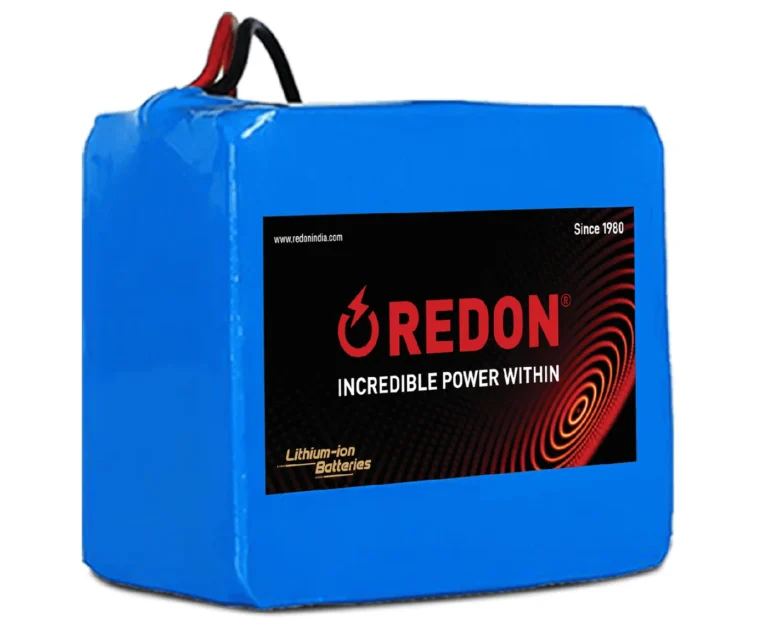
Small 12.8 V lithium-ion packs for street lights, solar fans and residential panels; the website lists five sizes...
No products match your filters. or ask our engineers.
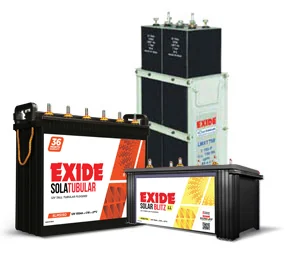
Solar batteries are built for daily charge and discharge, unlike inverter batteries that sit mostly on charge. This category includes Exide Solatubular 2 V and 12 V tubular batteries, Solatron tubular gel, Solar NXT AGM VRLA and SolarBlitz, plus small Redon lithium packs.
The type depends on the site. Tubular gel and AGM batteries are sealed and do not need topping up, so they suit remote installations and rooftop systems without maintenance staff. Flooded tubular 2 V cells give the longest life and the lowest lifetime cost on large off-grid plants, at the price of water topping and a ventilated room. Lithium suits space-limited and high-cycling applications. Whichever you choose, the battery should be sized for the days of autonomy needed, not only a single night.
Sizing steps:
Use the solar calculator and the battery backup calculator to size the array and bank, and see solar inverters and PCUs for charge controllers.
Solar batteries are designed for deep daily cycling with slow charge from variable solar input, using thicker tubular plates or other cycle-oriented designs. Inverter batteries are designed for standby with occasional discharge and regular grid charging. Using an inverter battery in daily solar cycling shortens its life.
Gel batteries tolerate deep cycling and high temperature a little better and typically have longer life, while AGM batteries accept higher currents and are often lower in cost. Both are sealed and maintenance-free. For remote sites with daily cycling gel is often preferred, but datasheet cycle-life figures should decide the selection.
It depends on the load criticality and weather at the site. Off-grid systems often design for two to three days of autonomy so they ride through cloudy weather, while grid-connected hybrid systems with a diesel or grid fallback can use less. More days means a larger and more costly bank, so find the balance.
It depends on the battery type and cycle-life datasheet. Lead-acid solar batteries are commonly designed for a daily depth of discharge of around 50 percent or lower to reach their rated cycle life, while lithium can usually be used deeper. Check the cycle-life versus depth-of-discharge curve in the datasheet for your product.
Choose between PWM and MPPT based on array and battery voltage. MPPT controllers extract more energy when the array voltage is well above battery voltage and are common for larger systems. The controller's current rating must match the array, and its charge profile must suit the battery chemistry: flooded, gel, AGM or lithium.
MPPT and PWM charge controllers treat panel voltage very differently; here is how each works, how to size one and which suits your battery system.
6 min readSolar & Energy EfficiencyOn-grid, off-grid and hybrid solar systems differ in batteries, backup and grid dependence; this guide shows which fits your site and what to check.
6 min readBatteries, Inverters & UPSSolar batteries cycle every day, so the cheapest battery is rarely the best. Compare tubular, gel, AGM and lithium for off-grid and hybrid solar, with a…
6 min read