The first question every buyer asks is “how many kW of solar do I need?” The honest answer is that there are four limits, and the smallest one decides. They are your electricity consumption, your daytime load, the shadow-free area you have, and the connection or load limits set by your utility. A rough estimate takes ten minutes with your last twelve electricity bills.
This guide gives the method with worked examples. It is for early planning. A final design needs a site survey and shade analysis by a qualified solar designer. SKE Bharat supplies the solar electrical equipment; we do not do solar EPC and cannot promise savings, so the numbers below are planning figures only.
Five steps to a first estimate
Step 1: Know your monthly consumption
Take the last 12 months of bills and note the units (kWh) used each month. Use the average, and note the highest and lowest. Industrial consumers should also note the maximum demand in kVA and the sanctioned or contract demand. If you are billed in kVAh, the kVA and power factor matter as well; see the power factor calculator.
Divide the monthly units by 30 to get daily units. A shop using 1,200 units a month uses about 40 units a day.
Step 2: Estimate how much a 1 kW system generates
Output depends on location, panel tilt, shade, dust, temperature and inverter losses. For quick planning in India, many designers use a figure of roughly 4 to 5 units per day for each kW of panels, averaged over the year. Clear, dry regions can do better and monsoon-heavy regions worse. Treat it as a starting assumption and ask your designer for a location-specific estimate.
Basic formula: required kW = daily units you want solar to supply, divided by daily units per kW.
Example (shop): daily use 40 units. At 4 units per kW per day, offsetting all of it needs about 10 kW. Offsetting only the daytime part, say 25 units, needs about 6 kW.
Step 3: Check the daytime load
For a grid-tied system without batteries, solar helps only while the sun shines, and that is also when most of your load must be running. Your daytime base load is a better cap than your total consumption.
- Look at the load between roughly 9 am and 4 pm when the plant is operating. A multifunction meter or a load profile from your utility meter helps. See our note on energy monitoring in factories.
- If the daytime load is steady at 40 kW, a system near 40 kW of AC output can be absorbed completely. If it dips to 15 kW at lunch and you install 40 kW, the surplus either goes to the grid (only if your utility allows) or the inverter limits its output.
- Single-shift factories fit solar well. Night-shift plants need a bigger share from the grid or storage.
Example (factory): monthly consumption 30,000 units on a single shift of 26 working days, so about 1,150 units a day, nearly all in 9 hours. The daytime load is about 125 kW average. A 100 kW solar array offsets most of it on sunny days. Going to 200 kW would risk daytime surplus unless export is permitted. Check also that the installed capacity is acceptable relative to your sanctioned load.
Step 4: Check the area
As a planning rule, 1 kW of panels needs roughly 8 to 10 square metres of shadow-free roof, depending on panel efficiency, tilt, row spacing and walkways. Remove areas shaded by water tanks, parapets, neighbouring buildings, lift machine rooms and ventilators. Also check that the roof can carry the extra load of the structure, which a structural engineer should confirm.
| Site | Free shadow-free area | Approx. maximum size |
|---|---|---|
| Small shop | 40 sq m | 4 to 5 kW |
| Workshop roof | 400 sq m | 40 to 50 kW |
| Factory shed | 2,000 sq m | 200 to 250 kW |
Step 5: Check the utility limits
The utility may restrict solar capacity based on your sanctioned load, the distribution transformer rating, and the connection category. These rules vary by state and change. Before finalising size, read net metering in India: what to check and ask your DISCOM.
Institutions: schools, colleges, hospitals
Institutions have long daytime hours and usually large roofs, which suits solar. Issues to watch:
- Hostel and hospital blocks run at night. Do not size for the 24-hour units if the solar can only offset the daytime portion.
- Hospitals need critical loads on UPS and generator. Solar is normally connected through a grid-tie inverter on the main LT bus and does not replace backup. See online UPS systems for the critical supply.
- Holidays and vacation months lower the daytime load. The plant should be sized against the lowest regular month, not the highest.
Turning kW into equipment
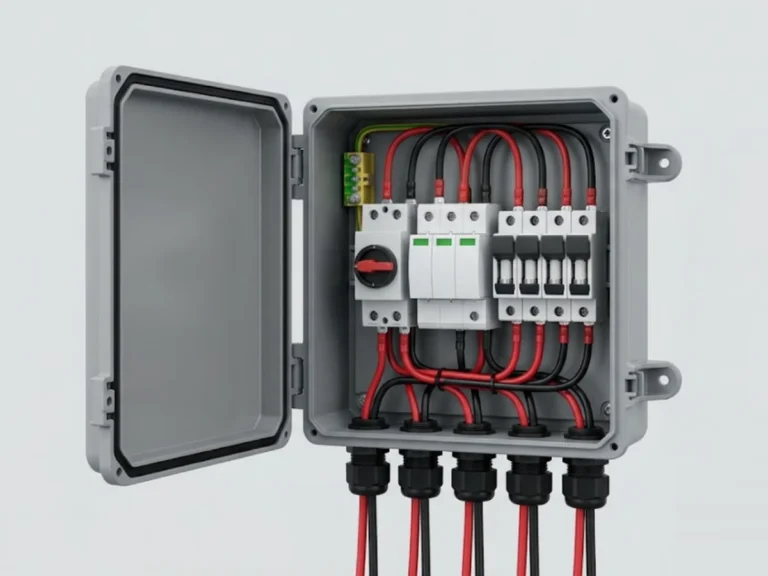
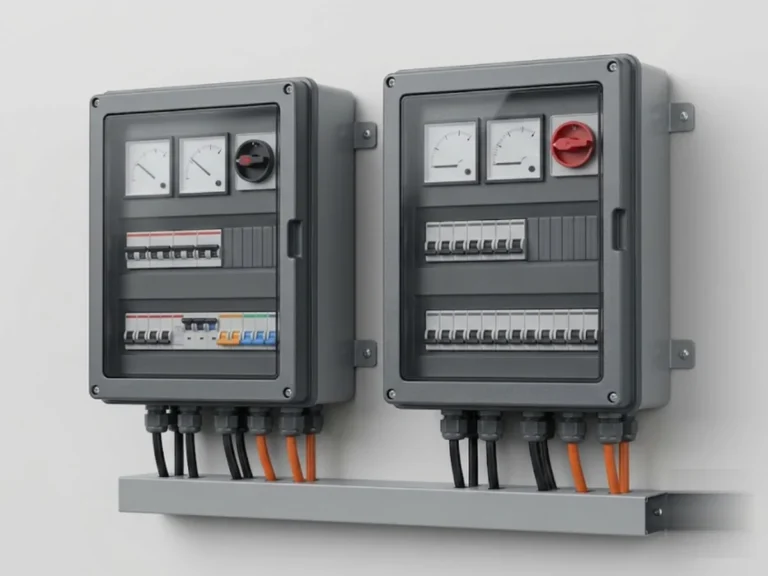
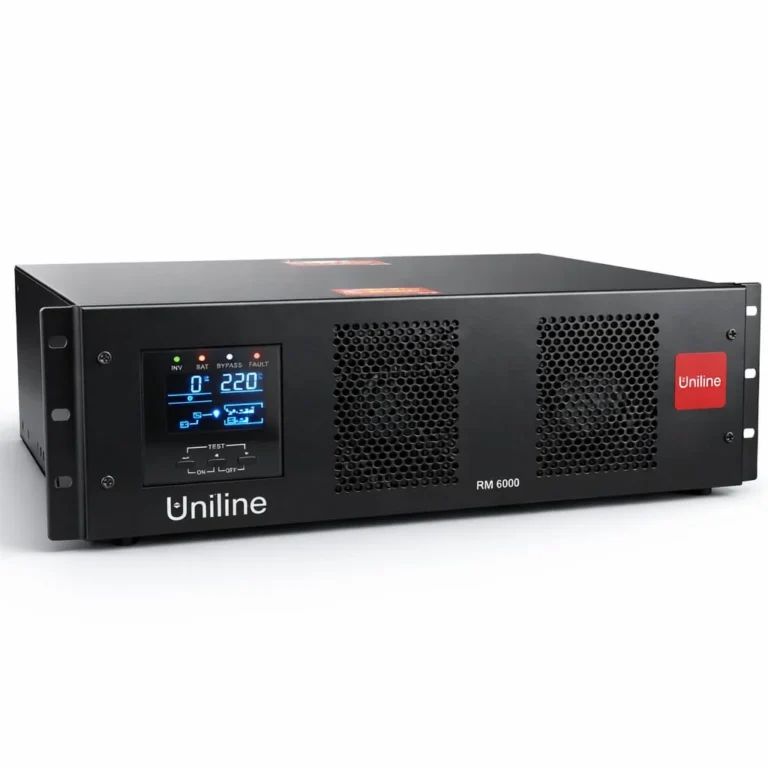
Once you have the kW figure, equipment follows. A plant of a given size needs panels, one or more inverters, an array junction box for each group of strings, a solar ACDB and DCDB and suitable cabling. Inverter options are on the solar inverters and PCUs page. You can run a first-pass estimate on the solar calculator.
Check also the effect on your transformer and incoming supply if the plant is large; see transformer sizing calculator and talk to a qualified engineer about protection settings.
What to send us for a quotation
To prepare the equipment list, send your sanctioned load, average monthly units, daytime load pattern, usable roof area, phase (1 or 3), and the target system size from your solar designer. Submit it via request a quote or contact us and we will reply within 24 hours.
Frequently asked questions
How many kW of solar do I need for 1,000 units a month?
A rough planning figure: 1,000 units a month is about 33 units a day. At 4 to 5 units per kW per day, offsetting all of it would need roughly 7 to 8 kW. In practice, daytime load, shade and utility limits often decide a smaller size. Ask a solar designer for a location-specific estimate.
How much roof area is needed for 1 kW of solar panels?
As a planning guide, around 8 to 10 square metres of shadow-free roof per kW, depending on panel efficiency, tilt, row spacing and access paths. Shade from tanks, parapets and neighbouring buildings reduces the usable area, so measure the clear area rather than the total roof area.
Should solar be sized to my total electricity bill or my daytime load?
For a system without batteries, daytime load is the better limit, because the plant produces only while the sun is up. If installed capacity exceeds daytime demand, surplus power goes to the grid only where your utility allows it. Review a load profile before fixing the size.
Does a bigger solar plant always save more money?
No. Savings depend on how much generated energy you can use or export under your utility's rules. An oversized plant may sit partly idle or be limited by the inverter. Size to the usable daytime load, and do not rely on guaranteed savings figures from any supplier.