Pumps and fans account for a large share of the electricity used in industry, and many of them run at full speed while the process needs less. The flow is cut down by a throttling valve or a damper, which wastes energy as pressure drop. A variable frequency drive (VFD) slows the motor instead, and the saving can be large because of a physical law. This article explains the law, works through an example and, just as important, shows when the saving is small.
The affinity laws
For a centrifugal pump or fan, three relationships hold to a good approximation when speed changes:
- Flow is proportional to speed.
- Pressure (head) is proportional to the square of speed.
- Power is proportional to the cube of speed.
So at 80 % speed the flow is 80 %, the head is 64 % and the power is 0.8 x 0.8 x 0.8 = 51 %. A 20 % reduction in speed halves the power. At 50 % speed, the power is only 12.5 %. This is why a VFD is attractive on variable-flow pumps and fans, and not on loads like conveyors or compressors that need torque at constant speed.
Why throttling wastes energy
A pump at constant speed produces a fixed head-flow curve. To reduce flow, the operator closes a valve. The pump still runs at full speed; it simply pushes against a higher resistance. The power falls only slightly (to perhaps 80 to 90 % of full-load power at 70 % flow, depending on the pump curve), and the surplus pressure is wasted in the valve. A fan with a damper behaves similarly. Using a VFD to reduce speed makes the pump produce just the head and flow that the process needs.
Worked example
A cooling water pump has a 37 kW motor drawing about 37 kW at full flow, and the process needs only 70 % flow for 6000 hours a year. This is an illustration with stated assumptions.
- With throttling: assume the power falls to about 85 % at 70 % flow, so about 31.5 kW.
- With a VFD at 70 % speed: ideal power = 37 x 0.7 x 0.7 x 0.7 = 12.7 kW. Allowing for VFD losses of about 3 %, lower motor and pump efficiency at part load, and some static head, say 15 kW.
- Saving: 31.5 – 15 = 16.5 kW. Over 6000 hours that is about 99,000 kWh a year.
- Value: at an assumed Rs 8 per kWh, about Rs 7.9 lakh a year.
Even if the real saving is half of this, a drive costing a fraction of that amount pays back quickly. You can enter your own pump, hours and tariff in the VFD energy savings calculator.
When the saving is small
The cube law only applies fully when the system is mainly friction. Be careful in these cases:
- High static head. A pump lifting water to a tall tank or a boiler feed pump working against a fixed pressure must keep a minimum speed just to overcome the static head. Below that speed there is no flow, so the speed range is limited and the saving is much smaller than the cube law suggests.
- Pumps that run at full flow most of the time. A VFD cannot save energy on a load that is already at full speed, and it adds about 2 to 3 % losses.
- Parallel pumps. The best saving often comes from running fewer pumps, plus one with a VFD for trimming.
- Constant pressure with varying demand. This is a good application, since a pressure sensor with PID control on the VFD matches the speed to demand.
- Fans with a high static pressure or ducts that need minimum flow. Check the system curve.
The key step is to know the real system curve and the actual flow profile. Log the flow, or the motor current, across a typical week before you size savings.
Installation points that matter
Minimum speed and motor cooling
A standard TEFC motor has its cooling fan on the shaft, so at low speed the airflow falls. For pumps and fans the load torque also falls with speed, so the heating is lower, but avoid long operation below about 30 to 40 % speed unless the motor manufacturer confirms. For motor selection basics see our LT motor guide.
Resonance and skip frequencies
Fans and pipework can resonate at certain speeds. VFDs have skip frequency settings to pass quickly through them.
Pump minimum flow
Do not run a pump below its minimum continuous flow; the VFD setting should limit minimum speed, and a bypass line may still be required.
Cables, harmonics and power factor
Use screened motor cable of the recommended maximum length, with an output reactor on long runs, and earth it correctly. VFDs create harmonics on the supply, so check the transformer and consider line reactors or filters where several drives share a bus. The VFD itself keeps the input displacement power factor high (typically above 0.95), so a plant with many VFDs may need less capacitor correction; see our power factor calculator.
Bypass
A bypass contactor lets the pump run direct on line if the drive fails, important for fire-water pumps or critical cooling duties. Pumps in fire service need a purpose-designed arrangement, not a standard VFD retrofit.
Choosing the drive and related equipment
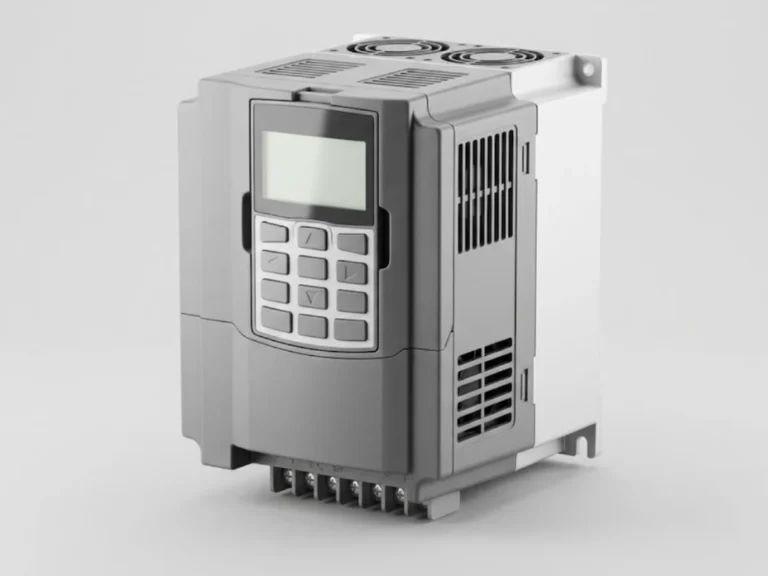
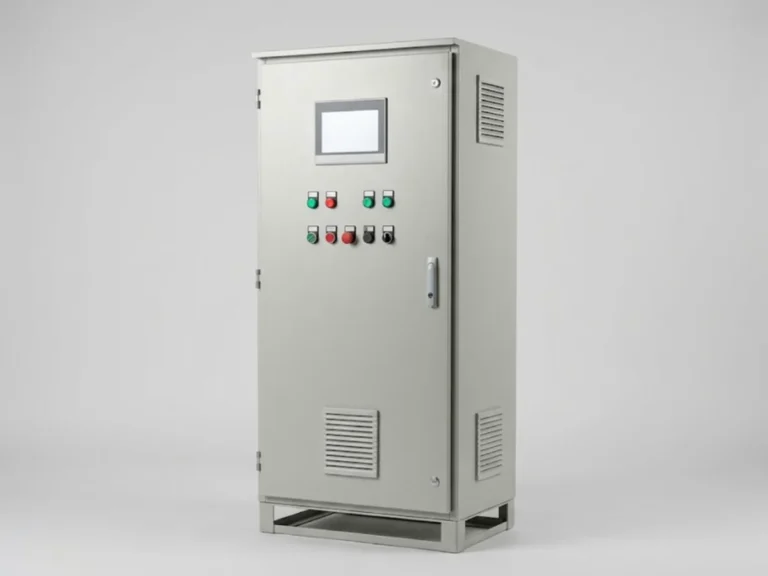
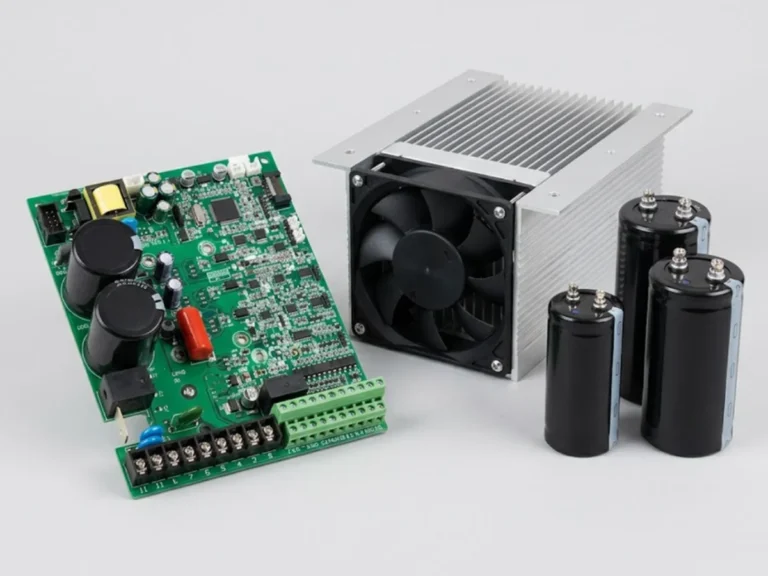
Size the VFD on the motor full-load current, not just the kW, and select a heavy or normal duty rating as the maker specifies; fans with high inertia may need more current margin. Look at our AC drives and the complete VFD and soft starter panels; spare parts are listed under VFD spares. If you only need a gentler start and stop on a pump, a soft starter is cheaper, as discussed in our starting method comparison. For the pump itself, see pumps and valves and centrifugal pumps; fan drives such as cooling tower motors also suit VFD control.
What to send us for a quotation: motor kW, voltage and full-load current, pump or fan type, flow and pressure profile or operating hours, cable length between drive and motor, control signal (4-20 mA, pressure sensor, PLC), and ambient temperature. Send these through the request a quote page or contact us; we reply within 24 hours.
Frequently asked questions
How much energy can a VFD save on a pump?
It depends on how much the flow varies and how much of the head is static. For a friction-dominated system running at 70 to 80 percent flow, the power can fall by half or more compared with throttling. With high static head, or when the pump runs near full flow, the saving is small. Measure your flow profile before estimating.
Does a VFD work on every pump?
It works well on centrifugal pumps and fans. It is not suited to loads that need constant torque at low speed, such as positive displacement pumps without special settings. Even on centrifugal pumps, keep the speed above the minimum needed to overcome static head and the minimum continuous flow stated by the pump maker.
Can I use a VFD with my existing motor?
Usually yes for standard 415 V motors, but check insulation, cable length, and cooling at low speed. Older motors may have insulation that is not suited to fast voltage edges. An output reactor or dV/dt filter reduces the stress. For continuous low-speed running, consider a motor with separate cooling or an inverter-duty motor.
Is a soft starter enough to save energy?
No. A soft starter reduces starting current and mechanical stress but the motor then runs at full speed, so it does not save energy during running. Energy savings come from reducing speed with a VFD when the demand is below full load. Use a soft starter when you only need a gentle start and stop.