A motor rarely fails without warning. Most failures begin weeks or months earlier as a slightly higher temperature, a change in vibration or a faint noise. The two parts that go wrong most often are the bearings and the winding, and most of the underlying causes are preventable. This article covers the real causes seen on Indian factory floors and the checks that catch them in time.
Bearings: the first thing to wear out
In most plants, bearing problems are the most frequent reason a motor stops. The bearing is a precision part carrying the rotor, and it fails when something changes its operating conditions.
Common bearing failure causes
- Lubrication errors. Too little grease causes metal contact and heat. Too much grease causes churning, overheating and pressing grease into the winding. Mixing incompatible greases (for example lithium-based and polyurea) can break down the lubricant. Use the grease type and quantity on the nameplate or the maker’s manual, and regrease at the stated interval.
- Misalignment. A poor coupling alignment between motor and load puts a bending load on the shaft and loads the bearings every revolution. Use a dial gauge or laser alignment, and check again after the foundation settles.
- Belt over-tension. Heavy belt pull loads the drive-end bearing beyond its rating.
- Contamination. Dust, water or process fluid entering a worn seal, or dirty grease nipples, quickly damages a bearing.
- Vibration from the load. An unbalanced fan or pump impeller, a loose base or soft foot hammers the bearing.
- Electrical damage on VFD-fed motors. High-frequency common-mode voltage can drive current through the bearings, pitting the races and causing fluting, a regular washboard pattern. Use shaft grounding rings, an insulated bearing at the non-drive end, and correct drive earthing. Suspect it when bearings on VFD motors fail early without mechanical cause.
- Wrong bearing fit or installation damage. Hammering a bearing on the shaft, or using a puller on the outer ring, leaves hidden damage.
Windings: heat is the enemy
Winding insulation ages with temperature. A common engineering rule of thumb is that every 10 degrees C of additional operating temperature roughly halves the insulation life. So anything that heats the winding shortens the motor’s life well before a sudden failure. The usual causes are:
- Overloading. A motor running above rated current for long periods, for example a pump with a worn impeller clearance or a conveyor with a jammed idler.
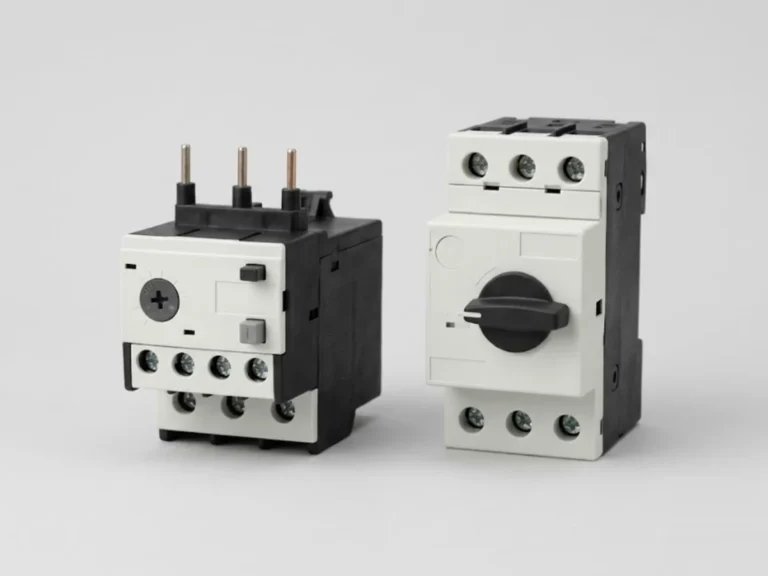
- Voltage unbalance and single phasing. Even a few percent of voltage unbalance causes a much larger current unbalance in the stator and extra heat. If one phase is lost (a blown fuse or a loose connection), a running motor continues on two phases with high current and burns out unless the protection responds. Fit overload relays with single-phasing protection, or a motor protection relay.
- Low or high voltage. Both increase current or losses. Long cable runs and a heavily loaded transformer are the usual sources.
- Poor ventilation. Blocked fan cover, dust-coated fins or a motor boxed in without airflow cannot reject its heat.
- High ambient temperature beyond the motor rating, such as near furnaces or in a closed pump house.
- Frequent starting. Each start produces several times the normal heat in the rotor and stator. Standard motors are not made for large numbers of starts per hour.
- Moisture and contamination. Idle motors in humid or monsoon conditions absorb moisture and insulation resistance falls. Dust and oil mixtures coat the winding and trap heat.
- VFD voltage spikes. Long cables between VFD and motor cause voltage reflections which stress the first turns of the winding. An output reactor, a dV/dt filter or an inverter-duty motor addresses this.
Symptoms, likely causes and the first check
| Symptom | Likely cause | First check |
|---|---|---|
| Bearing end running hot | Grease quantity, misalignment, belt tension | Compare temperature with the other end; check alignment |
| Growling or rumbling noise | Bearing wear or damage | Listen with a stethoscope; measure vibration |
| Motor trips on overload | Mechanical jam, low voltage, high load | Measure current on all three phases |
| Winding burnt on one phase | Single phasing or voltage unbalance | Check fuses, contactor tips and supply |
| Low insulation resistance | Moisture or contamination | Megger test; dry the motor |
| Early bearing failure on a VFD motor | Shaft currents | Check grounding and bearing insulation |
Tests and routine checks that prevent failures
- Insulation resistance (megger) test. Test the winding to earth with the supply isolated and leads disconnected, usually at 500 V or 1000 V DC for LT motors. A frequently used minimum is about 1 megohm plus 1 megohm per kV of rated voltage, so at least about 1.4 megohm on a 415 V motor, but trends matter more than a single value: a steady fall signals trouble. Test motors left idle during monsoon before starting them.
- Current balance. Measure all three phase currents at full load; they should be close to equal.
- Temperature. Use an infrared thermometer for bearing housings and the frame, and fit PT100 sensors or PTC thermistors in the windings of larger motors, tripping through a relay.
- Vibration. A portable meter or a periodic spectrum reading identifies bearing wear and imbalance early. Record a baseline when the motor is new.
- Lubrication schedule. Keep a logbook, and use the quantity and interval specified by the maker.
- Space heaters. Fit and energise anti-condensation heaters in large or idle motors.
- Cleanliness. Keep the fan cover and cooling fins clear, and check for blocked air intake.
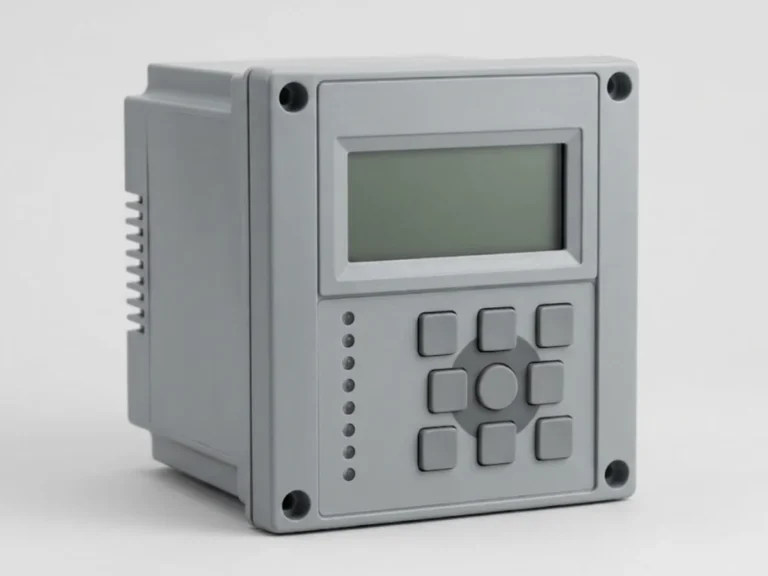
Use properly rated protection. The thermal overload relays and MPCBs in our range and the motor protection relays detect overload and single phasing. The right starting method also reduces stress; see our starter comparison.
Repair or replace?
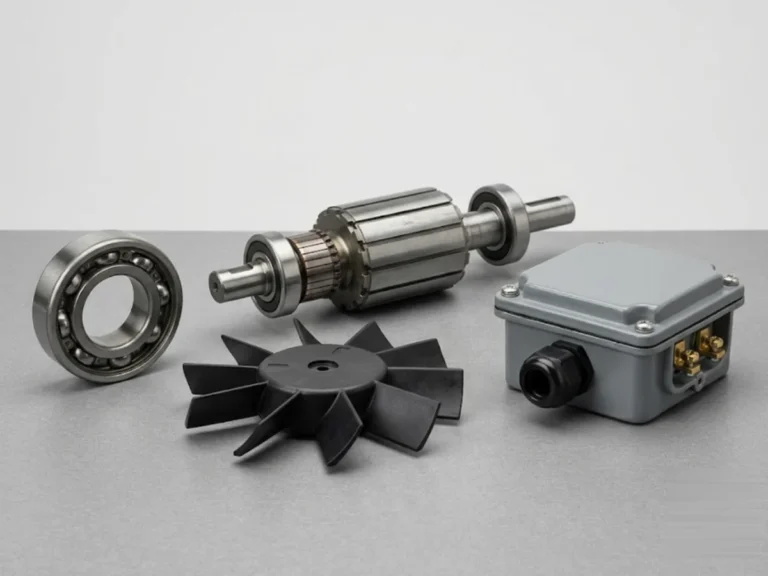
A rewind restores a burnt winding if the core is undamaged, but a poor rewind lowers efficiency and increases heating. Ask the workshop about core loss testing, the winding data and the insulation class used. For small motors, replacement with an IE2 or IE3 unit is often cheaper than rewinding. Wear parts such as bearings, fans, terminal boxes and brushes are available under motor spares. See our AC motor range for replacements, and note that the failure cause should be fixed before a replacement is run, otherwise it will also fail.
What to send us for a quotation: the nameplate photo of the failed motor, the type of failure if known, frame and mounting, duty, drive method (DOL, star-delta, soft starter or VFD), and the driven machine. Send these through the request a quote page or contact us; we reply within 24 hours.
Frequently asked questions
What is the most common cause of motor failure?
Bearing problems are usually the most frequent cause in industrial plants, followed by winding insulation failure from overheating, moisture or electrical stress. The two are linked: a failing bearing can rub or overload the winding, and an overheated winding bakes bearing grease. Regular lubrication, alignment checks and temperature monitoring prevent most of them.
How do I know if my motor winding is damaged?
Measure insulation resistance with a megger between each winding and earth, and check winding resistance between phases for balance. Signs of damage are a burning smell, a tripped overload with high current on one phase, or low insulation resistance. A test result below the minimum or a falling trend means drying out or rewinding is needed.
How often should motor bearings be greased?
It depends on motor size, speed, temperature and environment, so follow the grease interval and quantity given on the nameplate or the manufacturer's manual. Sealed bearings are not regreased. Avoid over-greasing, which overheats the bearing, and do not mix different grease types without checking compatibility. Keep a lubrication record.
Can a VFD damage a motor?
It can, if not applied correctly. Fast voltage edges and long cables stress the winding insulation, and common-mode voltages can drive current through the bearings. Reduce the risk with an inverter-duty motor, an output reactor or dV/dt filter, short cable runs, proper earthing and a shaft grounding ring or insulated bearing for larger motors.