When a squirrel-cage motor is switched on, it behaves like a short circuit for a moment. The starting method you choose decides how much current the supply must deliver, how hard the machine is jerked into motion, and how much the starter costs. There is no best method, only the right one for your motor size, supply strength and load. This article compares the four common choices on LT motors: direct on line (DOL), star-delta, soft starter and variable frequency drive (VFD).
Why starting method matters
A cage motor started direct on line draws around 6 to 8 times its full-load current while it accelerates. On a 55 kW motor with a full-load current near 100 A, that means 600 to 800 A for several seconds. The effects are:
- A voltage dip on the plant bus that can trip contactors, reset PLCs and dim lights.
- Mechanical shock to couplings, gearboxes, belts and pipework, including water hammer in pumping lines.
- Higher demand and stress on the transformer, cables and upstream breaker, which must be set above the inrush.
Some DISCOMs and plant standards also limit the size of motor that may be started direct on line. Check the rule that applies at your connection with the utility or your plant engineer.
The four methods explained
Direct on line (DOL)
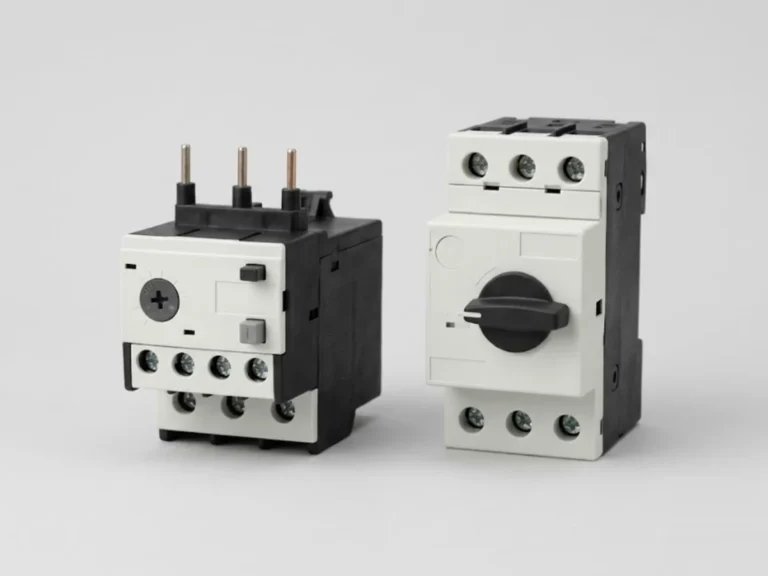
A contactor connects the motor to the full supply voltage. It is simple, cheap and gives full starting torque. It suits small motors and loads where the supply can absorb the inrush. A DOL starter needs a contactor, an overload relay or motor protection circuit breaker (see our thermal overload relays and MPCBs) and short-circuit protection.
Star-delta
The motor is first connected in star, so each winding sees about 58 % of line voltage, and then changed over to delta once it has run up. Line current and starting torque both fall to about one third of their DOL values. It needs a motor whose winding is designed for delta at the supply voltage, with all six terminals brought out. Three contactors and a timer are used. The change-over from star to delta is an open transition, so there is a brief current and torque spike when the delta contactor closes, particularly if the motor has not reached near full speed.
Star-delta works for lightly loaded starts, such as centrifugal pumps and unloaded fans, but it fails on loads that need high starting torque. If the machine needs more than about a third of rated torque to start, the motor will stall in star.
Soft starter
A soft starter uses thyristors to ramp the voltage up smoothly from a set value. Starting current can typically be limited to about 2 to 4 times full-load current, depending on the setting and the load. Torque falls roughly with the square of voltage, so the soft starter is not suitable if the load needs full torque at low speed. It also provides soft stop (useful on pumps to prevent water hammer), and motor protection features such as overload and phase loss. A bypass contactor is normally used once the motor reaches full speed to reduce heat and losses. See our range of soft starters, and medium voltage soft starters for HT motors.
Variable frequency drive (VFD)
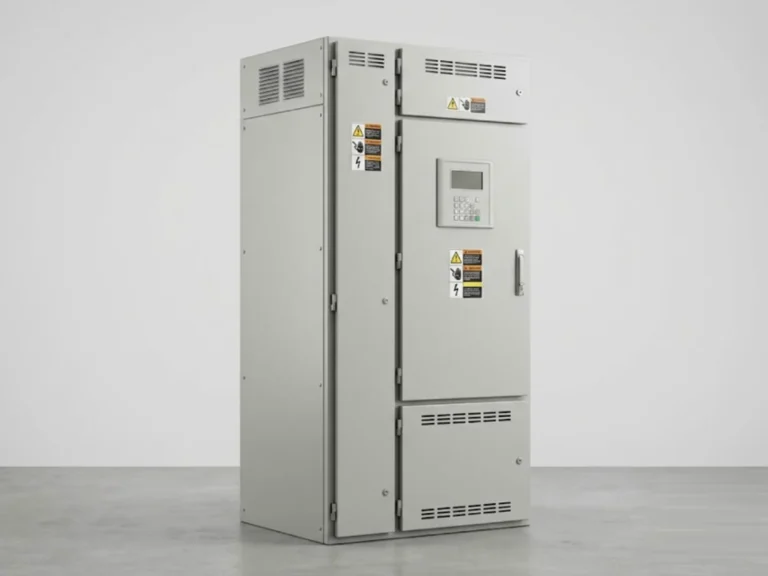
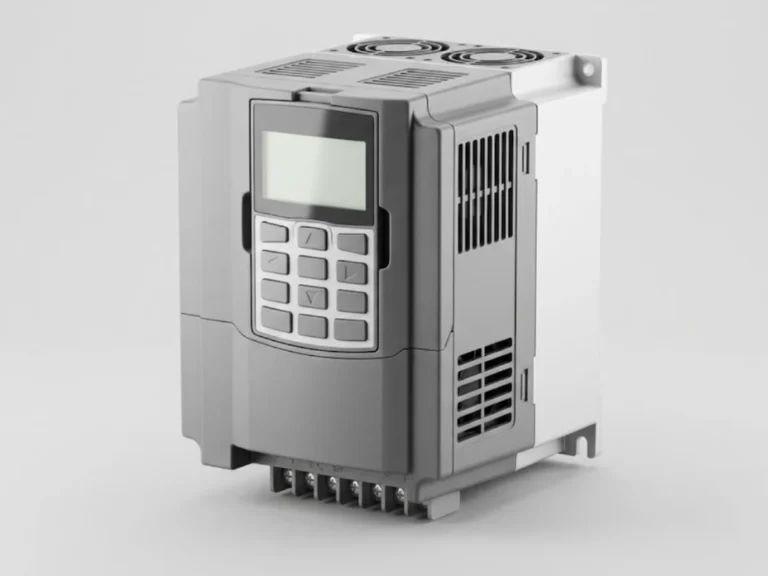
A VFD converts the supply to DC and rebuilds a variable voltage, variable frequency output. The motor starts at low frequency and accelerates smoothly, drawing about its rated current or less while delivering high torque. The VFD also controls speed during running, which is its main advantage. It costs more than other starters and adds harmonics, so it should be justified by a need for speed control or by long-run energy saving. Browse our AC drives and the combined VFD and soft starter panel.
Side-by-side comparison
| Feature | DOL | Star-delta | Soft starter | VFD |
|---|---|---|---|---|
| Starting current | 6 to 8 x FLC | about 2 to 2.7 x FLC | adjustable, about 2 to 4 x FLC | about 1 x FLC or less |
| Starting torque | full | about one third | reduced, adjustable | high, down to low speed |
| Speed control | no | no | no | yes |
| Soft stop | no | no | yes | yes |
| Relative cost | lowest | low | medium | highest |
| Harmonics | none | none | small, only during start | continuous, needs attention |
| Motor needs six terminals | no | yes | no | no |
The star-delta starting current figure above follows from the one-third rule applied to a typical DOL inrush; the actual number depends on the motor.
Choosing for your application
- Small motors (a few kW) on a strong supply: DOL, unless the load is delicate.
- Centrifugal pumps and fans, 11 to 90 kW, no speed control needed: star-delta or soft starter. Soft starters are preferred if water hammer is a problem or space and wiring are limited.
- Conveyors, crushers, mills and compressors needing high starting torque: a soft starter with current limiting, a VFD, or a slip-ring motor with rotor resistance. Star-delta usually fails on a loaded start.
- Anything that needs different speeds, or large pumps and fans with variable demand: VFD. The energy saving is explained in our article on VFDs for pumps and fans.
- Weak supply or generator-fed sites: soft starter or VFD to protect the source.
Remember that the starting method is tied to the motor choice: star-delta requires a delta-wound motor with six terminals, and a VFD on a long cable run may need an output reactor or filter. For motor selection basics see our LT induction motor guide.
Panel and protection considerations
Whatever you choose, the motor needs short-circuit protection, overload protection and, for larger motors, a protection relay. A group of starters is usually housed in an MCC panel, and our range of motor protection relays covers larger drives. Soft starters and VFDs need ventilation and ambient control; in hot plant rooms they often derate. For overall categories, see drives and motor starters.
A practical tip: when upgrading an old star-delta starter to a soft starter, keep the existing contactors only as isolators or bypass; do not use the star and delta contactors in the new circuit unless the soft starter manufacturer specifically allows it. Confirm wiring with a qualified engineer.
What to send us for a quotation: motor kW and rated current, supply voltage and fault level if known, the load (pump, fan, conveyor, crusher), whether speed control is needed, number of starts per hour, and ambient conditions. Send them through the request a quote page or contact us, and we will reply within 24 hours.
Frequently asked questions
Is a soft starter better than a star-delta starter?
For most pump and fan duties a soft starter gives smoother starting, no open-transition spike and extras such as soft stop and motor protection. It costs more than a star-delta starter and generates some heat. Star-delta remains a sound, cheap choice for lightly loaded starts. For a high-torque load neither is ideal; consider a VFD or slip-ring motor.
Can a soft starter replace a VFD?
Only where you do not need speed control. A soft starter limits current and torque during starting and stopping, then the motor runs at full speed. A VFD controls speed continuously and can deliver high torque at low speed. If the process demand varies, a VFD saves energy; if the motor simply starts and runs, a soft starter is usually enough.
Why does star-delta not work for loaded starts?
In star, the winding voltage is about 58 percent of line voltage, so starting torque falls to about one third of the DOL value. If the load needs more than that to move, the motor stays near standstill and draws high current until the change-over, then the delta contactor closes with a severe spike. Use a soft starter, VFD or slip-ring motor instead.
At what motor size is DOL starting not recommended?
There is no single universal limit. It depends on the transformer and cable capacity, the fault level and the utility's rules. Many plants avoid DOL above roughly 7.5 to 15 kW unless the supply is stiff. Check with your DISCOM or plant electrical engineer and calculate the voltage dip at the motor starting current.