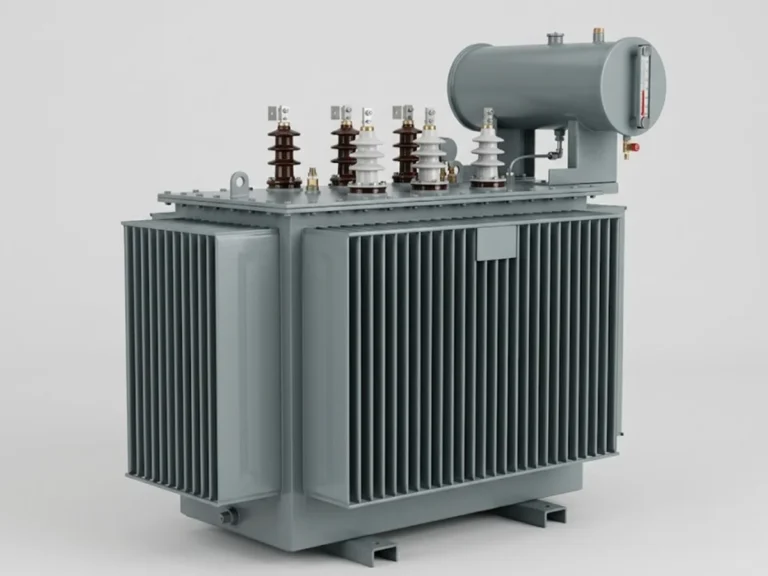
The vector group is the short code on a transformer nameplate, such as Dyn11, that tells you how the HV and LV windings are connected and what angle separates their voltages. It looks like jargon, but it controls three practical things: whether two transformers can be paralleled, how an unbalanced or earth fault behaves, and how your LV neutral is handled. Getting it wrong at the ordering stage is awkward to fix later.
How to read the code
A vector group has three parts, always written in the same order.
- Capital letter: HV winding connection. D is delta, Y is star (wye). YN means star with the neutral brought out.
- Lower-case letter: LV winding connection. d is delta, y is star, yn is star with neutral brought out.
- Number: phase displacement. This uses a clock face. The HV phase voltage is the 12 o’clock hand, and the number shows where the LV hand points. Each hour is 30 degrees, and the LV lags the HV as you go clockwise. So 0 means in phase, 1 means the LV lags by 30 degrees, and 11 means the LV leads by 30 degrees.
So Dyn11 reads: HV delta, LV star with neutral, LV leading HV by 30 degrees.
The common vector groups
Dyn11: the usual distribution choice
Dyn11 is the standard arrangement for distribution transformers stepping 11 kV or 22 kV down to 415 V in India. The reasons are practical.
- Neutral for single-phase loads. The LV star winding gives a neutral, so 240 V single-phase loads and 4-wire distribution work.
- Handles unbalanced loads well. When the LV neutral carries unbalanced current, the delta HV winding allows the matching ampere-turns to flow and keeps the neutral stable. The unbalance does not travel up as a large single-phase current on the HV line in the same way as with a star-star unit.
- Triplen harmonics are trapped. The third harmonic and its multiples circulate inside the delta instead of appearing on the HV network. This matters on sites with VFDs, computers and lighting.
- Earth faults are manageable. The delta is a zero-sequence path, which helps keep the LV earth fault level well defined.
When ordering distribution transformers, state the vector group explicitly on every order.
Dyn1: the same thing, shifted the other way
Dyn1 differs from Dyn11 only in the phase angle: the LV lags the HV by 30 degrees rather than leading it. Electrically each transformer behaves the same, but the two cannot be paralleled with each other. Some utilities and older installations use Dyn1, so when you are adding a second transformer to an existing bus, look at the nameplate of the first one before ordering. Do not assume Dyn11.
YNyn0: star-star with both neutrals
YNyn0 has no phase shift between HV and LV, and both neutrals are available. It is used where a zero phase shift is needed or the HV system is solidly earthed and the designer wants a through neutral path. Its weakness is zero-sequence behaviour: with no delta winding, third harmonics and unbalanced loads cause neutral shift and flux problems. To tame this, the transformer is often built with a tertiary delta winding (written YNyn0d11), or with a core type that offers a low-reluctance zero-sequence path. For plain factory distribution, YNyn0 is less common than Dyn11.
Quick reference
| Vector group | HV / LV | Phase shift | Typical use |
|---|---|---|---|
| Dyn11 | Delta / star with neutral | LV leads HV by 30 degrees | Distribution transformers, plants and buildings |
| Dyn1 | Delta / star with neutral | LV lags HV by 30 degrees | Matching existing Dyn1 installations |
| YNyn0 | Star with neutral / star with neutral | No shift | Larger power transformers, solidly earthed networks, often with a tertiary delta |
| Ynd11 | Star with neutral / delta | LV leads by 30 degrees | Generator step-up and some industrial duties |
Parallel operation: what must match
To run two transformers in parallel you need the same voltage ratio, the same phase displacement (the same vector group, or at least the same clock number with compatible connections), similar percentage impedance and a kVA ratio that is not extreme. If the vector groups differ, a circulating current will flow even with no load connected, and the breakers will see a heavy short-circuit across the bus. Dyn11 and Dyn1 cannot be paralleled, and neither can Dyn11 with YNyn0.
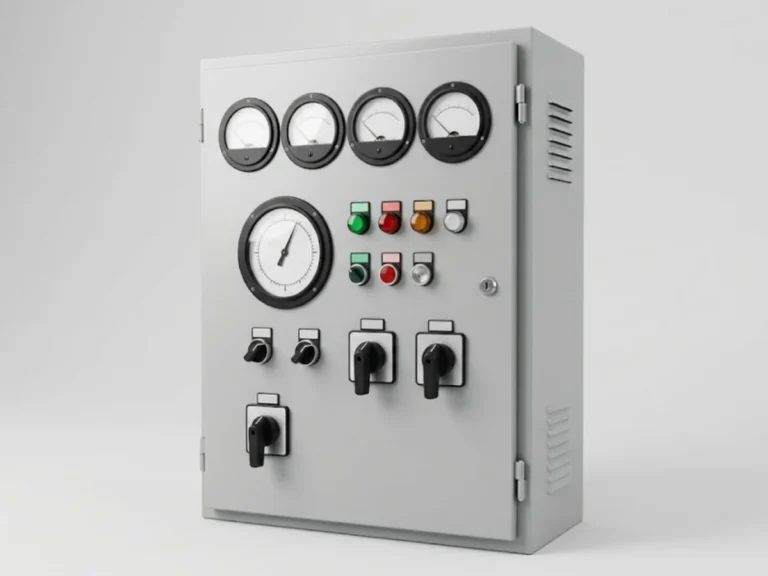
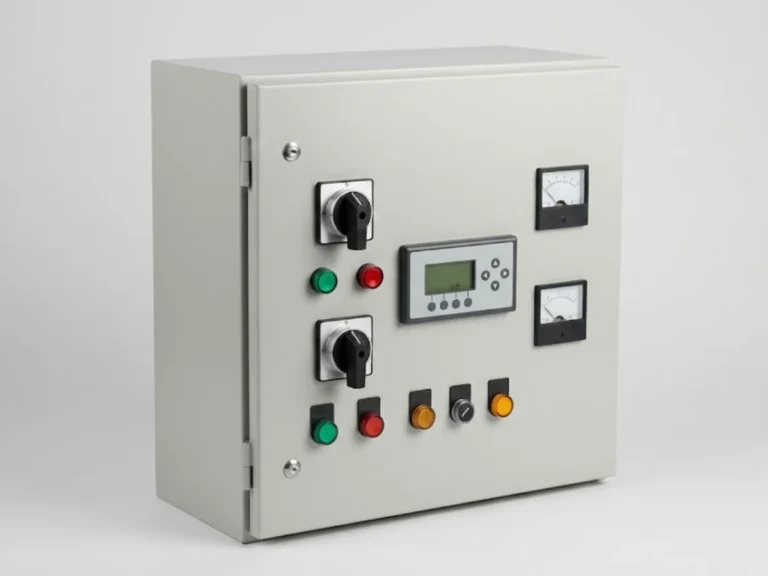
Before closing any bus coupler, a qualified engineer should confirm the phase sequence and phase angle with a phasing check. The same discipline applies to bringing a transformer in parallel with a generator or a second incomer. You will see this on LV panels such as synchronizing panels and auto change-over panels.
Where it affects your earthing and protection
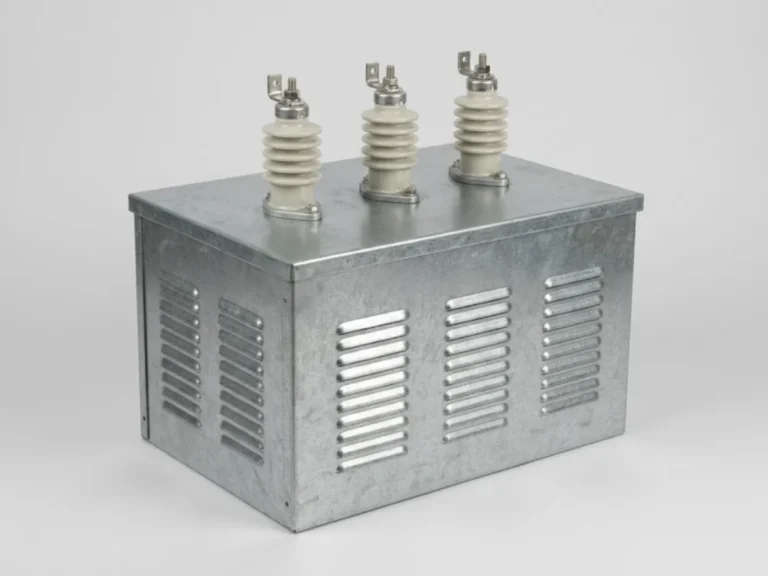
- LV neutral earthing. For Dyn11, the LV neutral is normally earthed at the transformer star point in a 415 V system. Where a resistance-earthed system is required (for example at higher voltages), a neutral grounding resistor panel is used; the earthing method is a system design decision.
- Relay settings. For differential and earth-fault protection, the relay may need to compensate for the 30 degree shift. Modern numeric relays do this in software; older electromechanical schemes used interposing CTs. See the protection relays range.
- Metering. The current transformers on the HV and LV sides sit on different phase references; check the connection diagram.
Read more on earthing practice in our earthing and cable accessories category.
Choosing a vector group in practice
- If you are adding to an existing bus, copy the existing nameplate.
- If it is a new plant fed from a DISCOM at 11 kV, the DISCOM or the applicable IS specification usually fixes it as Dyn11; confirm with the utility.
- If you have a generator, large harmonic loads or need a neutral at both levels, discuss the options with the transformer manufacturer and your electrical consultant.
What to send us for a quotation
Include the kVA, HV and LV voltages, required vector group, impedance, cooling type, tap range and whether the unit will run in parallel with an existing one (send the existing nameplate if so). Submit it via request a quote or contact the team through contact us. For paralleling and protection settings, confirm with a qualified engineer.
Frequently asked questions
What does Dyn11 mean on a transformer nameplate?
Dyn11 means the HV winding is connected in delta (D), the LV winding in star with the neutral brought out (yn), and the LV voltage leads the HV voltage by 30 degrees (the 11 on the clock). It is the standard connection for distribution transformers feeding 415 V systems in India.
Can I parallel a Dyn11 transformer with a Dyn1 transformer?
No. Dyn11 and Dyn1 differ by 60 degrees between their LV outputs, so connecting them in parallel would drive a large circulating current, equivalent to a short circuit across the bus. Parallel transformers need the same vector group, voltage ratio and reasonably matched impedance.
Why is Dyn11 preferred over YNyn0 for distribution?
The delta winding in Dyn11 gives a path for zero-sequence and third harmonic currents, so unbalanced single-phase loads and harmonics do not disturb the neutral or push problems into the HV network. YNyn0 lacks that path unless a tertiary delta is added.
Does the vector group affect the protection relay settings?
It can. Differential protection must compensate for the 30 degree phase shift of Dyn11, either with software compensation in a numeric relay or with interposing CTs in older schemes. Earth-fault settings also depend on how the neutral is earthed. Have a qualified protection engineer confirm.