Switchgear Panels
17.5 to 33 KV HT Panels
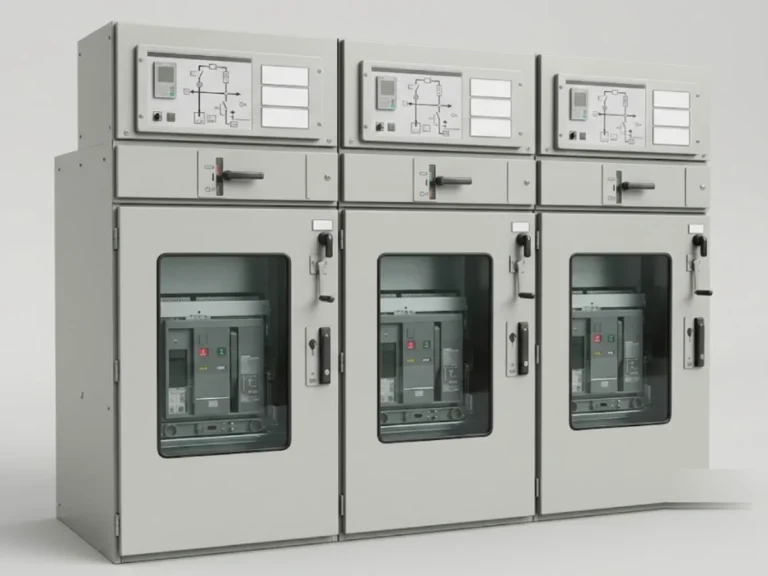
Indoor HT switchgear panels for 17.5 kV to 33 kV class distribution.
On request- StandardIEC 62271-200
- Voltage Class17.5 kV - 33 kV
Made to Order
Download specification sheet (PDF)
Resistor panels that limit earth-fault current at the transformer or generator neutral.
Made to order against your specification. Fill what you know; our engineers will confirm the rest.
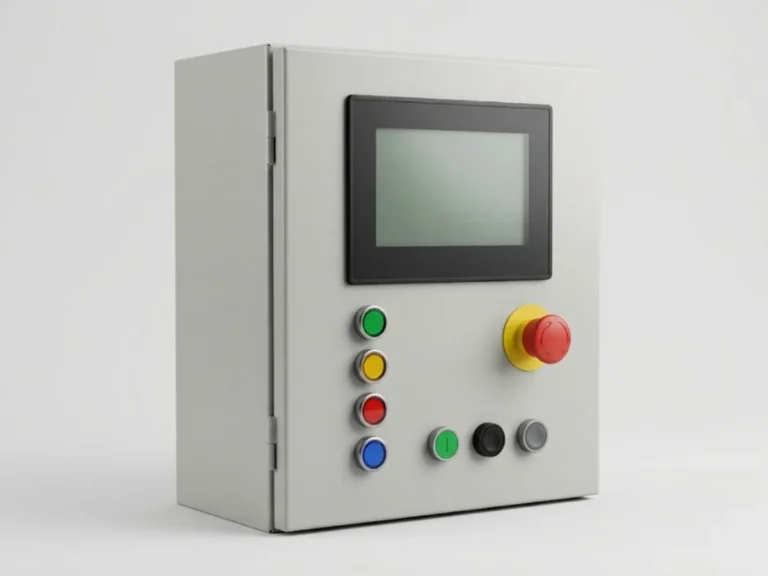
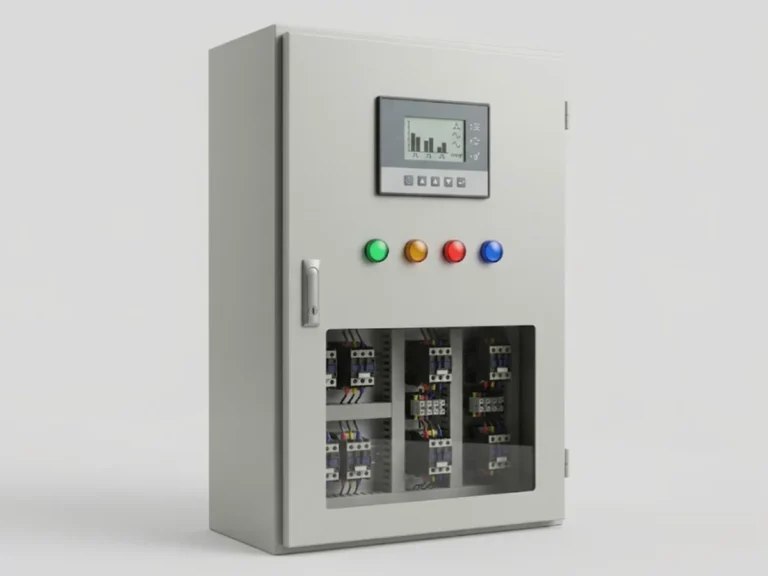
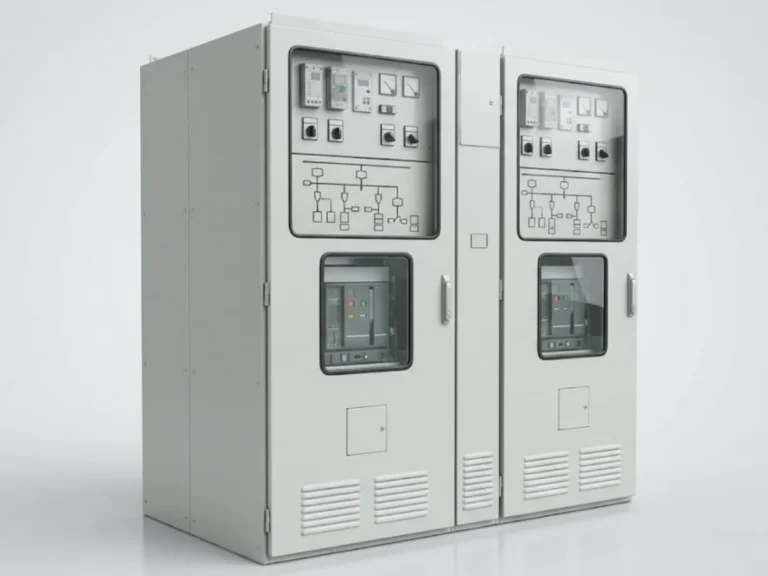
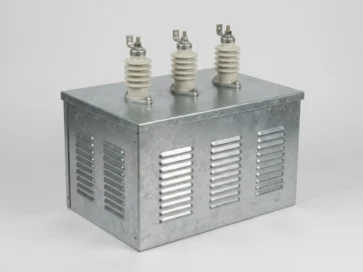
Representative image. The actual product, make and appearance depend on the supplier and your specification.
Also searched as: NGR panel, neutral earthing resistor panel, NER panel, neutral grounding resistor, neutral earthing resistor, NGR resistor panel
A neutral grounding resistor holds earth-fault current to a chosen value, so the first decision is that value. Higher limits make fault detection easy but damage more; lower limits are gentler on equipment but need sensitive relays. The system designer sets this, usually with the protection scheme in mind.
Worked example: on an 11 kV system, line-to-neutral voltage is about 6.35 kV. To limit earth-fault current to 400 A the resistance is 6350 / 400, about 15.9 ohm.
See protection relays and current transformers for protection, and power transformers for the transformer neutral. Specify all details with your protection engineer.
Ratings, dimensions and certification are confirmed against your enquiry. Use Send an enquiry and our engineers will respond within 24 hours.
Divide the line-to-neutral voltage by the earth-fault current you want to allow. On an 11 kV system, 6350 V and 400 A give about 15.9 ohm. The designer chooses the current limit. Always confirm the arithmetic with the system designer, who also checks relay settings.
A short-time rating lets the resistor carry fault current only for a stated time, such as 10 seconds, until protection trips. A continuous rating suits systems that must keep running during an earth fault. The choice affects resistor size and cost, so decide it early.
The resistor limits the fault current, but you still need to detect it and trip. A CT and earth-fault relay on the neutral measure the current and isolate the fault. Set the relay to trip within the resistor's time rating.
A neutral grounding resistor, or NGR, is a resistor connected between the neutral of a transformer or generator and earth. It limits the earth fault current to a safe level instead of letting the fault current rise very high.
It limits the earth fault current, which reduces damage to equipment such as windings and cables and reduces stress on the system during a fault. It also lets protection relays detect the fault and trip in a controlled way.
An NGR panel houses the resistor in a ventilated enclosure along with any associated monitoring, so it can be installed at the transformer or generator neutral safely. It limits earth fault current at that point.
Send the system voltage, the earth fault current to be limited, duration of the fault current, transformer or generator details, indoor or outdoor use and the standard required. SKE Bharat prepares the quotation from these details within 24 hours.
| Panel Type | Neutral grounding resistor (NGR) |
|---|---|
| Standard | IEEE 32 / IEC 60076-25 |
| Voltage Class | LT to HT |
| Construction | Ventilated enclosure |
| Protection Degree | IP23 - IP54 |
| Typical Use | Earth-fault current limiting |
Indoor HT switchgear panels for 17.5 kV to 33 kV class distribution.
On requestMetal-enclosed medium-voltage switchgear for motor starting and distribution from 3.3 kV to 11 kV.
On requestAuto Mains Failure panels that start the generator and transfer the load automatically when mains power fails.
On requestAutomatic Power Factor Correction panels that switch capacitor banks to hold power factor near unity and avoid utility...
On requestWhat a compact or packaged substation contains, how it differs from a conventional civil substation, when it makes sense and what to specify before you order.
6 min readTransformers & Power QualityA step-by-step method to size a 11 kV/415 V transformer for a factory or building, with a worked example, standard kVA ratings and the mistakes that…
6 min readSwitchgear, Panels & ProtectionFixed MCCs cost least, drawout MCCs cut downtime, and intelligent MCCs add data. Here is how to decide which construction your plant actually needs.
6 min read