An AMF (automatic mains failure) panel watches the incoming supply and, when it fails, starts the diesel generator, waits for it to stabilise, moves the load over, and reverses the whole sequence when mains power returns. Done right, the plant sees a short blackout of seconds and no human involvement. Done wrong, you get a DG that starts but never takes the load, or a panel that chatters between supplies when the mains flicker.
What the panel contains
- AMF controller: a microprocessor module that monitors mains and DG voltage, frequency and phase sequence, and runs the start and stop sequence.
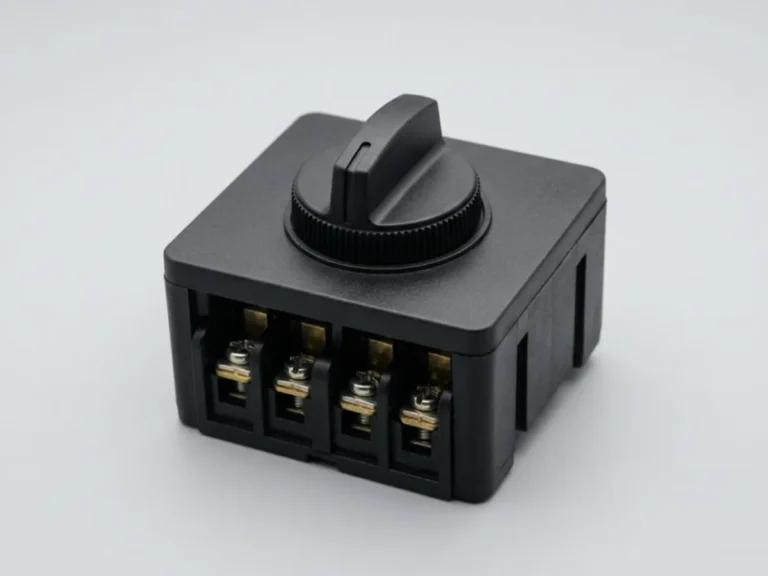
- Changeover switchgear: two interlocked contactors, two breakers (MCCB or ACB), or a motorised changeover switch, one for mains and one for DG. See changeover switches.
- Interlocking: electrical and mechanical, so the two sources can never be connected at once.
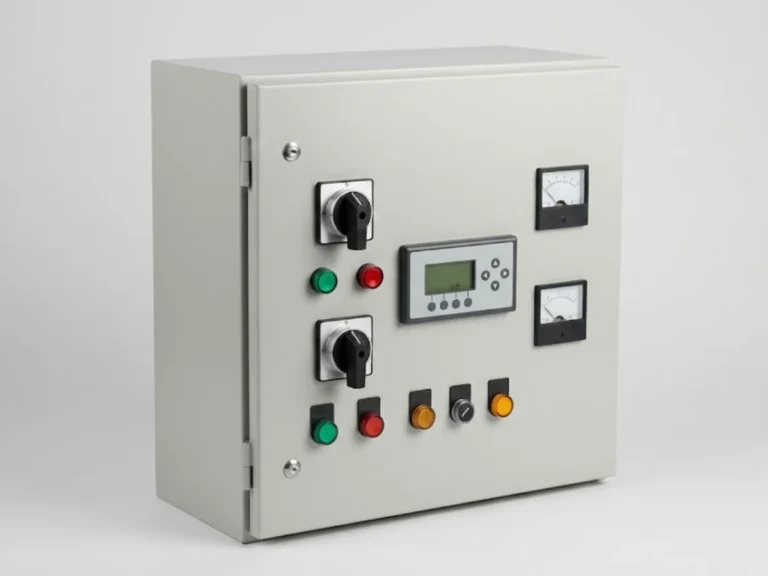
- Protection and metering: voltage relays, meters for both sources, indication lamps, and an emergency stop.
- Supply for control: the DG starting battery and charger, since the controller must work when the mains are dead. See battery chargers.
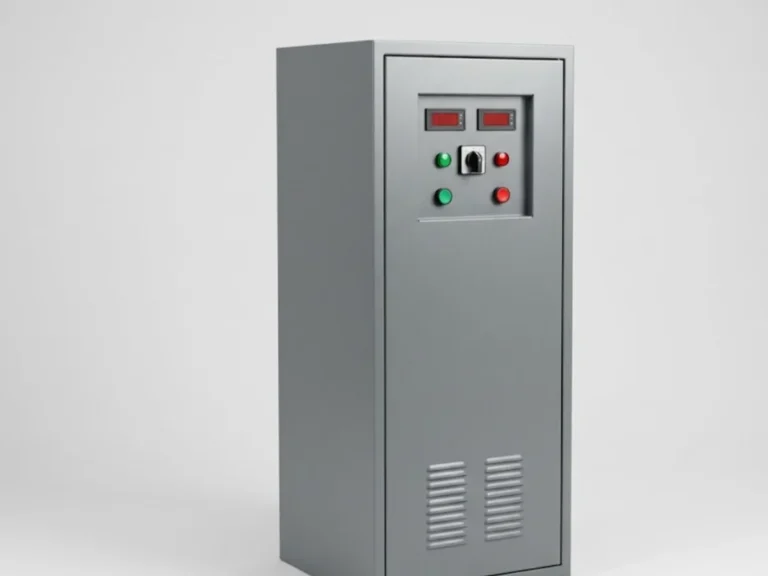
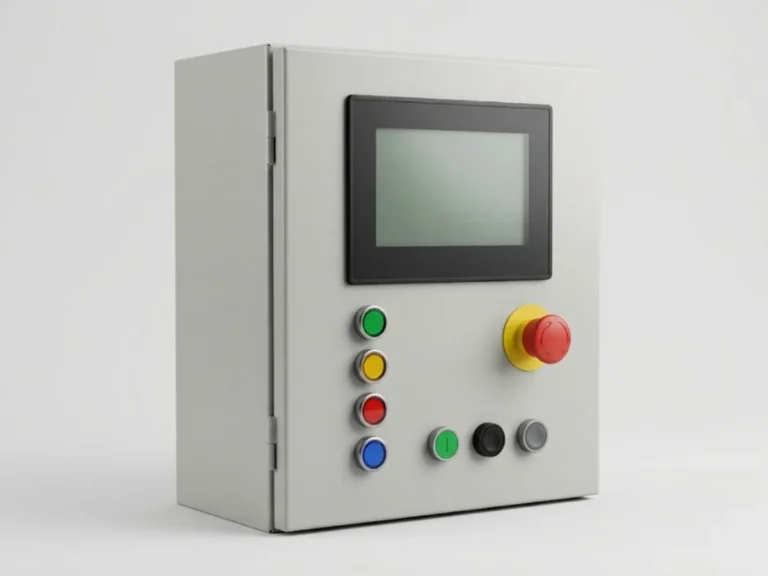
Our AMF panel and auto change over panel pages show the configurations.
The sequence, step by step
- Mains failure detected. The controller sees voltage or frequency outside its set window on any phase, or a phase loss.
- Delay before starting. A timer (commonly a few seconds) rides through short dips and flicker so the DG is not started needlessly.
- Start command. The controller energises the DG start circuit. If the engine does not fire, it retries, typically up to three attempts with rest intervals, then raises a “fail to start” alarm.
- Engine run and stabilise. The controller waits for DG voltage and frequency to be within limits for a set time before accepting it.
- Mains breaker opens, DG breaker closes. This is a “break before make” transfer, so the load sees a short outage, usually well under a few seconds counting the whole sequence from the failure to power on the bus.
- Mains returns. The controller waits for a retransfer delay (commonly a few minutes) to be sure the supply is stable.
- Retransfer. The DG breaker opens, the mains breaker closes. Another short interruption occurs.
- Cool-down. The DG runs off load for a few minutes, then stops.
The times above are typical starting values. The right settings depend on the DG manufacturer, the load and the DISCOM supply quality.
Choosing the changeover element
| Element | Good for | Notes |
|---|---|---|
| Interlocked contactors | Up to a few hundred amperes | Low cost, fast; check making and breaking duty, and use auxiliary contacts for feedback |
| Interlocked MCCBs with motor operators | Roughly 100 A to 1600 A | Common in industrial AMF panels |
| Interlocked ACBs | Above roughly 1000 A, or main incomers | Higher cost, built for large currents and high fault duty |
| Motorised changeover switch | Small loads, commercial buildings | Compact; check fault withstand |
Whichever you pick, rate it for the full load current of the larger of the two sources. For 3-phase 4-wire systems consider whether the neutral should also be switched (four-pole) to avoid circulating neutral currents and to keep protection correct on the DG side; this depends on how the DG neutral is earthed.
Sizing and design points
- DG capacity versus load. Do not load the DG with the entire plant when it only has 60 percent capacity. Use load shedding or a priority bus so non-essential feeders stay off until the DG is stable.
- Motor starting. Large motors starting on the DG draw several times full-load current and can stall the engine. Soft starters or VFDs help. A staged re-start delay stops everything restarting at once.
- APFC lockout. Switch the capacitor bank off on DG, or the alternator may see leading power factor.
- Earthing. Neutral earthing of the DG and mains must be decided before the panel is built; it influences whether the neutral is switched.
- Multiple DG sets. When two or more run in parallel, a synchronizing panel is needed, with load sharing and reverse power protection.
- Battery health. Control and starting circuits are battery-dependent, so check the battery and charger regularly.
- Test on load. Fit a test switch so the sequence can be run on a schedule, say monthly, before a real outage finds a fault. A DG that has not carried load for months is the most likely to fail on the day.
- Alarms and remote monitoring. Fail-to-start, low fuel, high temperature and breaker trip signals should reach someone, by relay contact to a PLC, a hooter or a remote monitoring module.
Common faults
- DG starts but the changeover does not operate: check the DG voltage or frequency window, then the breaker’s closing supply and interlock contacts.
- Panel chatters between sources: the mains voltage window is too tight or there is no hysteresis, so widen it or lengthen delays.
- Fails to start on a cold morning: weak battery or charger fault, the commonest cause.
- Phase sequence mismatch: the DG and mains do not rotate the same way, and motors run backward. Always verify the phase sequence on first connection.
An AMF panel interfaces with the engine controls and with the building electrical system. Confirm the design, interlocking scheme and settings with a qualified engineer and the DG supplier before commissioning.
What to send us for a quotation
Send the DG kVA rating and make, mains and DG current, the system (3-phase 3-wire or 4-wire), neutral arrangement, preferred changeover element (contactor, MCCB or ACB), any load-shedding feeders, and whether the controller should have remote monitoring. You can request a quotation or contact us. We reply to quotation requests within 24 hours.
Frequently asked questions
What does AMF stand for and what does an AMF panel do?
AMF means automatic mains failure. The panel senses when the grid supply fails, starts the diesel generator, changes the load over to it once it is stable, and moves the load back when mains returns, then stops the DG after a cool-down. It removes the need for an operator at the changeover.
What is the difference between an AMF panel and an ATS?
An ATS (automatic transfer switch) is the switching element that moves the load between two sources. An AMF panel includes a controller that also starts and stops the generator and runs the whole sequence. In practice the terms overlap, but AMF implies generator start control and ATS may only mean the changeover.
How long does the changeover take?
The load is without power during the whole sequence from mains failure to DG supply. Detection delay, engine start and stabilisation usually take from a few seconds to well over ten seconds, depending on settings and the engine. The actual switching at the changeover itself is a fraction of a second. For loads that cannot tolerate this, add a UPS.
Do I need a four-pole changeover?
It depends on how the neutrals are earthed. If the DG neutral is earthed separately from the mains neutral, a four-pole arrangement that switches the neutral is usually needed to prevent parallel neutral paths and keep earth fault protection correct. Confirm with a qualified engineer once the earthing scheme is fixed.