Any plant that takes supply at 11 kV, or runs large motors at 3.3 kV or 6.6 kV, needs medium voltage switchgear. In India, an 11 kV incomer panel is where your DISCOM supply is first switched and protected inside your premises. These are metal-enclosed lineups built around a vacuum circuit breaker (VCB) and they are specified quite differently from low-voltage boards. This guide covers what is inside, what the ratings mean and what to put in an enquiry.
What is inside an 11 kV panel
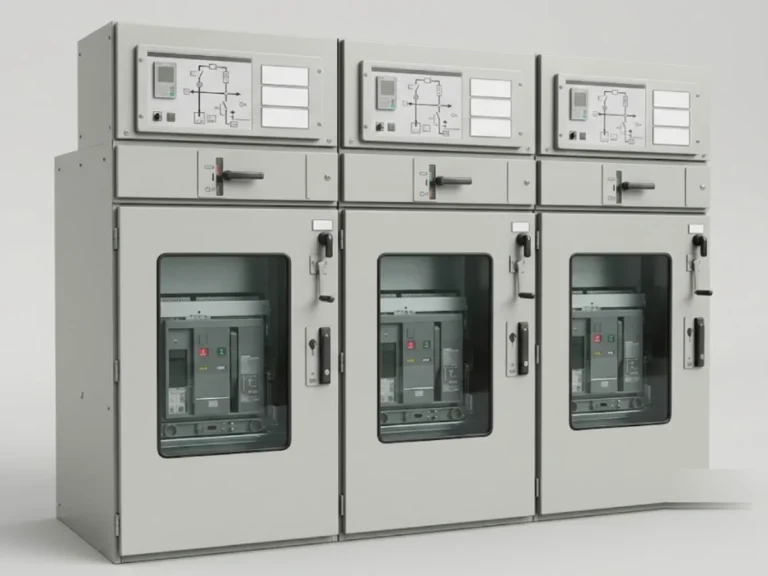
Each panel (or “cubicle”) is usually divided into compartments, so the parts that need work are separated from the live parts that do not.
- Busbar compartment: the main busbars running through the whole lineup, typically 630 A, 1250 A or 2000 A.
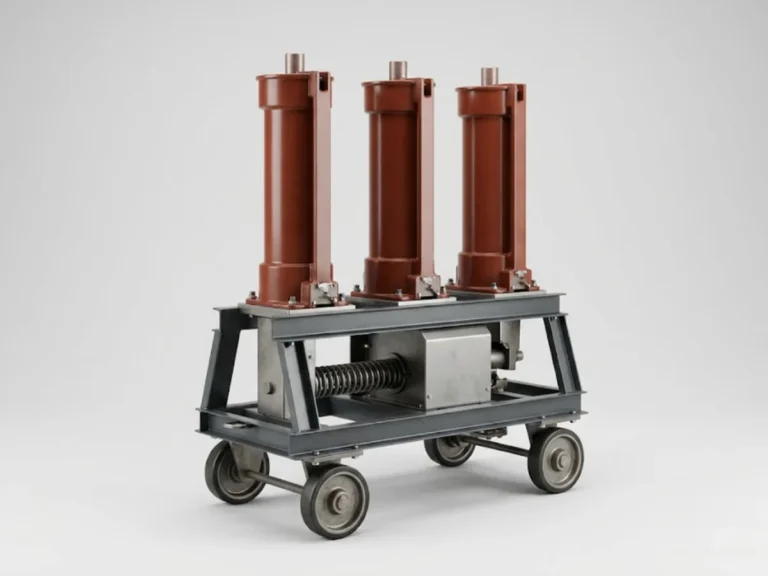
- Breaker compartment: the VCB on a truck that can be racked between service, test and isolated positions.
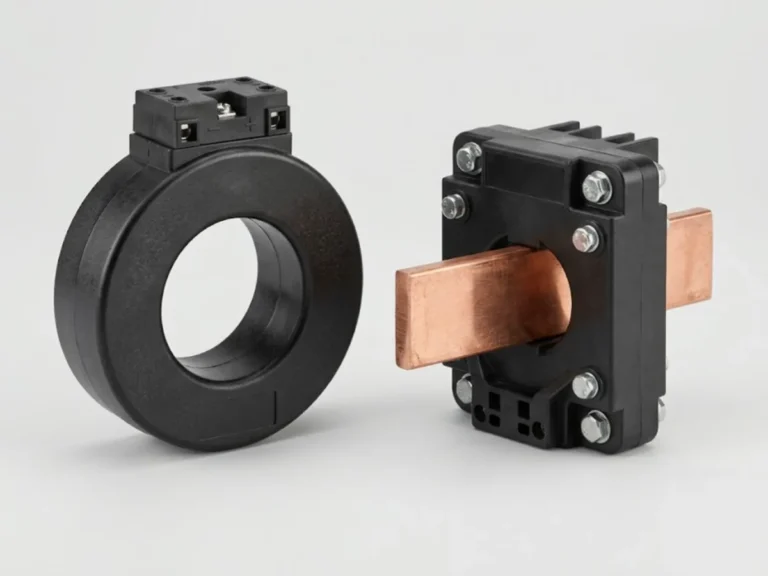
- Cable compartment: cable termination, current transformers, earthing switch and often voltage transformers.
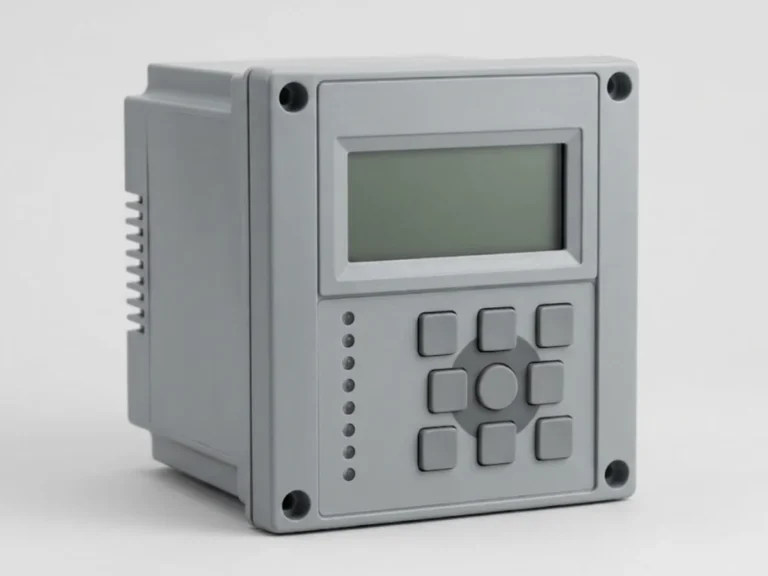
- Low voltage (relay) compartment: protection relays, meters, control switches and wiring.
Pressure relief flaps or ducts direct the effects of an internal arc away from the operator. Interlocks stop the breaker being racked in or out while closed and stop the earthing switch being closed on a live feeder.
Why vacuum circuit breakers
A VCB interrupts current inside a sealed vacuum bottle (the vacuum interrupter). The arc is extinguished at the first current zero because there is nothing in the gap to sustain it. The contact gap is only a few millimetres, so the mechanism is compact and light. Compared with the older oil circuit breakers and bulk-oil designs, VCBs have:
- no oil to maintain or burn;
- a long contact life at normal duty;
- low maintenance, usually mechanism lubrication, contact wear checks and vacuum integrity tests at intervals set by the manufacturer;
- suitability for frequent operation, such as motor feeders.
Sulphur hexafluoride (SF6) breakers are also used in medium voltage, but vacuum dominates at 11 kV and 33 kV for most industrial duties. See our VCB and 3.3 kV to 11 kV MV panels pages, and the 17.5 to 33 kV HT panels range for higher voltages.
The ratings that matter
| Rating | What it means | Typical values for 11 kV |
|---|---|---|
| Rated voltage | Highest system voltage the equipment is designed for | 12 kV for an 11 kV system |
| Rated normal current | Continuous current of breaker and busbar | 630 A, 1250 A, 2000 A |
| Short-circuit breaking current | Maximum fault the breaker can interrupt | 16, 25 or 31.5 kA |
| Short-time withstand | Current the equipment can carry without damage for the stated time | Same kA, for 1 s or 3 s |
| Power-frequency withstand and impulse | Insulation level | Per the voltage class in the standard |
| Auxiliary supply | For closing, tripping and spring charging | 24 V, 30 V, 48 V or 110 V DC are common |
Choose the short-circuit rating from the fault level at the point of supply. For a plant fed from a DISCOM, ask for the sanctioned fault level in your supply agreement. Do not under-specify to save money; the rating also decides the busbar bracing.
Protection, CTs and VTs
Each feeder is protected by a numerical relay measuring CT and sometimes VT signals. Typical functions include:
- Overcurrent and earth fault, instantaneous and time delayed.
- Under and over voltage on the incomer.
- Motor protection (thermal overload, locked rotor, starts per hour) on motor feeders.
- Transformer protection including restricted earth fault and, for larger transformers, differential.
- Lockout (trip circuit supervision) so the breaker cannot be reclosed on a fault until reset.
Select current transformers with accuracy class and burden matched to the relay and meter, and voltage transformers for metering and voltage protection, typically 11000/110 V. Use protection relays that suit the feeder type.
Auxiliary DC supply
MV breakers trip on DC from a battery, so that protection works even when the AC supply is lost. The battery and charger are part of the protection system, not an accessory. A typical 110 V DC (or 30 V, 48 V) battery bank with a float charger sits near the switchboard. See battery chargers and DC power supplies.
Specification points that avoid trouble
- Indoor or outdoor: outdoor panels need weatherproof enclosure, canopy and heaters for condensation control.
- Internal arc classification: ask whether the panel is tested for internal arc withstand and with what duration and kA. Access class (for example front only versus all sides) matters.
- Cable entry: bottom or top, number and size of cables per phase, and the depth of the cable chamber.
- Surge protection: motors and dry-type transformers switched by vacuum breakers often need surge arresters or RC snubbers across the load, because switching can create steep transient overvoltages. Ask the transformer or motor maker.
- Metering: the DISCOM may specify its own CT and PT and metering cubicle arrangement.
- Spares: keep a spare closing coil, trip coil and auxiliary contacts.
Medium voltage work is hazardous. Installation, testing, relay settings and commissioning must be done by qualified personnel, and ratings should be confirmed with a qualified engineer and the DISCOM requirements.
Finally, think about commissioning and maintenance from the start. Ask for factory test reports for each panel, the relay setting file format, and the list of interlock keys. Plan a regular schedule for insulation resistance and contact resistance checks, trip-time tests of the breaker and inspection of the cable compartment heaters. Schedule these around plant shutdowns rather than waiting for a fault.
What to send us for a quotation
Send the single-line diagram, system voltage, fault level, number and type of feeders (incomer, transformer, motor, bus coupler), busbar rating, indoor or outdoor, DC auxiliary voltage, relay and metering requirements and any DISCOM drawings or specifications. You can request a quotation or contact us. We answer quotation requests within 24 hours.
Frequently asked questions
What is a VCB panel?
A VCB panel is a metal-enclosed medium voltage cubicle housing a vacuum circuit breaker with its busbars, cable termination, instrument transformers and protection relays. It is used as the incomer, transformer feeder or motor feeder in 3.3 kV to 33 kV systems. The vacuum interrupter extinguishes the arc without oil or gas.
What fault level should I choose for an 11 kV panel?
Take the fault level at your point of supply from the DISCOM or from the system study and choose the next standard rating above it, commonly 16, 25 or 31.5 kA. Also check the time rating (1 s or 3 s) and that the busbars are braced for the same level. Under-rating is a safety risk.
Why does a VCB panel need a battery?
The breaker trips and closes on DC auxiliary power, so protection still works when the AC supply fails or collapses in a fault. A battery with a float charger gives that independent supply. Without a healthy DC system, the relays may detect a fault but the breaker cannot trip.
VCB or SF6 breaker, which is better at 11 kV?
Both are accepted, but vacuum breakers dominate at 11 kV because they are compact, need little maintenance and have no gas to handle or monitor. SF6 is more common at higher voltages. For a typical industrial 11 kV installation, VCB is the usual choice.