A power cable specification has four decisions that drive both cost and reliability: the conductor, the insulation, the armour and the outer sheath. Pick them by the installation conditions rather than by habit, and a cable will outlast the plant. This guide explains how to choose between XLPE and PVC, armoured and unarmoured, and when FRLS sheathing is worth specifying.
Reading a power cable designation
A typical Indian cable description reads like “3.5C x 185 sq mm, Al, XLPE, armoured, FRLS, 1.1 kV”. Break it down:
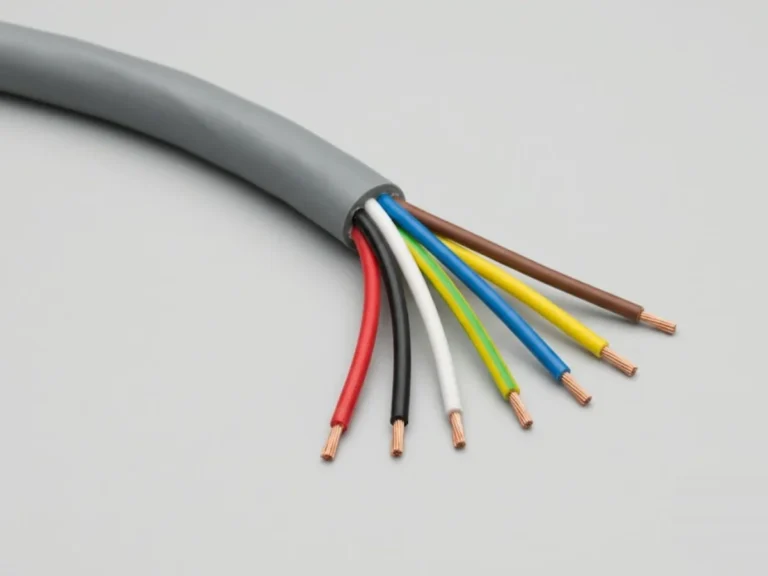
- Cores and size: 3.5C means three full-size cores plus a reduced neutral; 4C means four equal cores; single core is common for large currents.
- Conductor: aluminium or copper, usually stranded.
- Insulation: XLPE or PVC.
- Armour: none, galvanised steel strip or wire, or non-magnetic aluminium for single core.
- Outer sheath: PVC, with or without FRLS properties, or LSZH.
- Voltage grade: commonly 1.1 kV for LT and 3.3, 6.6, 11, 22 or 33 kV for HT.
XLPE versus PVC insulation
Cross-linked polyethylene (XLPE) is thermoset; PVC is thermoplastic. For normal LT work both are used, but the electrical and thermal margins differ.
| Property | PVC | XLPE |
|---|---|---|
| Max continuous conductor temperature | 70 degrees C | 90 degrees C |
| Short-circuit conductor temperature | 160 degrees C | 250 degrees C |
| Current rating for the same size | Lower | Higher |
| Moisture and ageing | Good for LT | Better electrical performance, essential for HT |
| Fire behaviour | Self-extinguishing, produces dense smoke and acid gas | Burns more readily unless covered by an FRLS sheath |
Because XLPE runs hotter, a given size carries more current, so you can often use a smaller conductor than PVC for the same load. XLPE is the usual choice for HT cables (3.3 kV and above), for long runs, hot environments and heavily loaded feeders. PVC suits small loads, control wiring and low-cost LT distribution. The bigger the load and the longer the cable, the more XLPE pays back. Our HT and LT power cables include both constructions.
Armoured or unarmoured
Armour is a layer of galvanised steel wire or strip over the inner sheath. It gives mechanical protection, tensile strength for direct burial or vertical runs, and a path for earth-fault current in some designs.
- Use armoured cable for direct burial, in cable trenches and trays where impact or rodents are possible, in industrial plants, on long vertical risers and wherever the cable is exposed to mechanical stress.
- Use unarmoured cable inside conduits or trunking, in protected indoor runs, and for flexible connections to equipment where armour would stiffen or kink the cable.
- Single-core AC cables should use non-magnetic armour such as aluminium; steel armour on a single core overheats because of induced currents.
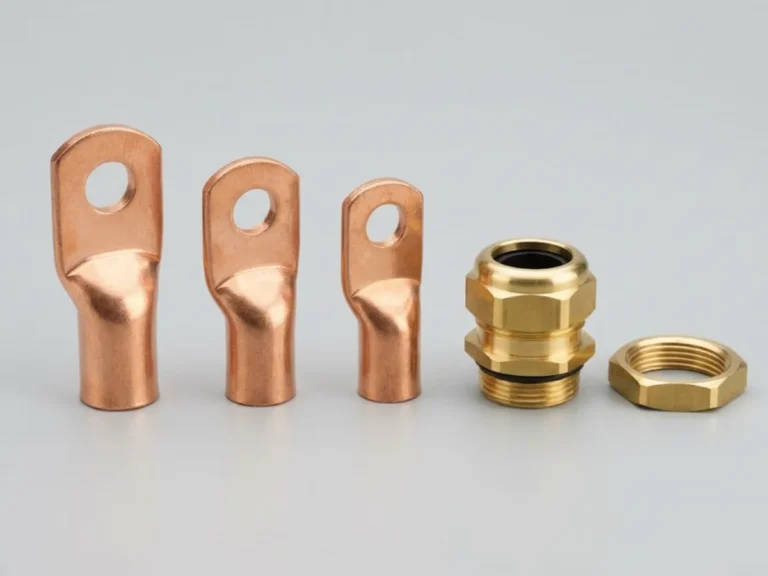
Armour must be terminated with proper armour-clamping glands so the earth continuity is not broken. Pair the cable with the right terminations from cable lugs and glands.
What FRLS actually means
FRLS stands for flame retardant, low smoke. An FRLS outer sheath is a PVC compound modified so the cable resists flame spread and gives less smoke than ordinary PVC. It is a good default for cables run in bundles on trays, in buildings, control rooms, substations, tunnels and shafts where several cables sit together and a fire could travel along them.
FRLS is not the same as LSZH (low smoke zero halogen). LSZH sheaths release almost no corrosive halogen gas when burning and are often specified for underground rail, hospitals, data centres, ships and places where people must evacuate or electronics must survive. They cost more and are mechanically a little different to handle. Ask the consultant which one the project specification calls for, and request the relevant test certificates for flame propagation and smoke from the manufacturer.
Aluminium or copper conductor
Aluminium is lighter and cheaper per ampere for larger sizes, so it is common for LT feeders and HT cables. Copper has lower resistance and better termination behaviour, so it is preferred for small sizes, control, instrumentation, motors in vibrating service and compact panels. If you mix, use bi-metallic lugs or approved joints where aluminium meets copper. Aluminium needs a size larger for the same current than copper, so compare total installed cost, not just the price per metre.
Selecting cable for a typical job
- Feeder from a transformer to an LT panel: single-core or multicore XLPE, aluminium or copper, armoured (non-magnetic for single core), FRLS sheath.
- Motor feeder in a plant: XLPE armoured, copper for smaller motors, size checked for voltage drop; see the motor current and cable calculator.
- Control wiring: multicore control cable; browse control cables and instrumentation cables for signal circuits.
- 11 kV feeder: XLPE, with screen, armour as per the application, and correct terminations or joints for the voltage.
Cable size comes after the type, from current, voltage drop and fault level. Cables should be laid on trays supported correctly; see cable trays and accessories. A qualified engineer should approve the final specification, especially for HT and safety-critical circuits.
Voltage grade, screening and markings
Cable voltage grade is written as two numbers, such as 1.1 kV for LT cable or 6.35/11 kV for an 11 kV cable, where the first number is the voltage to earth and the second is phase to phase. Never use a cable at a system voltage above its grade. HT cables carry a conductor screen, an insulation screen and often a metallic screen, which keeps the electric field inside the insulation; these screens must be terminated correctly with stress-control kits or the cable will fail at the end. Check the printed markings on the cable sheath: manufacturer, voltage grade, size, standard and year of manufacture. Ask for the manufacturer’s test certificate for each drum, and confirm drum length and cut lengths before ordering.
What to send us for a quotation
Send voltage grade, number of cores and size, conductor material, insulation, armour type, sheath (PVC, FRLS or LSZH), length required, drum length preference and the applicable standard. If you have a cable schedule, send it as is. Use the request a quote page or contact us; quotations are answered within 24 hours.
Frequently asked questions
Is XLPE cable better than PVC cable?
For most industrial feeders, yes, because XLPE allows a higher continuous conductor temperature (90 versus 70 degrees C) and tolerates higher short-circuit temperature, so it carries more current for the same size. PVC is still fine for small loads, control cables and low-cost LT work. For HT cables from 3.3 kV upwards, XLPE is the normal choice.
What does FRLS mean on a cable?
FRLS means flame retardant, low smoke. It describes the outer sheath compound, which resists flame spread and produces less smoke than ordinary PVC. It is useful where many cables run together, such as trays, shafts and control rooms. It is different from LSZH, which also avoids halogen gases. Ask the manufacturer for test reports against the standard named in your specification.
When do I need armoured cable?
Use armoured cable where it may face mechanical damage or pulling stress: direct burial, trenches, industrial trays, risers and outdoor runs. The armour also helps protect against rodents and can serve as an earth path when terminated with proper armour glands. Inside conduits or protected indoor routes, unarmoured cable is usually adequate. Single-core AC cables need non-magnetic armour.
Should I use aluminium or copper power cable?
Aluminium is cheaper and lighter for large LT and HT feeders, but needs a larger cross-section for the same current. Copper suits small sizes, control and vibrating equipment and gives easier terminations. Where aluminium meets copper at a lug or busbar, use bi-metallic lugs. Compare installed cost including lugs, glands and trays, not just rate per metre.