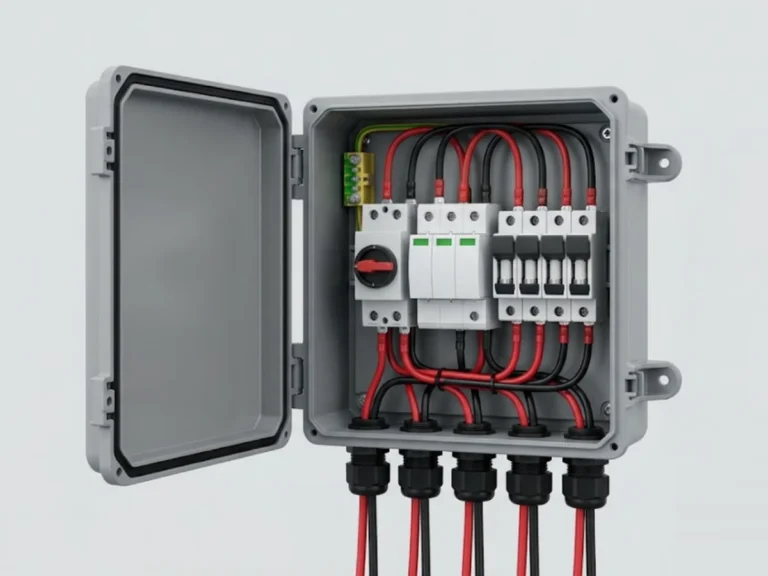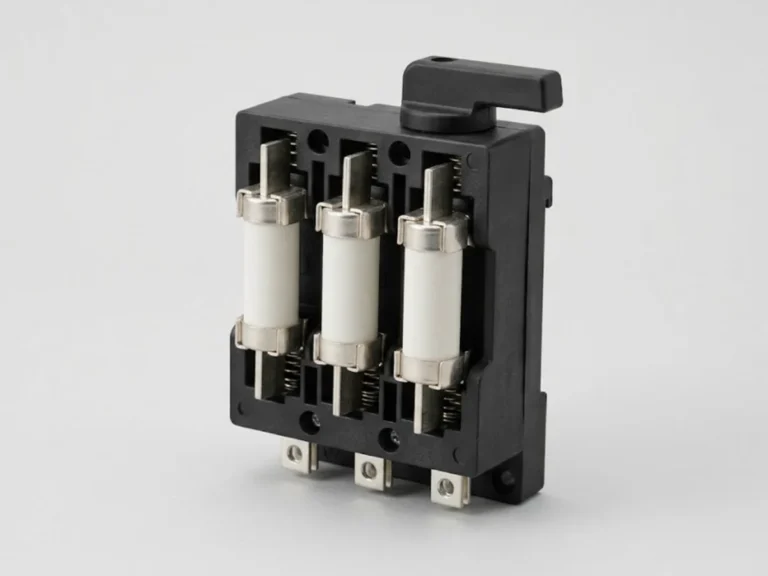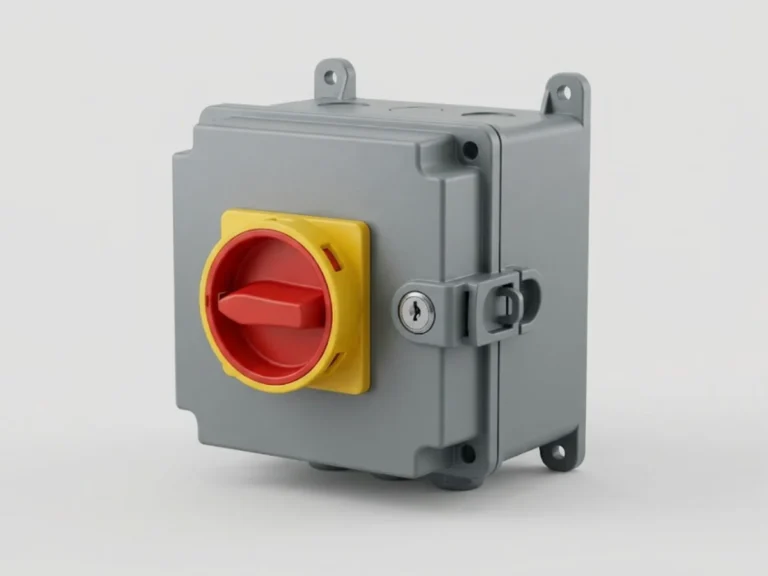
The DC side of a solar plant runs at hundreds of volts, carries current all day, sits in sun and rain, and is hard to switch off because the panels cannot be de-energised while light falls on them. Most faults on rooftop plants start here: a loose connector that overheats, a cable that is under-sized, or a fuse or breaker that is not rated for DC. This guide covers the basics of cable selection and protection so you can review a design or a quotation with more confidence.
SKE Bharat supplies solar electrical equipment such as junction boxes, fuses, isolators, surge protection and power cables, but we do not install solar plants. The values here are planning guidance. A qualified engineer must confirm the final design against the module datasheet and the applicable code.
Use proper solar PV cable
String cables run outdoors for many years. Ordinary PVC wire is not suitable. Solar PV cable is single-core, flexible, tinned copper conductor with cross-linked insulation and sheath that resists UV, ozone, heat and weather. It is normally rated for DC up to 1.5 kV and for the high cable temperatures seen on a hot roof. Look for compliance with a recognised PV cable standard such as EN 50618 or IEC 62930 on the datasheet and the cable marking.
Common string cable sizes are 4 sq mm and 6 sq mm. Longer runs, such as AJB to inverter, often use larger cables and are sometimes armoured; for those HT and LT power cables are used. Check that armour and insulation are suited to the voltage and laying method.
Sizing the cable
Sizing by current
A solar module is a current-limited source. Its short-circuit current (Isc) is only slightly above its operating current, so ordinary overcurrent logic does not apply. Design practice is to size cables for a current higher than Isc, commonly 1.25 times Isc as a first step, and then apply further derating for ambient temperature, grouping of cables and conduit. The exact factors depend on the code your designer follows, so ask for the calculation sheet.
Voltage drop on the DC side
Losses in cables are lost generation every day of the plant’s life. A target of about 1 to 2 per cent total DC voltage drop is common, though your designer may choose a tighter figure. Use:
Drop (V) = 2 x length (m) x current (A) x resistivity / cable area (sq mm)
Take copper resistivity as about 0.0175 ohm sq mm per m at 20 deg C; it is higher when the cable is hot, so add margin. Length is one way and the factor of 2 covers the return conductor.
Example: a string with 10 A operating current, 40 m of one-way cable on 4 sq mm. Drop = 2 x 40 x 10 x 0.0175 / 4 = 3.5 V. On a string of about 600 V that is roughly 0.6 per cent. On 6 sq mm the drop would be about 2.3 V. Our motor current and cable calculator works for AC loads; DC strings need the module’s own Isc and Voc.
Protection on the DC side
| Device | Why it is needed | Key point |
|---|---|---|
| String fuse | Stops reverse current from healthy strings flowing into a faulted string | Use a PV-rated DC fuse; often needed when three or more strings are paralleled |
| DC isolator / switch disconnector | Isolates the array or inverter for maintenance | Voltage and current rating must be for DC at system voltage |
| DC surge protection device | Limits lightning-induced surges | Choose a PV DC SPD; rating above the maximum system voltage |
| Earthing and bonding | Gives fault current a path and equalises potential | Bond module frames, structure, boxes and inverter |
These devices sit in the array junction box and the DC distribution board. Our guide on ACDB, DCDB and junction boxes explains where each one goes. Available components include HRC fuses, isolators and switch disconnectors and surge protection devices.
Open-circuit voltage in cold weather
A module’s open-circuit voltage rises as the temperature falls. When you decide how many modules to put in series, calculate the string Voc at the lowest expected temperature and make sure it stays below the inverter’s maximum DC input and the rating of all DC devices. Hill stations and winter mornings in northern India are where this limit is most likely to bite.
Connectors, terminations and routing
- Same make connectors. Do not mate MC4-type connectors from different manufacturers, because poor contact heats up over time. Use the right crimping tool and die for the connector; see crimping and termination tools and cable lugs and glands.
- Avoid loops. Large loops between positive and negative cables act as antennas for induced lightning surges. Run the pair together.
- Protect from sharp edges and sun. Use UV-resistant clips, conduits or cable trays and avoid contact with hot or sharp surfaces. Do not leave cables lying in water.
- Earthing. Connect the structure and equipment to the earth system using proper earthing materials. Lightning protection for the building is a separate design task.
Safety notes
Treat the array as live whenever there is light. Use insulated tools and insulated hand gloves, never open connectors under load, and let only trained personnel work on strings. Confirm all procedures with a qualified electrical engineer.
See the solar solutions page for the full range of solar electrical equipment.
What to send us for a quotation
Send the module Voc, Isc and Vmp, the number of modules per string, the number of strings, one-way cable lengths, and the inverter make and model. Add the voltage rating you need on fuses and isolators. Use request a quote or contact us and we will reply within 24 hours.
Frequently asked questions
What size cable is used for solar panel strings?
4 sq mm and 6 sq mm tinned copper PV cables are common for string wiring. The right size depends on module current, cable length, temperature and the voltage drop target, usually in the region of 1 to 2 per cent on the DC side. Ask your designer for the sizing calculation instead of choosing by habit.
Why do solar strings need fuses?
When several strings are paralleled, a fault in one string can push current backwards from the healthy strings and overheat the cable or modules. A PV-rated DC fuse on each string limits that reverse current. Fuses are often needed when three or more strings are connected in parallel, but your designer should confirm.
Can I use normal copper wire instead of solar PV cable?
It is not advised. Ordinary PVC wire is not built for years of UV, ozone and high temperature, and its insulation can crack. Solar PV cable is designed for outdoor use with cross-linked insulation and a DC rating of up to 1.5 kV. Always check the datasheet for the standard it meets.
Is surge protection necessary on the DC side of a solar plant?
Yes, in most designs. Long outdoor cable runs pick up surges from nearby lightning. A PV-rated DC surge protection device in the junction box and at the inverter input limits the surge and protects equipment, while earthing and bonding give the surge a path. Confirm ratings with a qualified engineer.