Controllers & HMI
HMI / Operator Panels
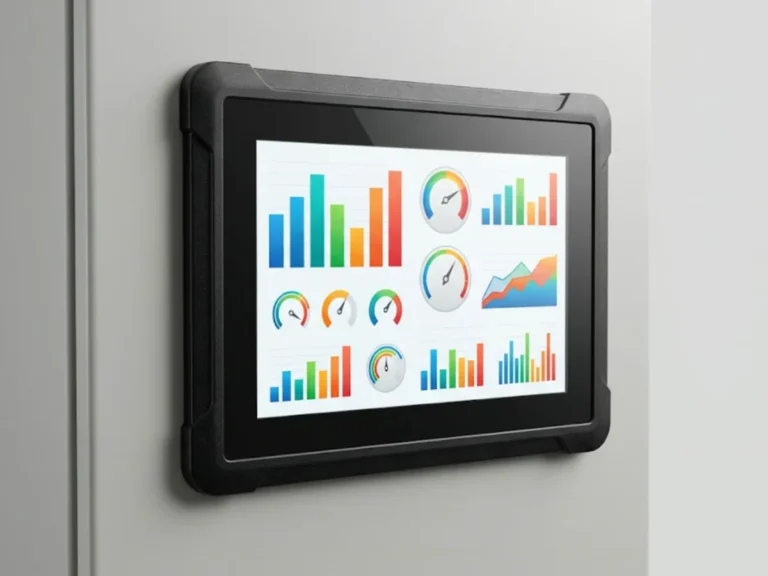
Touch and keypad operator panels for monitoring and controlling machines and processes.
- StandardIEC 61131-2 (typical EMC/environment), IEC 60529 (front IP)
Automation
Browse the full range. Filter by category or feature, compare specifications and add items to your quote list.
Touch and keypad operator panels for monitoring and controlling machines and processes.
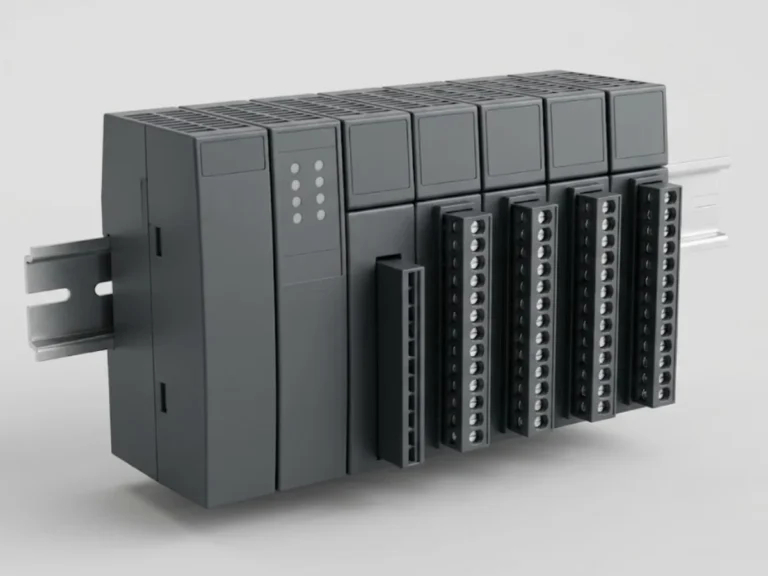
Programmable controllers that run machine and process logic, with digital, analogue and communication I/O.
Distributed input/output modules that extend a controller across the plant over a fieldbus or Ethernet.
No products match your filters. or ask our engineers.
This category covers the control layer of an automation system: PLCs that run the logic, HMI operator panels that let operators see and change the process, and remote I/O modules that bring field signals to the controller over a network. They go into machine control panels, pump stations, utilities, packaging lines and process skids.
Controller size follows the I/O count and the work to be done. A compact PLC with built-in I/O suits a single machine. A modular rack suits a plant section with analog loops, PID control, motion or many communication ports. Remote I/O is worth considering once field devices are spread over tens of metres, because one network cable replaces many multicore runs. On the HMI side, screen size and resolution matter less than the clarity of the screens you design, alarms that operators can act on, and trend displays of the critical variables.
When you prepare an enquiry, list:
Controllers need a clean 24 V DC supply, so size one from the range of sensors and power supplies, and match the controller to the drives it commands.
An HMI is a local operator interface, usually a panel mounted on one machine or panel. SCADA is a supervisory system, running on a computer or server, that collects data from many controllers across a plant, stores history, and provides alarms and reports. A plant can have both: HMIs at machines and SCADA in the control room.
Count the digital and analog inputs and outputs, add spare capacity, and note special functions such as PID, motion, high-speed counting and communication. Choose a platform with enough memory, scan speed and expansion room, and one your maintenance team can support. List the protocols needed to talk to drives, meters and SCADA.
The IEC 61131-3 standard defines ladder diagram, function block diagram, structured text, instruction list and sequential function chart. Ladder is most common on the shop floor, and structured text suits calculations and data handling. Most PLCs support more than one language, but check the language support of the programming software.
Use remote I/O when sensors and actuators are spread across a big machine or plant area, so signals can be collected locally and sent over one communication cable. It saves cable and wiring labour and makes troubleshooting easier. A larger PLC is better when everything is in one panel and the network adds no value.
Send the I/O list with signal types, communication protocols, program size expectations, HMI screen size and special functions, plus the supply voltage and panel conditions. If you already have a controller family in the plant, mention it, because compatibility with spares and software is often a deciding factor.