Controllers & HMI
HMI / Operator Panels
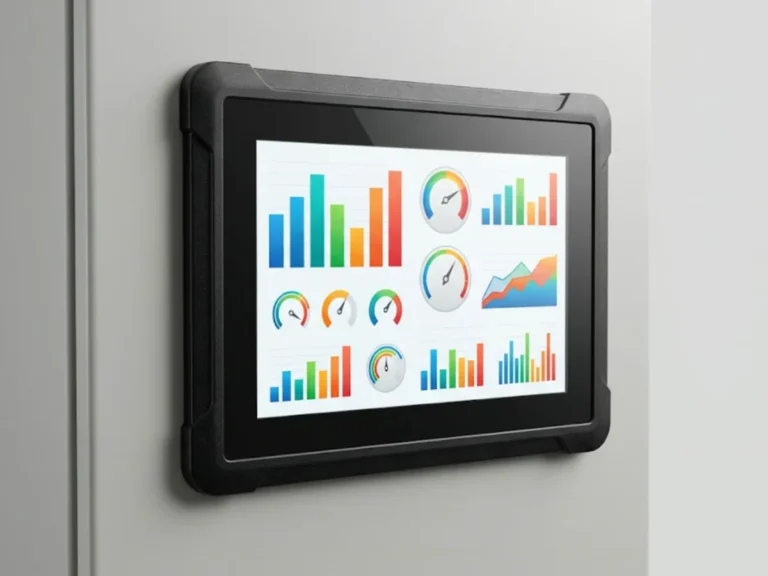
Touch and keypad operator panels for monitoring and controlling machines and processes.
On request- StandardIEC 61131-2 (typical EMC/environment), IEC 60529 (front IP)
Automation
Download specification sheet (PDF)
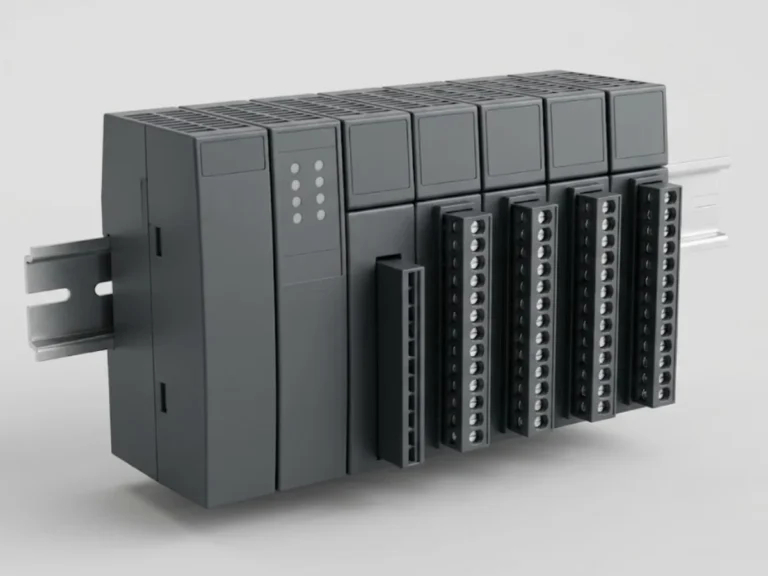
Distributed input/output modules that extend a controller across the plant over a fieldbus or Ethernet.
Every field is optional - tell us what you know and we will confirm the rest in the quotation.
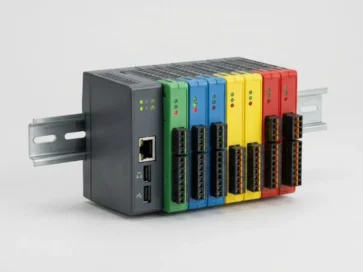
Representative image. The actual product, make and appearance depend on the supplier and your specification.
Also searched as: distributed I/O modules, remote IO module, Ethernet remote I/O, Modbus remote I/O module, fieldbus I/O module, remote input output module
Choose the communication first: the remote I/O must speak the protocol of your PLC, whether Profinet, Profibus, Modbus TCP, EtherNet/IP or another fieldbus. Then count channels by type, because digital input, digital output, analogue input (4-20 mA, 0-10 V, RTD) and analogue output each need their own modules.
Mistakes include forgetting field power for outputs, long unshielded runs, and ignoring update time on fast processes. Remote I/O pays back by cutting the length of home-run wiring to a central panel. Use a stable DIN-rail supply and connect through industrial Ethernet switches.
Ratings, dimensions and certification are confirmed against your enquiry. Use Send an enquiry and our engineers will respond within 24 hours.
Remote I/O places input and output modules near the equipment, so only one network cable returns to the controller instead of many field cables. That reduces wiring cost, commissioning time and fault-finding effort in spread-out plants and skids.
About 20 percent per signal type is a common practice, so that additional sensors or valves can be added without a new module. Add more if the process is likely to expand. Analogue and digital counts are planned separately.
A remote I/O module is a unit of digital or analog inputs and outputs installed near the process and connected to the controller over a fieldbus or Ethernet. It saves long runs of field wiring back to the main control panel.
Decide the number and type of channels needed: digital input, digital output, analog input or analog output. Then check the communication protocol your controller supports, such as Modbus or Ethernet, the mounting method and the supply voltage of the module.
Local I/O sits in the same panel or rack as the controller. Remote I/O is placed close to the sensors and actuators, away from the controller, and talks to it over a network, which reduces cabling in large plants.
Send the channel count for each type (DI, DO, AI, AO), the communication protocol, the controller make, the supply voltage and the mounting preference. Quotations are prepared from the details you send, so share your requirement and SKE Bharat will respond within 24 hours.
| Product Type | Remote I/O |
|---|---|
| Standard | IEC 61131-2 |
| Selection Basis | Channel count and type (DI / DO / AI / AO), protocol, mounting, supply |
| Typical Use | Distributed I/O near the process |
Touch and keypad operator panels for monitoring and controlling machines and processes.
On requestProgrammable controllers that run machine and process logic, with digital, analogue and communication I/O.
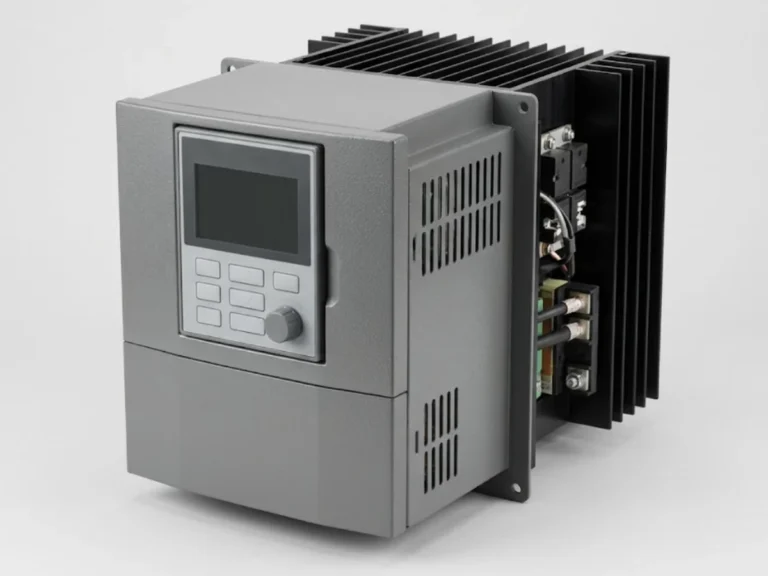
On requestThyristor DC drives for speed control of DC motors in rolling mills, cranes and process lines.
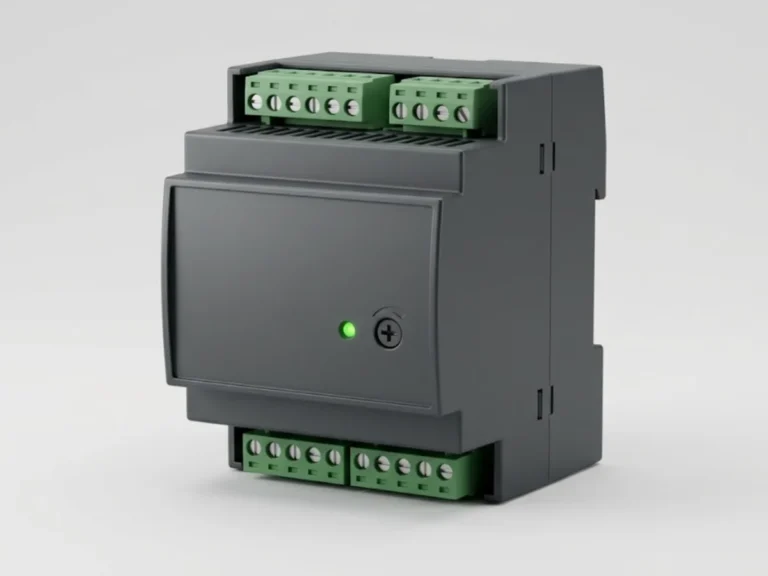
On request24 V DC and other DIN-rail switch-mode power supplies for control panels and automation.
On request