Sensors & Power Supplies
DIN-Rail Power Supplies (SMPS)
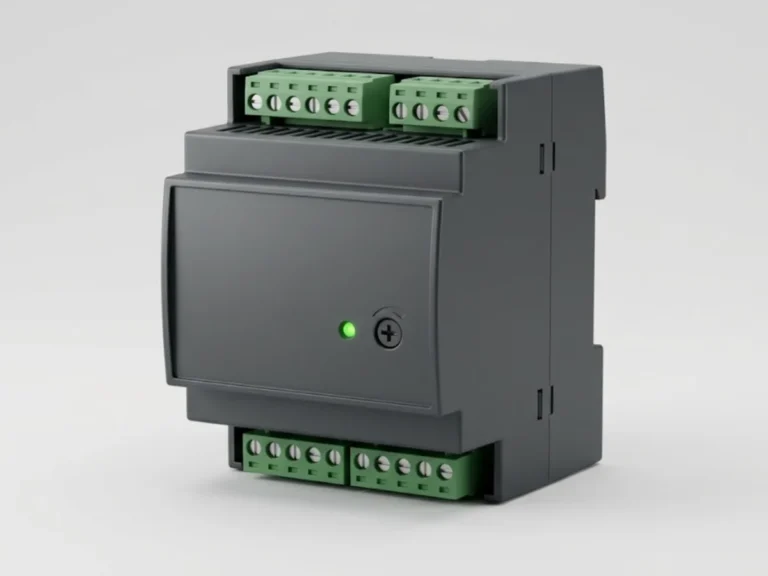
24 V DC and other DIN-rail switch-mode power supplies for control panels and automation.
- StandardIEC 61204-3, IEC 62368-1
Automation
Browse the full range. Filter by category or feature, compare specifications and add items to your quote list.
24 V DC and other DIN-rail switch-mode power supplies for control panels and automation.
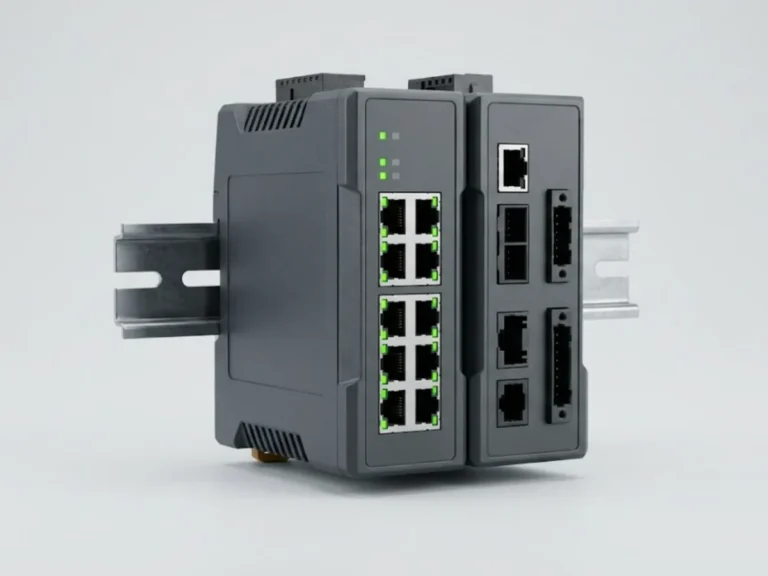
Industrial network switches and protocol gateways for plant communication.
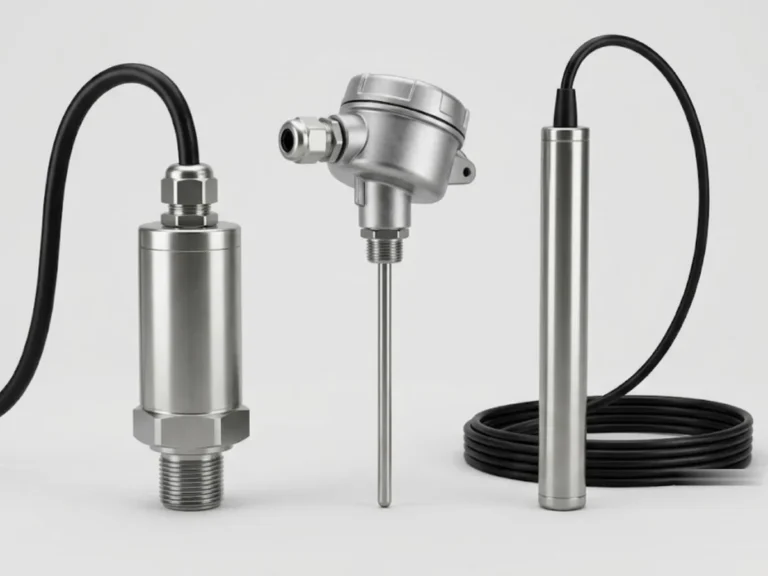
Field transmitters that convert process variables to 4-20 mA or digital signals.
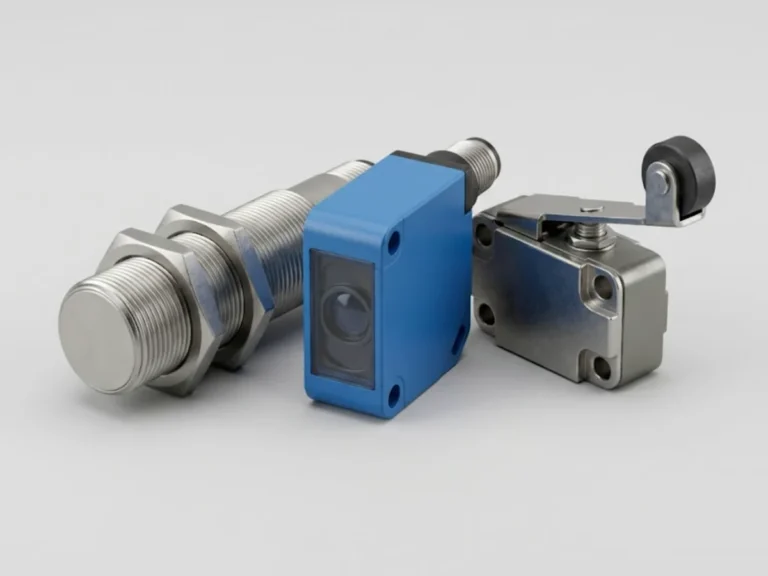
Sensors that detect presence, position and limits for machine and conveyor automation.
No products match your filters. or ask our engineers.
The field-side devices of an automation system are here: proximity, photoelectric and limit switches that detect position, pressure, temperature and level transmitters that send process values, DIN-rail power supplies that feed them, and industrial Ethernet switches and gateways that connect them to controllers.
Selection errors usually come from the wiring, not the sensor. A PNP sensor into an NPN input card will never switch. An inductive sensor rated at 8 mm in steel senses a much shorter distance in aluminium or copper because of correction factors. A transmitter with 4-20 mA output needs a loop supply of sufficient voltage for the total loop resistance. Check all of these on the datasheet before ordering.
Selection pointers:
Signals go to PLCs and remote I/O, and for temperature, RTD or thermocouple inputs need matching input cards. Power supply sizing should include the inrush of solenoids and output loads, not just steady current.
A PNP sensor switches the positive supply to the load, so the output is at 24 V when active; an NPN sensor switches the load to 0 V. The controller's input card must match, as sourcing or sinking inputs, otherwise the signal is never read. Check the input card manual.
Inductive sensors detect metal targets only and are the common choice for position and counting. Capacitive sensors detect almost any material, including plastic, liquid and powder, so they are used for level sensing, but they are more sensitive to dust and humidity. Match the sensing distance to your mounting gap with a safety margin.
It converts a measured value into a current between 4 and 20 mA. Current signals resist noise and voltage drop over long cables, and the live zero at 4 mA lets the system detect a broken wire. The controller's analog input must be configured for current, and the loop needs adequate supply voltage.
Add up the current of all devices on the 24 V DC rail, including inrush of solenoids, relays and sensors. Then choose a supply rated 20 to 25 percent above that total, and ensure its input range suits your mains variations. For critical systems consider redundancy modules. A qualified engineer should check the wiring.
Industrial switches are built for wide temperature ranges, vibration, DIN-rail mounting, 24 V DC supply and electrical noise, and often provide redundancy ring protocols. An office switch is not designed for these conditions and may fail in a panel. Select the number of ports, speed and management features according to the network design.