Gearbox
Bevel Helical Gearbox
Right-angle gearboxes combining bevel and helical stages for heavy-duty conveying and mixing.
On request- StandardAGMA / ISO 6336 rating
Download specification sheet (PDF)
Worm gearboxes giving large reduction ratios in a single stage with smooth, quiet operation.
Every field is optional - tell us what you know and we will confirm the rest in the quotation.
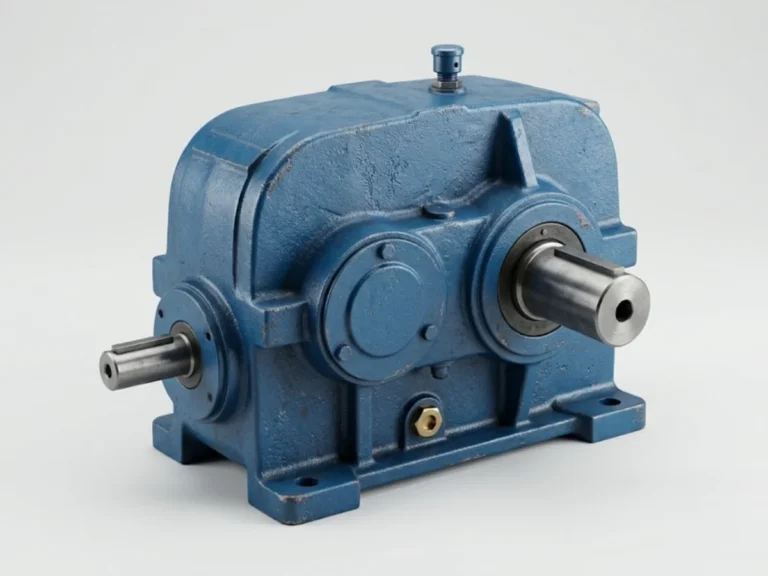
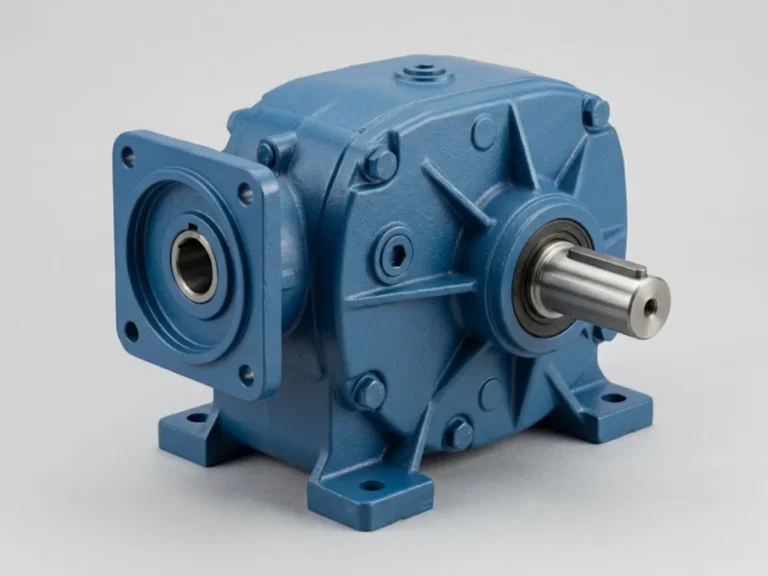
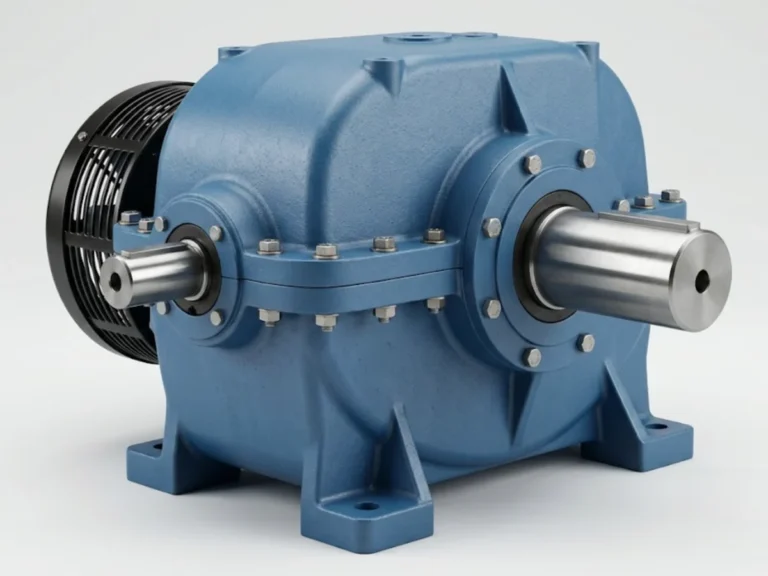
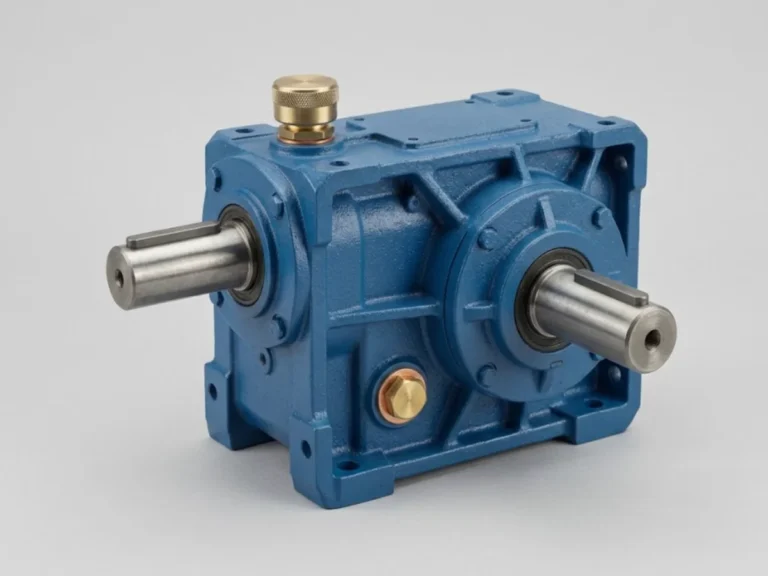
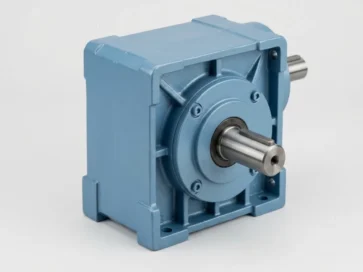
Representative image. The actual product, make and appearance depend on the supplier and your specification.
Also searched as: worm reduction gearbox, worm gear reducer, worm and wheel gearbox, right angle worm gearbox, worm geared motor
Worm gearboxes give large reductions in one stage, but efficiency drops as the ratio rises, and a high ratio means more heat for the same motor. Choose by output torque, ratio, input speed and duty, then apply a service factor for shock and hours per day.
Common mistakes are oversizing the motor so that shock torque exceeds the gearbox, ignoring radial load on the output shaft from chains or pulleys, and running the unit overfilled. On site, check oil grade, breather position and alignment. If higher efficiency or heavier duty is needed, compare an inline helical gearbox. Confirm selection with the manufacturer data.
Ratings, dimensions and certification are confirmed against your enquiry. Use Send an enquiry and our engineers will respond within 24 hours.
A high-ratio worm can resist back-driving, but this is not reliable under vibration or shock and should not be treated as a brake. For hoists, lifts or inclines, add a proper brake. Safety-critical holding duties should be confirmed with a qualified engineer.
Worm gearing has sliding contact between worm and wheel, which creates more friction and loss, especially at high ratios. That is why thermal rating matters. Helical gearing has mostly rolling contact and higher efficiency, so it suits continuous heavy duty.
A worm, which is a screw-like shaft, drives a worm wheel placed at right angles to it. The reduction ratio equals the number of wheel teeth divided by the number of starts on the worm, so a large reduction is possible in a single stage.
A worm gearbox gives a large reduction at right angles in one stage and runs quietly, but its efficiency varies with ratio. A helical gearbox has parallel shafts and higher efficiency, so it is used where power loss matters.
The common construction is a cylindrical worm with a worm wheel, and a double enveloping type is used for higher loads. Gearboxes are also described by mounting, such as foot, flange or shaft mounted.
Selection uses the motor power or torque, input speed, required ratio, service factor, hours of operation and shock load. The thermal rating should also be checked for continuous duty. Send these details for a quotation.
| Gear Type | Worm |
|---|---|
| Standard | AGMA / ISO 6336 rating |
| Mounting | Foot / flange / shaft mounted |
| Typical Efficiency | About 50 - 90 % (varies with ratio) |
| Shaft Arrangement | Right-angle shafts |
Right-angle gearboxes combining bevel and helical stages for heavy-duty conveying and mixing.
On requestHelical gearboxes for smooth, quiet, high-load power transmission in industrial drives.
On requestInline helical gear units with coaxial input and output for compact installations.
On requestParallel-shaft helical gearboxes for high-torque industrial duty.
On request