Solar Products
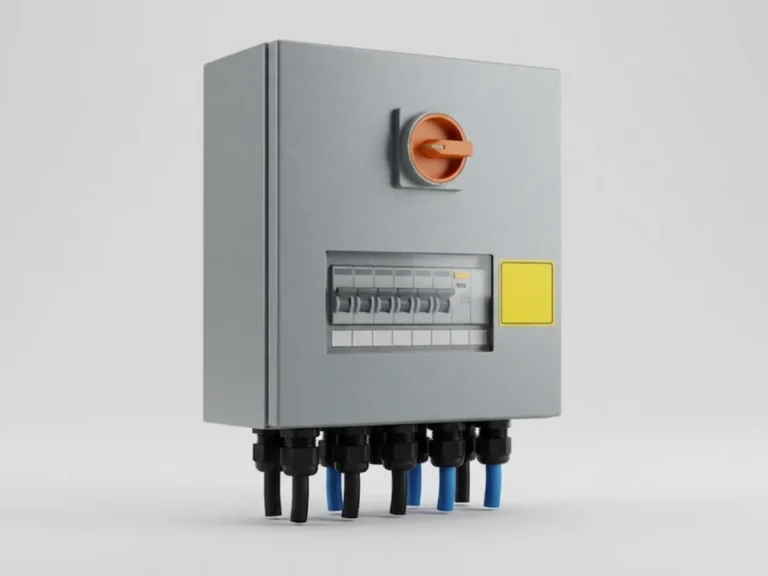
800V LT Panel
Low-voltage panels rated for 800 V class solar and inverter duty.
On request- StandardIEC 61439
- Voltage ClassLT, up to 800 V class
IEC 61439Solar
Download specification sheet (PDF)
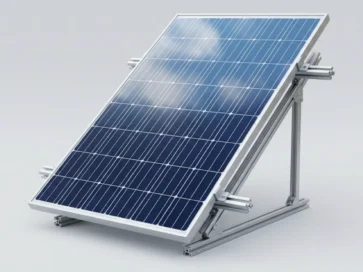
Crystalline-silicon photovoltaic modules for rooftop, ground-mount and utility plants.
Made to order against your specification. Fill what you know; our engineers will confirm the rest.
Representative image. The actual product, make and appearance depend on the supplier and your specification.
Also searched as: PV module, solar PV panel, crystalline silicon solar module, solar module, photovoltaic panel, rooftop solar panel
Module datasheets give several voltages and currents, and the design depends on using the right ones. Wattage alone does not tell you how many modules fit on a string or an inverter.
Plan the roof or ground area using the module dimensions, and allow for shading and tilt. Use the solar calculator for a first estimate and see array junction boxes and solar inverters for the equipment between modules and the grid. Mixing different modules on one string is a mistake because the weakest module limits the rest.
Ratings, dimensions and certification are confirmed against your enquiry. Use Send an enquiry and our engineers will respond within 24 hours.
The count is limited by the inverter's maximum DC voltage at the coldest temperature and its MPPT window at operating temperature. Use the module Voc and Vmpp temperature coefficients from the datasheet. A string calculator or the inverter maker's design tool automates this check.
Module voltage rises as temperature falls, so on a cold morning the string voltage is highest. If it exceeds the inverter or system rating, equipment can be damaged. Design for the lowest temperature recorded at the site, not the average.
It is not recommended. In a series string the current is limited by the weakest module, so mismatched modules waste output. Keep the same model within each string. Even modules of the same wattage from different batches or makers can have different currents, so keep them to separate strings.
PV stands for Photovoltaic. A PV panel or module converts sunlight directly into DC electricity. Several modules are connected in strings and feed an inverter, which converts the DC power to AC for use.
Solar panels are commonly grouped by cell type, such as monocrystalline and polycrystalline, and by cell technology such as PERC, TOPCon and HJT. Modules can also have glass-glass or glass-backsheet construction. The right type depends on space, budget and project needs.
Check the module wattage, efficiency, system voltage, dimensions and the standards it is tested to, such as IEC 61215 and IEC 61730. Also match the module to the inverter input range and the available roof or ground area.
Send the module wattage and technology preferred, total capacity in kW or MW, make preference, site location and whether the project is rooftop, ground mount or utility. Price depends on model, rating, make and quantity, so share details for a quotation.
| Product Type | PV module |
|---|---|
| Standard | IEC 61215, IEC 61730 |
| Voltage Class | DC, up to 1000 / 1500 V system |
| Construction | Framed glass-glass or glass-backsheet |
| Protection Degree | IP67/IP68 junction box |
| Typical Use | Power generation |
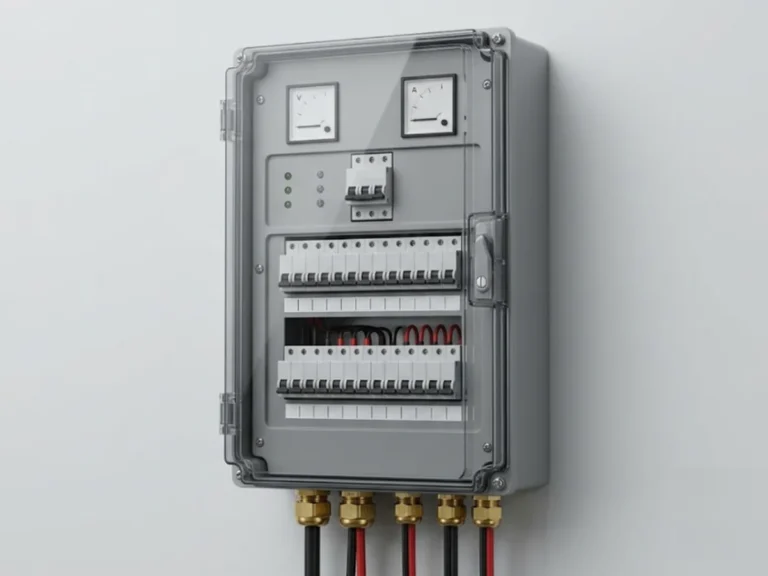
Low-voltage panels rated for 800 V class solar and inverter duty.
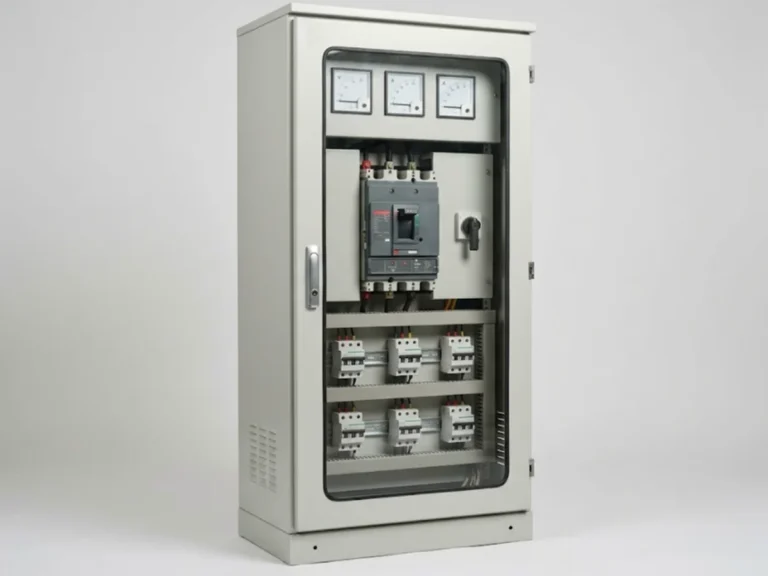
On requestBoxes that combine several inverter AC outputs into a single feeder with protection.
On requestAC-side distribution boards that gather inverter outputs and connect them to the plant LV supply.
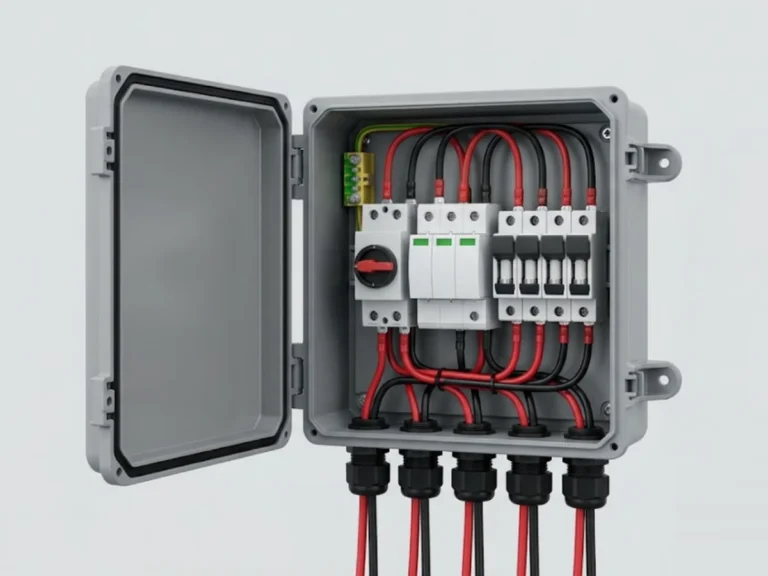
On requestWeatherproof boxes in the array field that combine PV strings with fuses and surge protection.
On requestType 1 SPDs handle direct lightning current at the service entrance, Type 2 sit at distribution boards and Type 3 protect sensitive equipment. Here is where…
6 min readSolar & Energy EfficiencyArray junction box, DCDB, AC combiner box and ACDB each protect a different stage of a solar plant; here is what they contain and how to…
6 min read