Solar Products
800V LT Panel
Low-voltage panels rated for 800 V class solar and inverter duty.
On request- StandardIEC 61439
- Voltage ClassLT, up to 800 V class
IEC 61439Solar
Download specification sheet (PDF)
DC-side boards that combine string inputs with protection before the inverter.
Made to order against your specification. Fill what you know; our engineers will confirm the rest.
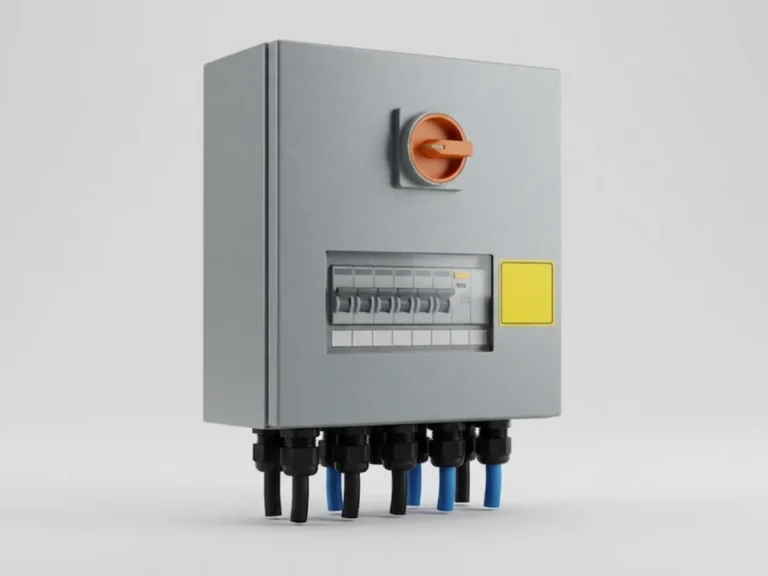
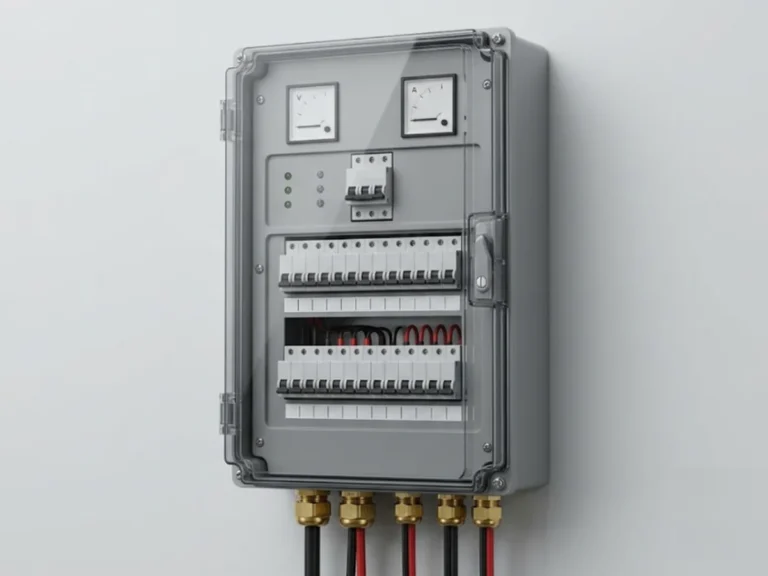
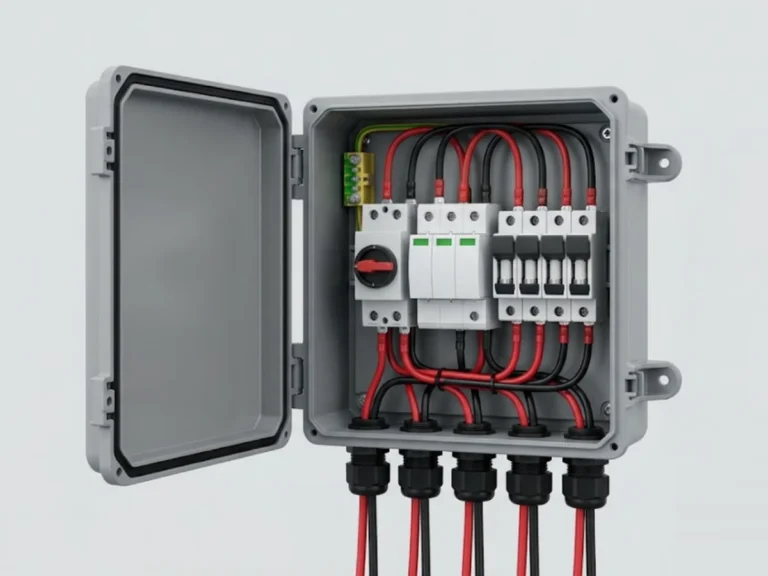
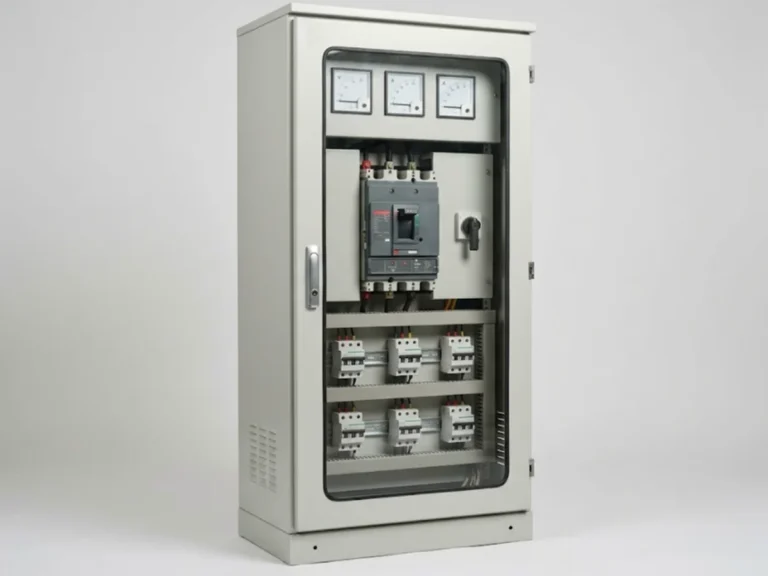
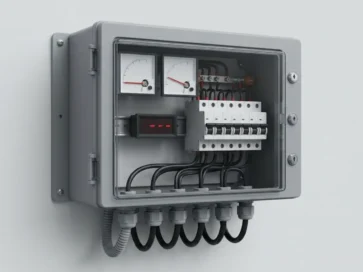
Representative image. The actual product, make and appearance depend on the supplier and your specification.
Also searched as: DCDB, solar DC distribution board, DC distribution box, direct current distribution board, DC switch board, solar DC combiner board
The DC distribution board sits between the strings and the inverter, so everything in it works with direct current, which is harder to switch off than alternating current. The rating that matters most is DC breaking capacity at the full system voltage, not the AC figure printed on a similar-looking device.
Pick an enclosure that suits the mounting spot and temperature. For field-mounted combining see the array junction box, and for single-inverter rooftop systems the combined ACDB DCDB. Isolators are listed under switching and control devices.
Ratings, dimensions and certification are confirmed against your enquiry. Use Send an enquiry and our engineers will respond within 24 hours.
DC current has no natural zero crossing, so arcs persist when contacts open. DC-rated devices are built to extinguish the arc at a stated voltage. Always use devices rated for DC at the system voltage.
As many as the number of strings feeding it, plus spares for expansion. Group strings to suit the inverter's MPPT inputs; your system design decides the count. Keep a spare input or two for later strings, and check the rating of the shared busbar.
Reversed polarity can damage inverters, SPDs and meters, and cause unsafe conditions. Terminals and busbars should be clearly marked, and wiring checked before energising. Use clearly coloured, labelled terminals and test polarity with a meter before closing the isolator.
A DC distribution board, or DCDB, is the DC-side board of a solar plant. It takes the string inputs, combines them and provides protection such as fuses, an isolator and surge protection before the supply goes to the inverter.
DCDB stands for Direct Current Distribution Board. In a solar system it sits between the PV strings or array junction boxes and the inverter, and it protects and isolates the DC input.
An array junction box is mounted in the field and combines the strings from a few modules. A DCDB is normally placed near the inverter, collects the outputs from several array junction boxes or strings and provides the main protection and isolation.
Send the number of string inputs, string current, system voltage (1000 V or 1500 V DC), number of outputs to the inverter, fuse, isolator and surge protection needs and the protection degree. SKE Bharat prepares the quotation within 24 hours.
| Product Type | Solar DCDB |
|---|---|
| Standard | IEC 61439, IEC 60364-7-712 |
| Voltage Class | DC, up to 1000 / 1500 V |
| Construction | Sheet-steel or polycarbonate |
| Protection Degree | IP54 - IP65 |
| Typical Use | String combining and protection |
Low-voltage panels rated for 800 V class solar and inverter duty.
On requestBoxes that combine several inverter AC outputs into a single feeder with protection.
On requestAC-side distribution boards that gather inverter outputs and connect them to the plant LV supply.
On requestWeatherproof boxes in the array field that combine PV strings with fuses and surge protection.
On requestType 1 SPDs handle direct lightning current at the service entrance, Type 2 sit at distribution boards and Type 3 protect sensitive equipment. Here is where…
6 min readSolar & Energy EfficiencyArray junction box, DCDB, AC combiner box and ACDB each protect a different stage of a solar plant; here is what they contain and how to…
6 min read