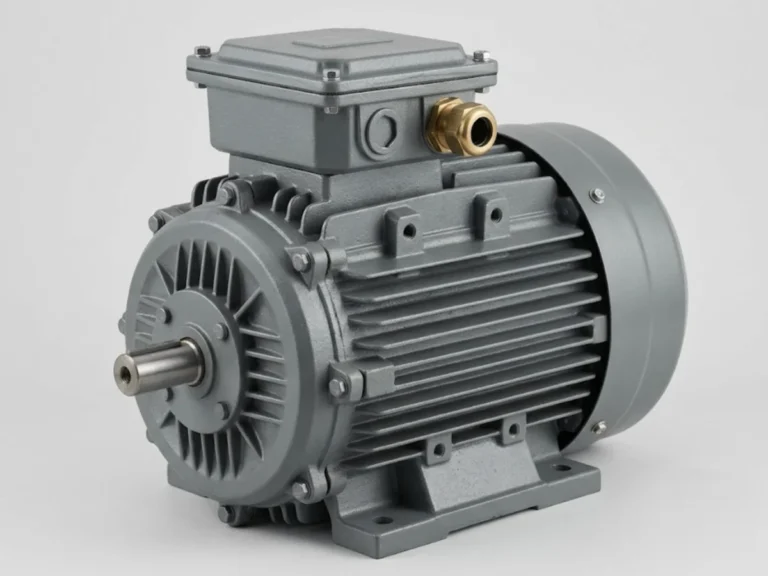
Overview
Also searched as: HT motor, medium voltage motor, 6.6 kV motor, 11 kV induction motor, 3.3 kV motor, high tension motor
Selection notes
High-voltage motors are chosen once the supply, the starting method and the driven load are known together. Gather the voltage (for example 3.3, 6.6 or 11 kV), kW, speed, duty and the fault level of the supply, since these affect insulation, starting current and protection.
- Starting method: direct-on-line, a medium voltage soft starter or a VFD; weak grids and long run-up fans often need current limiting.
- Cooling and enclosure: air-cooled designs are common; the cooling method and ingress protection should suit dust, ambient and altitude.
- Insulation and monitoring: winding RTDs, bearing temperature sensors and vibration probes protect large machines.
- Switchgear: a motor feeder panel from a MV panel provides protection.
Mistakes include ignoring starting torque of the driven machine (fans have high inertia), leaving out space heaters for idle motors, and not coordinating relays with the motor thermal limit curve. Foundation design and alignment are critical for large machines. Final selection should be confirmed by a qualified engineer.
Frequently asked questions
Which starting method is best for a high voltage motor?
It depends on supply strength and the load. DOL is simplest where the grid can take the starting current. Soft starters limit current and shock, and VFDs add speed control. The choice comes from the starting study, so share fault level and load inertia.
What protection should a high voltage motor have?
Typical protections include overload, short circuit, earth fault, locked rotor and phase unbalance, plus winding and bearing temperature sensing on large machines. The set depends on the size and criticality, and should be coordinated by a protection engineer.
What is a high voltage motor?
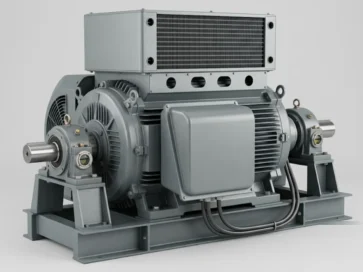
A high voltage motor is an AC induction motor wound for supply of 3.3 kV, 6.6 kV or 11 kV. It is used for large continuous-duty drives such as fans, pumps, compressors and mills.
What is the difference between a high voltage motor and a low voltage motor?
A high voltage motor runs on 3.3 kV or higher, so for the same power it draws much lower current than a 415 V motor. This suits large power ratings, but it needs HT switchgear and suitable insulation and cabling.
When should I choose a high voltage motor?
Choose HV for large power, where a 415 V motor would need very heavy cables and switchgear. The right voltage depends on the motor power, your HT supply and the plant design.
What details are needed for a high voltage motor quotation?
Send the power in kW, voltage (3.3, 6.6 or 11 kV), speed or poles, rotor type, enclosure (IP23 or IP55), mounting, duty, driven load and starting method. Price depends on rating, make and quantity, so send details for a quotation, which SKE Bharat prepares within 24 hours.