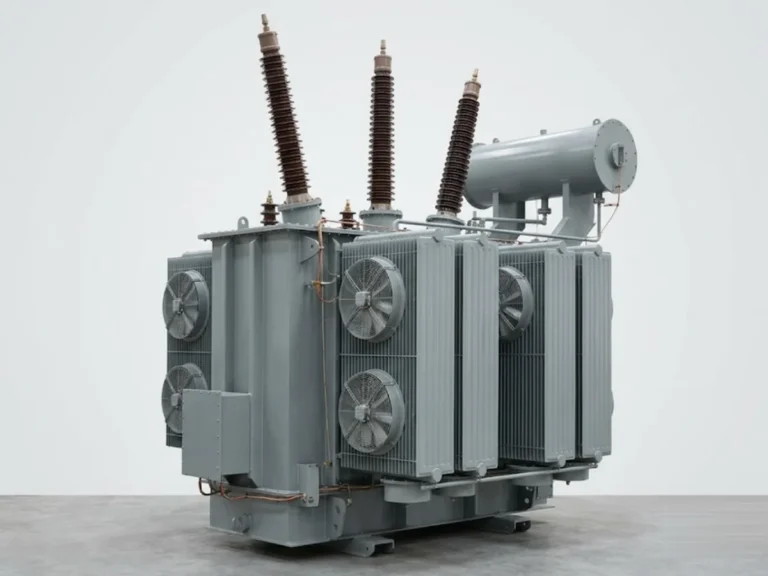
Overview
Also searched as: arc furnace transformer, induction furnace transformer, EAF transformer, furnace duty transformer, transformer for melting furnace
Selection notes
Furnace duty is very different from distribution duty: the load swings sharply, secondary current is very high and short circuits happen routinely during melting. So rating alone is not enough, and the furnace type and process data must be given.
- Furnace data: arc, induction or ladle, furnace capacity, the melting cycle and the secondary voltage steps you want.
- On-load voltage range: a wide tapping range lets operators change power during the melt; ask how the tap changer copes with frequent operations.
- Short-circuit strength: windings and clamping need to withstand repeated mechanical stress; ask what design checks were made.
- Cooling: forced oil or water cooling for higher ratings must suit your water quality.
Mistakes include ignoring the effect of furnace harmonics and flicker on the supply, which may need study or filtering, and underestimating the busbar and cable system carrying the high secondary current. The upstream breaker must also suit frequent switching; see vacuum circuit breakers. For standard step-down duty, use an oil immersed transformer.
Frequently asked questions
Why is a furnace transformer different from a normal power transformer?
It must cope with very high secondary current, frequent load changes and repeated short circuits during melting. The winding bracing, tap changer and cooling are designed for this. A standard transformer would age quickly under such duty.
What information should I send for a furnace transformer enquiry?
Give furnace type and capacity, required power, secondary voltage range, supply voltage and fault level, cooling water availability and tap steps. Add the melting cycle and any limits set by the utility on flicker or harmonics.
What is a furnace transformer?
A furnace transformer steps down high-voltage supply to a very low voltage and very high current for arc or induction furnaces. It is built to handle frequent load swings and short circuit stresses that occur during melting.
What does a furnace transformer do in an arc furnace?
It takes supply from the HT line and delivers a low voltage, high current output to the electrodes. Taps are changed to adjust the furnace voltage during melting and refining, and an on-load tap changer allows this without switching off.
How is a furnace transformer different from a normal power transformer?
A furnace transformer has a very low voltage, very high current secondary and is designed for frequent heavy load changes and repeated short circuits. A normal power transformer is built for steadier loading at regular voltages.
What details are needed for a furnace transformer quotation?
Send the MVA or kVA rating, HT supply voltage, secondary voltage range, number of taps, furnace type (arc or induction), cooling method and whether an on-load tap changer is needed. Price depends on rating, make and quantity, so send details for a quotation, which SKE Bharat prepares within 24 hours.